For someone who loves giving their home a warm and classy feel, floor lamps can be a great addition. The reason? Their different functions and lighting styles can instantly change a room’s look and feel. Personally, I love placing lamps in different corners of my home because they add a great look and are useful when I need some light, but not the regular overhead lighting. But which type of floor lamp is right for you? If this question still bothers you, here are some types of floor lamps you can explore.
What should be considered before buying a floor lamp?
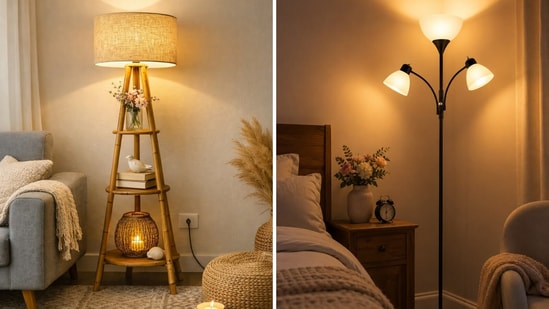
A few things to consider include:
- Purpose: Decide whether you need task, ambient or accent lighting.
- Height: The lamp should be proportionate to your furniture and ceiling height.
- Shade: Opaque shades create a more focused or diffused effect depending on their design, while translucent shades can spread light more softly.
- Placement: Check that the lamp does not obstruct walkways or make a small corner feel crowded.
- Bulb compatibility: Check the recommended bulb type, wattage and fitting before buying.
- Switch placement: A conveniently placed switch can make everyday use much easier.
Types of floor lamps you can consider
1. Arc floor lamps
An arc lamp has a long, curved arm that extends over a particular area. This makes it especially useful when you want light over a sofa, lounge chair or side table without placing the base directly beside it. It can also act as a statement piece in a living room. Choose a simpler silhouette if the rest of your decor already has several strong elements.
2. Tripod floor lamps
As the name suggests, these lamps have three legs supporting the light fixture or shade. Their structure gives them a slightly sculptural quality, making them useful when you want the lighting to become part of the decor. A fabric or woven shade can soften the light, while a simpler shade can work well in contemporary interiors.
3. Uplift floor lamps
Uplighters direct light towards the ceiling rather than straight into the room. The reflected light can create a softer atmosphere, making this style useful when you do not want a harsh overhead light in the evening. They work particularly well as secondary lighting rather than as the only light source in a room.
4. Reading floor lamps
If your main reason for buying a floor lamp is reading, look for a design that lets you direct the light where you need it. Adjustable necks or heads can be particularly useful because you can change the position of the light depending on whether you are sitting on a sofa or an armchair. Place it close enough to your reading seat to illuminate the page without the lamp becoming an obstruction.
5. Torchiere lamps
Torchiere-style lamps have a bowl-shaped or upward-facing shade that sends light towards the ceiling. They are related to uplighters but often have a taller, more vertical profile. Their slim footprint makes them useful when you want additional ambient lighting without taking up much floor space.
6. Pharmacy floor lamps
Inspired by traditional task lighting, pharmacy lamps typically feature an adjustable head or arm that lets you direct the light. Their practical design makes them suitable for reading, writing or other activities that need focused illumination. A simple metal finish can also work well with modern interiors.
7. Multi-light floor lamps
These designs have multiple light sources branching from one central stand. Instead of illuminating just one point, they can distribute light across different parts of a room. They can also be useful when you want a decorative lighting feature without installing several separate lamps.
8. Lantern-style floor lamps
Lantern-style lamps usually surround the light source with a frame, cage or translucent material. They can create a decorative glow and work especially well when you want your lighting to add to the overall mood of a room. If you are using one as ambient lighting, choose a placement where the light can spread without being blocked by furniture.
9. Sculptural floor lamps
Some floor lamps are designed almost like pieces of art, with unusual shapes, curved forms or distinctive materials. Here, the lamp can serve two purposes: lighting the room and filling an empty corner. If you choose a statement design, keep the surrounding decor relatively restrained so that the lamp does not compete with too many other focal points.
How to make a floor lamp look good in your home
- Place it beside seating: A floor lamp next to a sofa or armchair instantly creates a more purposeful corner.
- Layer your lighting: Instead of relying on a single bright ceiling light, combine overhead lighting with floor lamps, table lamps, and other sources to create different levels of illumination.
- Use empty corners: A floor lamp can fill an empty corner without needing additional furniture.
- Decide on the shade: The material and colour of the shade can determine the vibe the room gives.
- What are the trending floor lamps for 2026?
Warm, dimmable, curved floor lamps are trending in home decor.
- What are the trending floor lamps for 2026?
Consider the type of lighting you need, choose based on the available floor space, and check the lamp’s stability.
- Where should you place a floor lamp?
Common placements include beside a sofa or armchair, in an empty corner, next to a console or near a reading area.
Disclaimer: At Hindustan Times, we help you stay up-to-date with the latest trends and products. Hindustan Times has an affiliate partnership, so we may get a part of the revenue when you make a purchase. We shall not be liable for any claim under applicable laws, including but not limited to the Consumer Protection Act, 2019, with respect to the products. The products listed in this article are in no particular order of priority.