
 E-Paper



Pronouns and prejudice: When your pronouns are they/them

 Prefer HTon Google


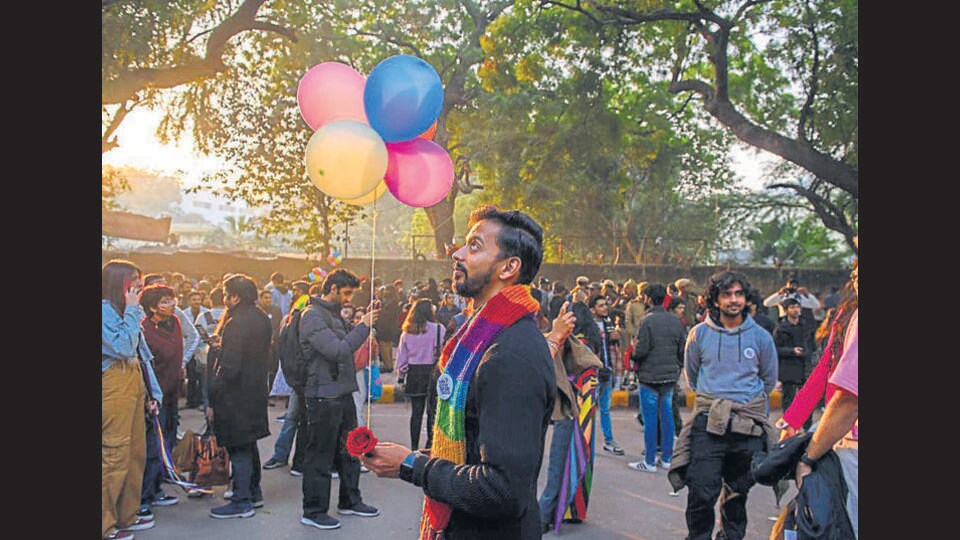
Being constantly misgendered is exhausting, says a non-binary Delhi resident. It can break networks but build them too
I grew up being addressed as she/her. I adopted she/they pronouns in 2019, when I was in Class 10. I come from Prayagraj in Uttar Pradesh, where there isn’t much knowledge or awareness about the non-binary community. People don’t even want to know. The convent school I went to was barely breathable for a cis woman, let alone a queer person. It took time to find people I could confide in.
Instagram felt safer: A space where people knew me for the art I was putting out. So when I adopted they/them pronouns in 2020, I added the update to my Instagram page. It was only a year later that I decided to speak to my friends about it, and tell them that this wasn’t a “joke” or a “phase”.
My childhood friends are yet to adapt to this. I can see them trying. There are some people who just don’t care. I ask myself, “If they can’t understand my identity, why am I friends with them?” I have allowed some of those friendships to end.
Then there are those like my former flatmates, who, in December 2022, asked me to vacate the Delhi flat that we were renting as a group. My pronouns made them uncomfortable. The way they phrased it was: they couldn’t deal with the guilt of misgendering me, and they just couldn’t get my pronouns right. And so, I had to leave. I did.
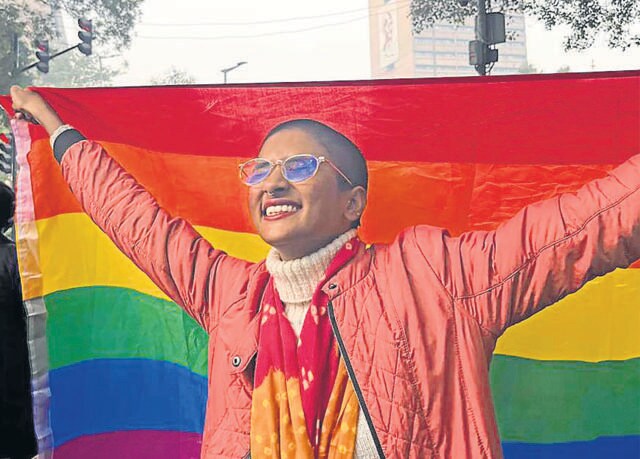
I get stared at, mainly by Aunties, in the women’s coach of the Delhi Metro. I get told, “Yeh ladies’ coach hai (This is a women’s coach).”
I haven’t talked about my pronouns to my family, though I have given my parents many hints by recommending that they watch films and shows with queer characters in them. I played Shubh Mangal Zyada Saavdhan (a queer-themed romcom from 2020 starring Ayushmann Khurrana) on TV five times to give mum a hint. I even sort of told my mother that I don’t fit into the category of binary genders. I’m not sure if she understood.
Then, a few months ago, she casually mentioned a non-binary celebrity and said, “Voh bhi transgender hai.” Non-binary is not trans, but maybe she is beginning to understand.
The first family member I officially came out to was an elder cousin whom I had lived with when I first moved to Delhi. She and her family questioned what I wore, and my clothes are how I express my gender. So I told her that I go by they/them pronouns. She said, “I understand what you are saying, but this is a little weird for me. Where does it end?”
She recently sent me a Reel about how the younger generation is identifying with non-binary situations, and how some high school teacher is saying that picking one’s pronouns is akin to a child saying they want to be treated like a cat.
I am exhausted by the need to explain my pronouns to people. I began a two-month internship in Delhi recently and introduced myself as someone who uses they/them. There are people who do use the right pronouns, but I have to correct multiple people who use feminine phrases such as, “kar rahi ho”.
It’s saddening, because in that moment I feel like I’m not standing up for myself. Do I use incorrect pronouns for other people? No. When it’s not difficult for me, why is it for them?
The hardest part is telling yourself that it’s okay to just let it go. That hurts too, because something that they think is trivial actually means so much to one.
At home in Uttar Pradesh, the language has always been non-binary; usage of the pronoun “hum” is quite prevalent. This is also true for Assamese, Bengali and other Indian languages.
But I choose my battles now. Because if people find it difficult to approach me, the world still believes that the onus is on me to make them more comfortable.
Where do I draw hope from? In 2019, Iceland passed a bill allowing non-binary children to avoid gendered last names. In 2021, Canada became the first country to provide census data on transgender and non-binary people. In 2022, the US introduced a third-gender option on its passports, joining a growing list of countries that include Argentina, Austria, Australia, Canada, Colombia, Denmark, Germany, Iceland, Ireland, Malta, the Netherlands, New Zealand, Pakistan, Nepal, and (in 2005) India.
Meanwhile, in the queer community, I find the love, warmth and acceptance that I seek. It’s a safe space; there are times when someone misgenders me, and a friend will correct them before I can. Which makes me believe that together, we will reach a point where no one has to correct anyone any more.
(Ambar Himanshi Sanjay, 21, is pursuing their BA in multimedia and mass communication at the Indraprastha College in Delhi, and aspires to be a filmmaker and actor)
As told to Karishma Kuenzang


