So here’s the situation. It is 2006. You have guests from abroad. (Perhaps they are business contacts.) You need to take them out for dinner. They say they would prefer Indian food because they are in India, after all.
Where do you take them?
If I had been placed in this situation in 2006, I would have taken them to Bukhara. I have yet to meet a foreign guest who hasn’t loved Bukhara. The no-cutlery rule, the aprons, and the fairly basic seating make it seem different from a hotel restaurant, even though it’s been located at ITC Maurya from the day it opened in 1978. And the food is consistently good; the dal and the kababs are sure-fire hits.
If I lived in Mumbai, I would have taken them to Trishna. It’s very clearly not hotel-restaurant fancy. The crab is delicious and the flavours always appeal to foreigners.
And that, I think, would have been it.
After those favourites I would have had to fall back on hotel restaurants. There weren’t many other places you could have chosen to entertain curious foreigners or business colleagues 20 years ago. In both Chennai and Bangalore, I would have found it hard to find places in the same league as Bukhara and Trishna.
Ten years later, in 2016, the range of choices would have gone up, but not by much. Bukhara and Trishna would still have been the obvious preferences, but there would have been options. In Delhi I would have recommended Indian Accent, which opened in 2009 and took the city by storm. In Mumbai, I would have taken them to The Bombay Canteen, which opened in 2015. But that would have been pretty much the end of the story.
{{/usCountry}}Ten years later, in 2016, the range of choices would have gone up, but not by much. Bukhara and Trishna would still have been the obvious preferences, but there would have been options. In Delhi I would have recommended Indian Accent, which opened in 2009 and took the city by storm. In Mumbai, I would have taken them to The Bombay Canteen, which opened in 2015. But that would have been pretty much the end of the story.
{{/usCountry}}I thought of all this last week, because the great Italian chef Massimo Bottura and his team were cooking for Culinary Culture at Le Cirque in Delhi and wanted to go out for dinner.
Massimo wanted to go back to Bukhara, but we suggested he consider fresh alternatives just to see how things had changed. What about Ikk Panjab, we asked? We said that while it clearly was not in the same category as Bukhara, it was very good, and Massimo would get his giant naans and black dal but also regional gravy dishes of the kind Bukhara does not serve. Or, we said, they could go to Nisaba, where the food was sometimes vaguely modern but always delicious.
Massimo’s team went to both and loved them. Massimo went into the Ikk Panjab kitchen and got them to make him a giant naan. At Nisaba, they were blown away by the sophistication of the food.
We have had great chefs cook for Culinary Culture in Mumbai, and it’s become much easier there, thanks to a clutch of Indian restaurants that did not exist until 10 years ago (or were still getting their act together). Massimo was very impressed by Hussain Shahzad’s food at O Pedro. Other chefs have loved Masque, Ekaa and Bandra Born.
In Chennai, there is now an obvious option: Avartana. Farmlore, in Bengaluru, is one of India’s best restaurants. In Kolkata, there is now the wonderful Sienna. And I take guests to the buzzy Grand Market Pavilion for chef Pramod Sinha’s takes on the food of India’s north-eastern states.
Nobody has any difficulty now in finding original restaurants that serve distinctive Indian (or Indian-influenced) food. And it’s getting better. Massimo asked about Gaggan Anand’s Raga but we told him we couldn’t get his entire team in at short notice, given that the restaurant was booked out for months. In Mumbai, everyone wants to go to Hussain Shahzad’s Papa’s but hardly anyone can ever find a seat. (I finally got in last week!)
Clearly things are changing more quickly than we realise. Some of the new places focus on international cuisine. The Table and Kaspers in Mumbai are outstanding, as are Alex Sanchez’s Americano and Otra. There’s a boom in Japanese food: Izumi in Mumbai and Goa; the dare-to-be-different Mizu in Mumbai; and Bengaluru’s amazing Naru, a world-class ramen bar. They are all full all the time. Even Delhi’s Megu, which muddled along for years, is now full because chef Shubham Thakur has turned it into India’s best modern Japanese restaurant.
But the real breakthrough is in the Indian-food space. Chefs have rebelled against the standard three-gravies formula that North Indian restaurants religiously followed and are now finding their own space. There has never been a Punjabi restaurant as original and authentic as Amninder Sandhu’s Kikli in Delhi. In Kolkata, Amar Khamar is doing something I never thought possible: reviving the lost ingredients of Bengal, and offering a menu never served in a restaurant before. (When I lived in Kolkata in the 1990s, there was not a single Bengali-food restaurant worth going to.)
New micro-cuisines are finding their way into restaurant concepts. Gresham Fernandes, a brilliant classically trained chef, has created Bandra Born to celebrate the cuisine of Mumbai’s trendiest suburb. The micro focus and Gresham’s skill have turned it into one of India’s finest restaurants.
I used to know Regi Mathew when he was Thai chef at Bangalore’s West End hotel. Regi has turned his back on all that and rediscovered the food of the mothers of Kerala’s simpler families (which is very different from restaurant food) and created the hit Kappa Chakka Kandhari in Chennai and Bengaluru and now runs a successful restaurant, Chatti, in New York.
What accounts for this boom? It’s hard to be sure, but my sense is that a generational change has occurred. Once upon a time, going out for dinner meant eating Butter Chicken or Chicken Manchurian. Those dishes are still popular, but a lot of people want more. Even in the Butter Chicken space, there is more complexity and choice: consider the Butter Chicken wars between Moti Mahal and Daryaganj.
And while real Chinese food is now easier to find, there is also growing recognition that Indian Chinese should be regarded as a branch of Indian cuisine. Some Chinese foodies I know went to one of Mumbai’s most expensive Chinese restaurants. The chef greeted them warmly but was apologetic. He told them not to expect what they were used to: This was a different kind of Chinese food.
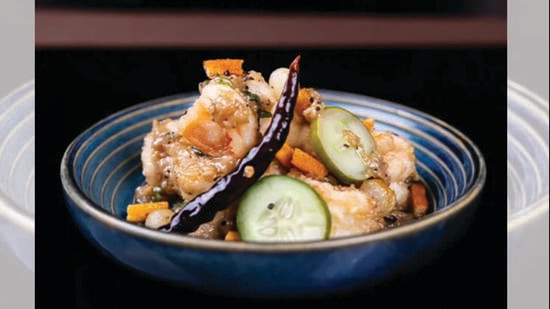
The foodies did not know what to expect and when the food came, did not recognise it. But they liked it. They took pictures and posted them on Instagram to show people back home what Indian Chinese food was like. It was, they thought, a legitimate cuisine in its own right.
All this was unthinkable 20 years ago. And even a decade ago, we had no idea this boom was coming. Given the speed at which things are changing, here’s my question: What will our food scene be like 10 years from now?
I’m not sure anyone knows the answer to that.
From HT Brunch, September 5, 2026
Follow us on www.instagram.com/htbrunch