
 E-Paper



75th Independence Day: History, evolution and significance of Indian Tricolour

 Prefer HTon Google


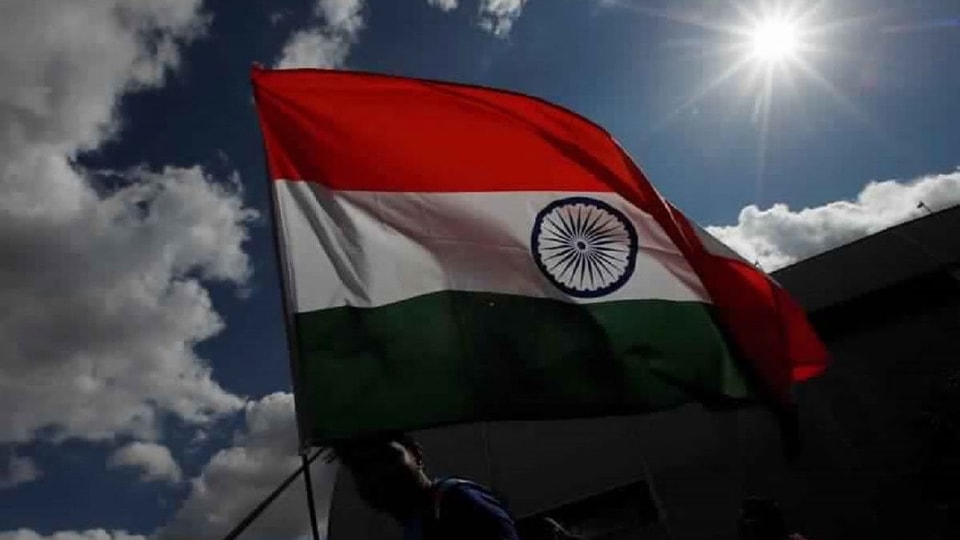
75th Independence Day 2021: Here's a look at the history, evolution and significance of the Indian Tricolour.
Independence Day 2021: India is gearing up to celebrate its 75th Independence Day on August 15, 2021. As we near the day, it only makes sense to revisit the history of the tricolour or tiranga. Did you know that the saffron, green and white colours on our flag bears no communal significance? In this article, we will delve deep to know more such facts by looking at the history of the tricolour, its evolution, and lastly, the significance of the Chakra and three colours of the flag.
History and Evolution of the Indian Tricolour
Mahatma Gandhi had once stressed why India should have its own flag and had said, "A flag is a necessity for all nations. Millions have died for it. It is no doubt a kind of idolatry which would be a sin to destroy. It will be necessary for us Indians Muslims, Christians Jews, Parsis, and all others to whom India is their home-to recognize a common flag to live and to die for."
ALSO READ: 75th Independence Day: 10 quotes by India's freedom fighters to inspire you
A nation's flag is a symbol of its freedom. The present form of the Indian National Flag was adopted a few days before the country gained its independence from British rule on August 15, 1947. The decision was made during the meeting of the Constituent Assembly held on July 22, 1947. It served as the national flag of the Dominion of India between August 15, 1947, and January 2, 1950, and that of the Republic of India thereafter.
However, the Indian National Flag went through many changes before arriving at what it is today. According to Knowindia.gov.in, the first unofficial flag of India was hoisted on August 7, 1906, in the Parsee Bagan Square (Green Park) in Calcutta, now Kolkata. It featured three horizontal stripes of red, yellow and green.
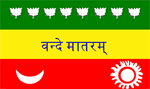
The second flag was hoisted in Paris by Madame Cama and her band of exiled revolutionaries in 1907 (according to some inl9OS). It was very similar to the first flag. However, the lotus was replaced by stars. They denoted the Saptarishi.
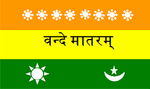
The third flag was hoisted by Dr Annie Besant and Lokmanya Tilak in 1917, during the Home rule movement. This was the time when the political struggle in India was taking a definite turn. This version of the flag was very different from the first two. It featured red and green horizontal stripes, seven stars in the saptarishi configuration, the Union Jack, and a white crescent and star.

The fourth flag was unofficially adopted in 1921. An Andhra youth prepared a flag and took it to Mahatma Gandhi during a session of the All India Congress Committee. It had two colours - red and green - to represent the Hindu and Muslim community in India. Mahatma Gandhi added the white strip to represent the remaining communities and the spinning wheel to symbolise the nation's progress.
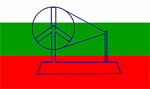
The forbear of the present flag was adopted in 1931, and it was also used as the battle ensign of the Indian National Army. It was a landmark moment as a resolution was passed to adopt a tricolour flag as our national flag. It featured saffron, white and green bands with Mahatma Gandhi's spinning wheel at the centre. At that time, it was clearly stated that it bore no communal significance and was to be interpreted consequently.

The present tricolour flag of India came after the advent of independence. The colour and significance of the previous flag remained the same, only the Dharma Charkha of Emperor Asoka was adopted in place of the spinning wheel as the emblem on the flag.
The colours of the Indian flag
The national flag of India is a horizontal tricolour of deep saffron at the top, white in the middle and dark green at the bottom. A navy blue wheel representing the chakra is present right in the middle of the white band.
The saffron colour indicates the strength and courage of the country. The white indicates peace and truth. The green band represents the fertility, growth, and auspiciousness of our land.
Dharma Chakra depicts the "wheel of the law" in the Sarnath Lion Capital made by the 3rd-century BC Mauryan Emperor Ashoka. It signified that there is life in movement and death in stagnation.


