When was the last time you got your eyes checked? For most of us, we get our eye prescriptions updated when we want to change the frames. But according to Dr Sujal Shah, director, ophthalmology, Sir HN Reliance Foundation Hospital, Mumbai, this delay may be doing more harm than good.
Your glasses sit on your face for months, but that does not automatically mean that you need a new pair. What matters most is not the age of your glasses, but whether your prescription has changed. If it has, Dr Sujal stressed that continuing to use an old prescription can make it harder to see clearly.
When should you change your glass lenses?
But how can you know that it is time to change your glass lenses? According to Dr Sujal, the first sign is usually something quite simple: “things just do not look as sharp as they used to.”
{{/usCountry}}But how can you know that it is time to change your glass lenses? According to Dr Sujal, the first sign is usually something quite simple: “things just do not look as sharp as they used to.”
{{/usCountry}}So, when you notice blurred vision while reading, working on a computer, driving or looking at objects in the distance, it is a sign to get your current eye prescriptions checked.
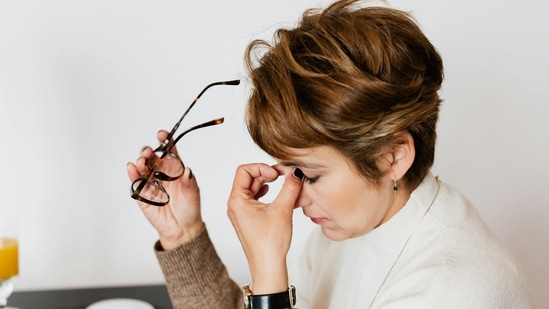
Dr Sujal stressed that for some people, the problem shows up as “eye strain, headaches, difficulty keeping things in focus or eyes that feel tired after spending a long time on visually demanding tasks”. He added that these symptoms can appear when the “refractive power of the eye changes and the existing prescription is no longer suitable for your current visual needs”.
What happens when you keep using the wrong prescription?
According to Dr Sujal, there is some reassurance here, as wearing the wrong spectacle prescription does not usually damage your eyes or cause your refractive error to keep getting worse.
However, he stressed that reduced or uncomfortable vision can make everyday activities more difficult, especially when you need to see something clearly and precisely.
For people over the age of 40, he states that changes in vision are often related to ‘presbyopia’. “Which means that as the eyes gradually lose their ability to focus on nearby objects, reading small print can become more difficult. You may also find yourself developing headaches or experiencing eye fatigue when doing close-up work,” he added.
Why is it important to keep an eye on your child's eye health?
Children need a little more attention when it comes to changes in their prescription, Dr Sujal underlined. He explained, “Poorly corrected refractive errors should not be overlooked because clear vision plays an important role in normal visual development. Parents should consider getting their child’s vision assessed regularly, particularly if the child frequently squints, sits unusually close to books or screens, complains of headaches or starts struggling at school.”
Lastly, he clarified that there is no need to replace your glasses simply because they are old. The better approach is to replace them when your prescription changes.
“Regular eye examinations can help determine whether you need an updated prescription and can also identify whether an underlying eye condition is contributing to a change in your vision,” he added.
Note to readers: This article is for informational purposes only and not a substitute for professional medical advice. Always seek the advice of your doctor with any questions about a medical condition. HT.com has not independently verified the claims and does not endorse them.
Catch your daily dose of Fashion, Taylor Swift, Health, Festivals, Travel, Relationship, Recipe and all the other Latest Lifestyle News on Hindustan Times Website and APPs.
Catch your daily dose of Fashion, Taylor Swift, Health, Festivals, Travel, Relationship, Recipe and all the other Latest Lifestyle News on Hindustan Times Website and APPs.