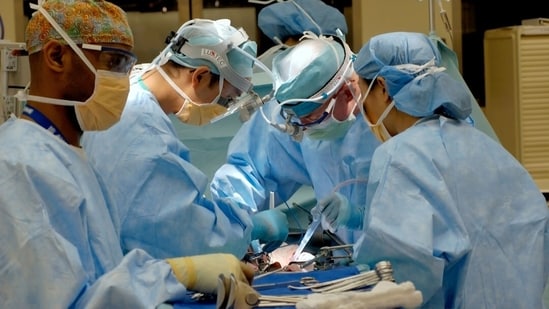
Imagine giving a part of your own body and, with that, the gift of life to a fellow human being. Indeed, organ transplantation has been one of the biggest miracles of modern medical science. The first successful kidney transplant was from a living donor to the recipient's own twin brother, a Nobel Prize-winning feat performed in 1953 in Boston. From that date till now, hundreds of thousands of living kidney transplants have taken place across the world. But is it that simple to just donate an organ? In an interview with HT Lifestyle, Dr Amol Mahaldar, lead consultant – nephrology and transplant physician, Manipal Hospital, Goa, explains how living organ donation works.
Also read | AIIMS-Delhi performs dual kidney transplant from 70-year-old brain dead donor
Requirements for organ donation
Dr Amol Mahaldar highlighted that the basic requirement when selecting a living donor is that this act should not cause any undue risk to the volunteer donor, who is undergoing a major surgery where there is no direct benefit. While they don't directly benefit medically, a successful organ transplant to a friend or family member results in tremendous emotional satisfaction and mental well-being in the living donor.
“A healthy human being can live normally with one healthy kidney, and thus has the possibility of donating the other to a person in need after having undergone a battery of tests to satisfy the above prerequisite,” added Dr Mahaldar.
Which organs can be donated while alive?
The other organ that can be donated while alive is a part of the liver. Here, the evaluation process is very stringent, and the involved doctors determine the exact size of the liver graft that can be taken from a donor with adequate benefit to the intended recipient while, at the same time, avoiding harm to the donor. Here again, along with Korea and Brazil, India is a world leader in the number of living donor liver transplant surgeries. Very rarely, a part of a lung can also be donated by a living donor, but this requires specialised centres.
{{/usCountry}}The other organ that can be donated while alive is a part of the liver. Here, the evaluation process is very stringent, and the involved doctors determine the exact size of the liver graft that can be taken from a donor with adequate benefit to the intended recipient while, at the same time, avoiding harm to the donor. Here again, along with Korea and Brazil, India is a world leader in the number of living donor liver transplant surgeries. Very rarely, a part of a lung can also be donated by a living donor, but this requires specialised centres.
{{/usCountry}}The need for ethical living donation and deceased organ donation
In India, and indeed in most of the civilised world, the legal framework prohibits the sale of organs for any monetary exchange or material benefit other than love. There is also a stringent ban on transplant tourism. However, only a fraction of eligible kidney transplant recipients have a fit and willing relative or friend who can donate a kidney. The rest have to depend on dialysis and a long wait for a deceased donor organ to become available.
Note to readers: This article is for informational purposes only and not a substitute for professional medical advice. Always seek the advice of your doctor with any questions about a medical condition.
Catch your daily dose of Fashion, Taylor Swift, Health, Festivals, Travel, Relationship, Recipe and all the other Latest Lifestyle News on Hindustan Times Website and APPs.
Catch your daily dose of Fashion, Taylor Swift, Health, Festivals, Travel, Relationship, Recipe and all the other Latest Lifestyle News on Hindustan Times Website and APPs.