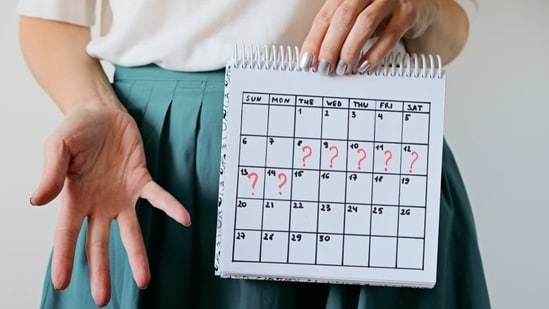
Before obvious fertility-related problems emerge, the earliest signs may show up through changes in your periods. It is important not to assume that unusual changes in your menstrual cycle will resolve on their own, especially if they persist.ALSO READ: Girls entering puberty earlier than before? Gynecologist explains why periods may begin before age 10
Dr Rashmi Patil, Obstetrics and Gynecology and Reproductive Medicine, Apollo Hospitals, Bannerghatta, Bengaluru, explained how periods are closely linked to fertility and how unresolved menstrual issues may affect the chances of pregnancy later.
How are periods linked to fertility?
The menstrual cycle can give glimpses into your hormonal balance, which is essential for conception. The expert said the menstrual cycle is essential for ovulation to occur.
She elaborated, “The menstrual cycle is one of the most obvious signs of ovulation in the body. Conception requires ovulation, and a continuing change in menstrual cycle length or bleeding pattern can be an early sign of ovulatory dysfunction or an underlying reproductive condition which can affect fertility."
She also dispelled the misconception that regular periods guarantee fertility. However, she urged those experiencing irregular periods to get them checked by a gynaecologist.
As a general parameter, the doctor noted that a normal menstrual cycle during reproductive years lasts between 21 and 35 days, with bleeding lasting up to seven days. She advised watching for cycles that are consistently shorter, longer, or more variable.
What are the period-related signs that may indicate fertility issues?
{{/usCountry}}As a general parameter, the doctor noted that a normal menstrual cycle during reproductive years lasts between 21 and 35 days, with bleeding lasting up to seven days. She advised watching for cycles that are consistently shorter, longer, or more variable.
What are the period-related signs that may indicate fertility issues?
{{/usCountry}}There are a few period-related unusual signs that signal a problem, including undetected gynecological or metabolic issues:
1. Irregular periods
- Less than 21 days, or more than 35 days apart.
- May indicate an ovulatory problem.
- Common underlying causes include PCOS, thyroid disorders, and other hormonal imbalances, all of which can disrupt ovulation and make it harder to conceive.
2. Heavy menstrual bleeding
- Lasting more than seven days, soaking through a pad or tampon every hour for several hours, or passing large clots. This is not considered normal.
- Can be associated with structural conditions such as fibroids, adenomyosis or polyps, or with ovulatory disorders.
3. Extremely painful periods that interfere with work, school, or daily activities
- Should not be dismissed as ‘normal.’
- Persistent severe menstrual pain can be a symptom of endometriosis, a condition that has been linked to infertility in some women and benefits from earlier recognition and evaluation.
4. Spotting between periods or bleeding after intercourse
- May indicate cervical abnormalities, uterine polyps, infections, or other gynaecological conditions.
- Should always be medically evaluated.
Which conditions that can affect fertility may show up through changes in your periods? The doctor said, "Conditions such as PCOS, thyroid imbalance, fibroids, and endometriosis can often be identified and managed with timely assessment. Early consultation gives women clarity, helps address underlying concerns, and supports better fertility planning.”
Red-flag symptoms that require medical evaluation
As per Dr Patil, women should consult a gynaecologist if they experience:
- Cycles consistently shorter than 21 days or longer than 35 days.
- No menstruation for 3–6 months (when not pregnant).
- Bleeding lasting more than 7 days.
- Bleeding that soaks through one pad or tampon every hour for several consecutive hours.
- Bleeding after sexual intercourse, or spotting between periods.
- Chronic pelvic pain or menstrual pain that affects your day-to-day life.
Note to readers: This article is for informational purposes only and not a substitute for professional medical advice. Always seek the advice of your doctor with any questions about a medical condition.
Catch your daily dose of Fashion, Taylor Swift, Health, Festivals, Travel, Relationship, Recipe and all the other Latest Lifestyle News on Hindustan Times Website and APPs.
Catch your daily dose of Fashion, Taylor Swift, Health, Festivals, Travel, Relationship, Recipe and all the other Latest Lifestyle News on Hindustan Times Website and APPs.