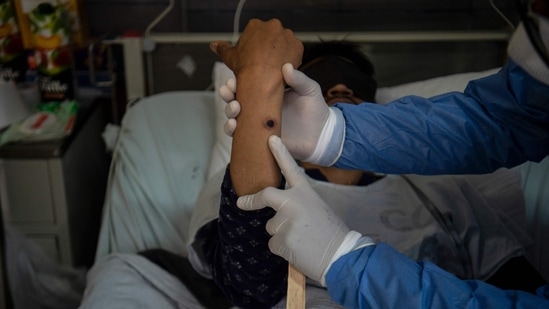
Monkeypox is a viral disease and the present outbreak has a very low fatality rate but numerous discussions about the virus have resulted in uncertainty and individuals are still unsure about how to prevent monkeypox infection and what kind of treatment to seek if they get infected. In an interview with HT Lifestyle, Dr Rohit Batra, Dermatologist at Sir Ganga Ram Hospital in New Delhi, cautioned, “Be alert and keep an eye on initial signs and symptoms of monkeypox which include fever, headaches, muscle aches, back discomfort and swollen lymph nodes. Usually, within five days, rashes and lesions commonly appear on the face, hands, feet, eyes, mouth, or genitals. The rashes develop into raised bumps, blisters, and finally sores that may fill with white fluid”.
According to Dr Sanjeev Gupta, Professor and Head at Deptt of Dermatology, MM Institute of Medical Sciences and Research Mullana in Ambala India, highlighted, “Monkeypox can spread by touching objects that have been contaminated by the disease's fluids or lesions as well as direct physical contact with the lesions and the "respiratory secretions" shared during face-to-face contact. The placenta is another route via which the virus might infect a foetus”.
Dr Rohit Batra suggested, “If monkeypox is confirmed, isolation is required until the virus has subsided. In most cases, the disease is mild and recovery takes two to four weeks for most people. Wearing a mask and avoiding direct contact with others are advised until the skin lesions are fully recovered.”
He listed the following points to keep in mind as they may help prevent the spread of monkeypox:
{{/usCountry}}He listed the following points to keep in mind as they may help prevent the spread of monkeypox:
{{/usCountry}}1. Keep distance from people who have recently been diagnosed with the virus or who might be affected.
2. If you are in close proximity to someone who is experiencing symptoms, put on a face mask and maintain distance.
3. Maintain adequate hand hygiene, particularly after interacting with infected or possibly contaminated persons. Wear PPE kit when caring for infected individuals. Use an alcohol-based hand sanitizer, or wash your hands with soap and water.
4. Avoid contact with people who have recently visited the outbreak regions.
5. It is advisable to refrain from touching objects that have come into contact with an infected person (like bedding, towels and personal clothing) since monkeypox virus can also transfer through surfaces and materials.
6. Avoid sharing cups or eating utensils with someone who has monkeypox. If using disposable plates and cups, maintain correct containment and disposal of contaminated waste.
7. All foods that contain animal meat or parts must be properly cooked.
8. It is required to clean and disinfect touched surfaces.
Dr Sanjeev Gupta advised, “In case you are diagnosed with monkeypox, don’t panic, contact your doctor. The illness is self-limiting and its course could last up to 4 weeks. During this time, symptoms must be effectively handled. In most cases, the patient will get better on their own without treatment. To prevent the spread of the virus, isolate yourself till all the lesions scab go away. Keep the skin lesions covered with clothes, gloves or bandages and try not to touch the sores/rashes. Keep in touch with your doctor who can assist you in overcoming this infection.”
Catch your daily dose of Fashion, Taylor Swift, Health, Festivals, Travel, Relationship, Recipe and all the other Latest Lifestyle News on Hindustan Times Website and APPs.
Catch your daily dose of Fashion, Taylor Swift, Health, Festivals, Travel, Relationship, Recipe and all the other Latest Lifestyle News on Hindustan Times Website and APPs.