
 E-Paper



Neuroscientist shares 3 things to do while brushing to reduce dementia risk: ‘Use non-dominant hand…’

 Prefer HTon Google


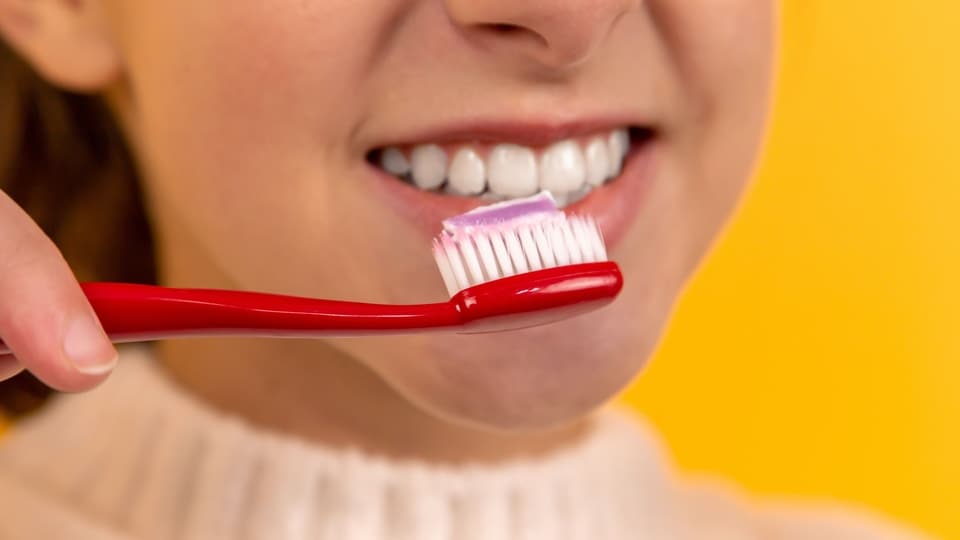
You can reduce the risk of dementia with the help of simple, daily habits that keep your brain challenged and engaged.
Dementia is a group of neurodegenerative conditions that affect essential cognitive skills and the ability to perform everyday activities. It is conventionally believed to appear old, typically after the age of 60, but early onset can begin as early as middle age, or even before. A study published in Translational Psychiatry on February 17, 2025, revealed that the prevalence of dementia among people aged 40 to 64 alarmingly doubled globally over the past three decades. This is alarming as it shows that even those who are in their 40s and 50s are not free from the risk.
This growing trend highlights the need to embrace habits that help reduce dementia risk early on. But you don't need major lifestyle overhauls. You can also start with small habits that you can add to your everyday routines. They can be as basic as when you are brushing.
Jules, a neuroscientist, took to Instagram on December 24 to highlight how a routine as basic as brushing teeth can turn into something powerful and productive.
Here are the three things you can do:
1. Use the non-dominant hand
Brushing with your dominant hand is almost instinctive and greatly involuntary in nature as well. For left-handed people, it is the left hand, and so on. However, this is exactly what the neuroscientist suggested modifying. Jules recommended switching to your non-dominant hand. In other words, if your dominant hand is right, brush with your left hand, and vice versa.
What is the benefit? She said, “This helps to break us out of autopilot, helps us to form new neural connections, triggering neural plasticity and supporting cognitive reserve, which is like our brain's ability to be resilient as we age.”
Your brain gets used to doing things with your dominant hand, requiring very little conscious effort. Since reducing dementia risks is all about challenging the brain, you need to engage your brain in unfamiliar tasks. The entire point is the discomfort you may feel, which means your brain is working.
2. Stand on one leg
Taking it up a notch, Jules suggested standing on one leg while you brush. She reasoned, “This challenges our vestibular and proprioceptive systems, which are our brain's awareness of movement, orientation and body position. It also helps to strengthen coordination, and research shows that individuals with better balance have better overall health outcomes.”
She also cited a study published in March 2021, which found that poor balance is associated with a higher risk of cognitive decline, and in turn, cognitive decline is closely linked to the development of dementia.
3. Reverse letter number sequence
The last exercise is the most challenging, and it is a type of brain game that demands a lot of focus and sustained attention. So what exactly is this reverse letter number sequence then?
It is simple, at least in concept. In practice, it may be a bit tricky, but that's the entire point: to make your brain work harder.
Jules asked to recite the alphabet in reverse order, from Z to A, while simultaneously pairing each letter with its corresponding number, also in reverse.
Jules shared examples of how the countdown is supposed to look: Z26, Y25, X24, W23 and so on.
This brain game ensures your brain is working harder as it coordinates two sequences in reverse at the same time.
The neuroscientist recommended doing this brain activity while standing on one leg, “Challenging our attention, challenging our working memory, and overall executive function, and if you do it while balancing on one leg, which I recommend you try, you are making it a dual task, which is great for helping our brain stay sharp as we age.”
Note to readers: This article is for informational purposes only and not a substitute for professional medical advice. Always seek the advice of your doctor with any questions about a medical condition.


Catch your daily dose of Fashion, Taylor Swift, Health, Festivals, Travel, Relationship, Recipe and all the other Latest Lifestyle News on Hindustan Times Website and APPs.


