There was a time when choosing a supplement was refreshingly simple. You reached for vitamin C when the seasons changed, fish oil if your doctor recommended it, perhaps calcium as the years went by. The decision began and ended with the nutrient itself. Today, that decision starts somewhere entirely different. Walk into any pharmacy or wellness store, and you'll find yourself standing before an entirely new language of nutrition. Capsules sit beside oral thin strips. Powders promise performance. Liquid concentrates celebrate whole food nutrition.
“Labels speak of liposomal delivery, chelated minerals, and sustained-release technologies, transforming what was once a straightforward purchase into something far more nuanced,” Nutritionist Shradha Khanna, VP, Nutrition & Research, Wellbeing Nutrition tells Health Shots.
It's a reflection of just how dramatically nutritional science has evolved. And yet, for all the innovation, one question remains surprisingly simple: which format is actually right for you? The answer isn't the newest technology or the most eye-catching packaging. It's important to understand that each format was designed with a different purpose in mind. Some are better suited to larger doses, others prioritize convenience, while certain nutrients perform better in one format than another.
Here's what each one does best:
Capsules and tablets: The original format, reimagined by science
For all the excitement surrounding newer delivery systems, the capsule remains the quiet cornerstone of modern supplementation. Not because it's old, but because it continues to solve some of nutrition's most fundamental challenges remarkably well. “Capsules offer precision. They deliver consistent doses, protect ingredients from light and moisture, and enable combining multiple vitamins, minerals, and botanicals into a single formulation,” says the expert. Nutrients designed to support long-term health are often the most practical choice. But today's capsules are far more sophisticated than they appear.
What supplements are scientifically proven to be effective?
Advances in formulation science have transformed what goes inside them. “Depending on the ingredient, scientists may use liposomal delivery to help protect delicate nutrients during digestion, chelated forms to improve tolerance and utilization of certain minerals, or sustained-release technologies that allow nutrients to be released gradually rather than all at once,” explains the expert. The goal isn't to make supplements sound more advanced. It's to help them work more effectively where the science supports it.
What is the most researched supplement?
Of course, even the best formulation depends on one very human factor: consistency. “Research suggests that many people struggle to swallow tablets or capsules, which can lead them to skip doses or abandon a routine altogether,” says the nutritionist. Because ultimately, the smartest supplement isn't simply the one with the most sophisticated technology. It's the one you'll actually take, day after day.
Powders: When biology demands bigger doses
Which nutrient is needed in very small amounts?
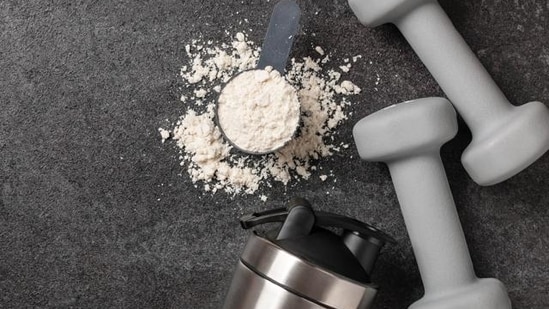
Not every nutrient fits inside a capsule. Some need more room. Protein, collagen, creatine,fiber, and electrolytes are effective at gram-level doses, not milligram levels. “Delivering meaningful amounts of these nutrients in a capsule would often require swallowing several pills at once, making powders the most practical and biologically sensible choice,” says the nutritionist. Their greatest strength isn't convenience. It's capacity.
What two supplements should you never take together?
Powders make it possible to deliver clinically meaningful doses while pairing ingredients that naturally work together, whether that's protein with digestive enzymes, collagen with vitamin C, or electrolytes with essential minerals. Instead of taking multiple products throughout the day, they bring complementary nutrition into a single serving.
They're also among the most adaptable formats available. Stir them into your morning smoothie, mix them into yogurt,t or shake them with water. “Rather than asking you to change your routine, powders often become part of the one you already have. Their only drawback is that they ask for a little more effort,” says the nutritionist. A scoop to measure, a bottle to shake, a moment to prepare. On busy mornings, even that small pause can become enough to interrupt consistency.
How do modern lifestyles and food habits affect us?
It's one reason ready-to-drink nutrition has gained such momentum in recent years. It combines the meaningful doses that powders make possible with the convenience modern lifestyles increasingly demand. “Ultimately, the choice isn't between powders and capsules,” says the nutritionist. It's about choosing the format that delivers the right nutrient in the right amount, in a way you'll realistically use every day.
Oral thin strips: Where delivery meets precision
Perhaps no innovation captures the evolution of delivery science quite like the oral thin strip. “Instead of taking the long route through the digestive system, where nutrients encounter stomach acid and liver metabolism before they can be utilized, thin oral strips dissolve on the tongue and deliver selected nutrients directly through the tissues of the mouth,” shares the expert. For ingredients such as vitamin B12, melatonin, and certain botanical actives, this can offer a more efficient delivery route.
But perhaps their greatest advantage isn't just how they're delivered. It's how effortlessly they fit into everyday life. No water. No swallowing. No measuring. “Individually packed and travel-friendly, oral thin strips remove many of the small inconveniences that often get in the way of consistency,” explains the expert. And because the easiest routine is often the one we stick to, they transform supplementation from something you have to remember into something easy to make a habit of.
Liquid nutrition: When nature already designed the perfect format
What nutrients are found in sea buckthorn berries?
Not every nutrient needs to be engineered into a capsule or dissolved into a strip. Some arrive with a delivery system that nature perfected long before science began refining it. Sea buckthorn is one such example. Often described as one of the world's most nutrient-dense berries, it naturally brings together vitamin C, carotenoids, flavonoids, polyphenols, and a complete spectrum of omega fatty acids, including the rare plant source of omega-7.
Are cold-pressed juices good for you?
Rather than isolating a single compound, cold pressing helps preserve this remarkable nutritional complexity in a form that's strikingly close to how the berry exists in nature. That's what makes liquid nutrition unique. For ingredients that naturally contain a rich spectrum of vitamins, healthy fats, and plant compounds, the goal isn't always to extract, concentrate, or reinvent them.
What does minimally processed mean in food?
Sometimes, it's simply to preserve as much of that natural integrity as possible. Minimal processing allows these ingredients to retain the diversity that makes them valuable in the first place. Of course, not every liquid supplement is created equal. How an ingredient is sourced, processed, and preserved plays just as important a role as the ingredient itself.
What do cold-pressed juices do?
Cold-pressed juices, for instance, are designed to retain more of the naturally occurring compounds that contribute to a food's nutritional profile. With so many delivery systems now available, it's tempting to look for a winner. But nutrition rarely works in absolutes. No format is inherently better than another. The right choice depends on the nutrient, the dose it requires, and how it best fits into your daily life.
(Disclaimer: At Hindustan Times, we help you stay up to date with the latest trends and products. Hindustan Times has an affiliate partnership, so we may get a part of the revenue when you make a purchase. We shall not be liable for any claim under applicable laws, including, but not limited to, the Consumer Protection Act, 2019, arising from the products. The products listed in this article are in no particular order of priority, and the expert mentioned has not directly suggested any brands.
This article is for informational purposes only and is not a substitute for professional medical advice. Always seek the advice of your doctor with any questions about a medical condition.)
Catch your daily dose of Fashion, Taylor Swift, Health, Festivals, Travel, Relationship, Recipe and all the other Latest Lifestyle News on Hindustan Times Website and APPs.
Catch your daily dose of Fashion, Taylor Swift, Health, Festivals, Travel, Relationship, Recipe and all the other Latest Lifestyle News on Hindustan Times Website and APPs.