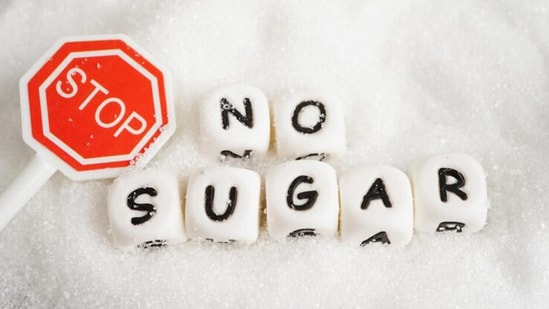
Scrolling through social media, it is almost impossible to escape the allure of the ‘zero-sugar’ or ‘no-sugar’ challenge. Content creators regularly showcase dramatic transformations in trending videos. They attribute chiselled cheekbones, a snatched jawline, and the sudden disappearance of facial fat entirely to cutting sugar out of their diets. Also read | Orry reveals he lost 23 kg with his 'zero sugar' diet: 'I don't eat...'
But behind the sleek before-and-after photos and videos, what actually happens to your body and face when you drop the sweet stuff? Can ditching dessert truly melt away a double chin, or are we confusing physiological water weight shifts with real fat loss?
To separate wellness myth from medical reality, we spoke with Dr Shehla Shaikh, consultant endocrinologist at Saifee Hospital in Mumbai. In the interview with HT Lifestyle, she broke down what cutting sugar can — and cannot — do for your facial structure, skin, and overall health.
According to a 2019 study by National Library of Medicine, excessive sugar consumption is linked to an increased risk of certain health conditions, including type 2 diabetes and heart disease. Reducing your intake of added sugar over time can benefit your overall health.
Added sugar vs natural sugar: know the difference
Before clearing out your pantry, it is essential to understand that not all sweetness is created equal. The social media narratives around 'zero-sugar' diets often mistake wholesome, nutrient-rich foods for processed treats.
{{/usCountry}}Before clearing out your pantry, it is essential to understand that not all sweetness is created equal. The social media narratives around 'zero-sugar' diets often mistake wholesome, nutrient-rich foods for processed treats.
{{/usCountry}}Dr Shehla Shaikh explained, "When you see all these videos showing changes in people’s faces, weight and energy after they stop eating sugar, you have to wonder what really happens when you eat less sugar. Do you really have to stop eating sugar? First, you need to know the difference between sugar that's naturally in foods and sugar that is added to foods. The sugar in fruits, for example, comes with vitamins and minerals that are good for you. Added sugar, on the other hand, is just a lot of empty calories that do not do much for your body."
Crucially, added sugar often hides in plain sight, making complete elimination tricky — and unnecessary — if you pay attention to food labels. "Added sugar can be in foods that you do not think are sweet, like ketchup and salad dressing. It can also be in breakfast cereals and flavoured yoghurts," noted Dr Shaikh. "So, instead of just stopping yourself from eating desserts, you should check the labels on the food you buy and see where all the extra sugar is coming from," she added. Also read | What happens when you stop eating sugar for 14 days? From improved digestion to better sleep, check out amazing benefits
The cold-turkey trap
Going entirely cold-turkey on sugar might sound empowering, but the endocrinologist warned against extreme restrictions that lead to burnout and intense cravings: "You do not have to stop eating sugar at once." Dr Shaikh added. "If you eat a lot of sugar and then stop, you might really crave sweets. Feel sick for a little while. It is better to cut back on sugar a little at a time."
According to her, instead of banning sweets altogether, incorporating sensible swaps creates a dietary routine you can actually stick to long-term:
⦿ Swap sugary carbonated drinks for water infused with lemon or fresh ginger.
⦿ Trade processed sugary cereals for hearty oatmeal topped with fresh berries.
⦿ Reach for a whole fruit or a couple of dates when your sweet tooth kicks in.
⦿ A small portion of dark chocolate is a sensible choice over rigid bans that inevitably end in bingeing.
Facial fat and double chins: what science says
Now for the million-dollar question: will quitting sugar sculpt your face? According to Dr Shaikh, the answer requires a reality check on spot-reduction myths. "When it comes to changes in your face, however, it is important to understand what is actually happening," she clarified. Also read | Woman dramatically reduces face fat with this simple diet and exercise routine: ‘Cut out dairy completely’
"Cutting back on added sugar may reduce calorie intake and, over time, contribute to weight loss. This can make the face appear slimmer. There is no evidence that cutting sugar specifically targets facial fat. Any early reduction in puffiness may also be related to changes in fluid balance rather than a sudden loss of facial fat," she explained.
Dr Shaikh highlighted that when it comes to expected timelines and target areas like a double chin, patience and holistic habits are key:
⦿ Noticeable de-puffing occurs within days to a couple of weeks, primarily driven by reduced fluid retention.
⦿ Facial fat reduction takes much longer and relies on overall body-weight loss, not sugar elimination alone.
⦿ Double chin removal 'cannot be guaranteed' by cutting sugar alone, and is influenced by genetics, ageing, and skin elasticity.
Dr Shaikh added, “Sugar-related bloating and salt-related bloating are also not exactly the same. High-sugar foods can contribute to water retention and bloating, particularly when they are part of a highly processed diet. Salt, meanwhile, has a direct effect on fluid retention because sodium influences how the body holds onto water. Both can make you feel or look puffier. The mechanisms are different.”
Collagen, glycation and skin health
Beyond volume and puffiness, social media claims often tout sugar bans as an immediate skin-brightening cure. Dr Shaikh highlighted that while a high-sugar diet can indeed damage skin integrity through a mechanism called 'glycation' —where sugar molecules attach to proteins like collagen, causing them to become stiff and brittle — cutting sugar is not a miracle face cream.
"A diet high in added sugar may indirectly contribute to poorer skin health, particularly when it replaces more nutrient-dense foods. High sugar intake can also contribute to processes such as glycation, which may affect collagen and skin structure over time. However, cutting sugar is not a skin-brightening treatment," Dr Shaikh explained.
Reducing added sugar undeniably yields incredible long-term rewards: improved energy levels, balanced cholesterol, reduced risk of type 2 diabetes, and better dental health. However, treating it as an overnight facial contouring routine sets unrealistic expectations. As Dr Shaikh concluded, "The bigger picture is that reducing added sugar is a healthy habit, not a quick facial transformation. The goal is to make choices consistently rather than expecting dramatic changes overnight."
Note to readers: This article is for informational purposes only and not a substitute for professional medical advice. Always seek the advice of your doctor with any questions about a medical condition.
Catch your daily dose of Fashion, Taylor Swift, Health, Festivals, Travel, Relationship, Recipe and all the other Latest Lifestyle News on Hindustan Times Website and APPs.
Catch your daily dose of Fashion, Taylor Swift, Health, Festivals, Travel, Relationship, Recipe and all the other Latest Lifestyle News on Hindustan Times Website and APPs.