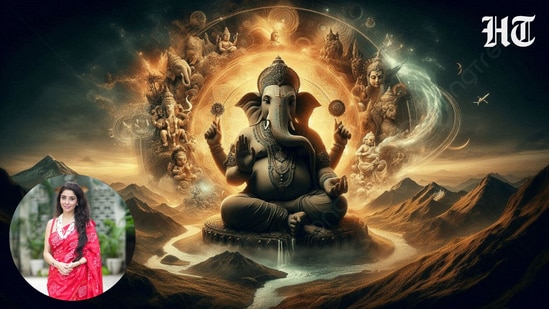
For many people, Ganesh Chaturthi is a time when everyday life takes on a different rhythm. Homes are cleaned and decorated, families come together, modaks are prepared, and prayers become part of the day. Beyond the celebrations, the festival can also give you a chance to pause, reflect, and consider what you want to bring more of into your life, whether that is peace, clarity, confidence, or simply a fresh start.
That personal side of the festival was at the heart of Dr Jai Madaan’s first Ganesh Chaturthi celebration in Mumbai this year. Her Navgraha-themed celebration brought together the traditional symbolism of the nine planetary energies with the blessings of Lord Ganesha, offering a different way to look at the festival. Instead of thinking of planets only in terms of whether they can bring good or difficult phases, the idea encourages you to reflect on the qualities and experiences they have traditionally been associated with.
ALSO READ: 5 spiritual leaders who studied science and engineering before finding their calling in spirituality
In Vedic astrology and Hindu spiritual traditions, the Navgrahas are traditionally understood to be the Sun, Moon, Mars, Mercury, Jupiter, Venus, Saturn, Rahu, and Ketu. Each is associated with particular qualities and areas of human experience.
What are the Navgrahas?
{{/usCountry}}In Vedic astrology and Hindu spiritual traditions, the Navgrahas are traditionally understood to be the Sun, Moon, Mars, Mercury, Jupiter, Venus, Saturn, Rahu, and Ketu. Each is associated with particular qualities and areas of human experience.
What are the Navgrahas?
{{/usCountry}}Sun: Associated with vitality, confidence and identity
Moon: Linked with the mind and emotions
Mars: Traditionally connected with courage, action and energy
Mercury: Associated with communication, learning and intellect
Jupiter: Linked with wisdom, growth and knowledge
Venus: Traditionally associated with relationships, beauty and comforts
Saturn: Connected with discipline, responsibility and patience
Rahu: Often associated with ambition, desire and worldly pursuits
Ketu: Traditionally linked with detachment, introspection and spirituality
Seen this way, the Navgraha concept can become less about fear and more about self-reflection. Instead of asking whether a particular planetary influence will bring you luck, you can think about what qualities you may need to develop when facing a particular situation.
How does Ganesha connect with the idea of balance?
This is where the symbolism of Ganesha can add another layer to the festival. Lord Ganesha is traditionally revered as Vighnaharta, the remover of obstacles, and is also associated with wisdom and discernment.
ALSO READ: Pitru Paksha 2026: Tarpan rituals, dates, timings and how to offer water to your ancestors
Bringing these ideas together can serve as a reminder that finding balance is not necessarily about making every part of life perfect. It can also mean developing the awareness and inner strength to respond to different situations.
“Balance implies that all things are not perfect in life,” Madaan explains. “It’s about learning to react to different scenarios with an increased sense of awareness: sometimes we need courage, sometimes patience, sometimes wisdom and sometimes confidence.”
Her explanation also offers a simple way to look at the traditional planetary associations. Depending on what you are navigating in life, you may find yourself reflecting on qualities such as:
Courage: When you need to take action
Patience: When things do not move according to your plans
Wisdom: When you have to make an important choice
Confidence: When you are questioning yourself
Clarity: When your thoughts or emotions feel unsettled
Discipline: When you need to stay committed to a goal
The idea can also make the festival feel deeply personal. An entire family may share a ritual, but its meaning can be different for each person. One person may pray for greater clarity, another for peace at home, someone else may hope for progress in their career, while another may see the festival as an opportunity for a fresh start.
From this perspective, the Navgrahas need not be approached only through fear or the idea that planetary forces control every aspect of life. Within the traditional belief system, they can also provide a framework for reflecting on qualities such as:
- Patience and responsibility
- Confidence and personal identity
- Relationships and emotional well-being
- Communication and learning
- Wisdom and personal growth
- Detachment and inner reflection
Ganesh Chaturthi, then, can become more than a celebration of Bappa’s arrival. It can also offer a moment to pause amid the festivities and consider where you may need more balance in your own life.
Perhaps that is one way to understand the Navgraha concept: not as a means of controlling planetary energies, but as an invitation to become more aware of yourself, your choices and the way you respond to life’s changing circumstances.
Disclaimer: The Navgraha associations and spiritual interpretations discussed here are part of traditional Hindu and Vedic belief systems and are not scientifically established facts. This article is for cultural and informational purposes only and should not be used as a substitute for professional advice or as the sole basis for important decisions.