You may often know yoga through familiar poses such as downward dog, warrior or child’s pose. But the practice has a much wider history than the movements you see in a modern class.
A recent article in The Atlantic looks at how yoga has changed in the US, from a practice linked with spirituality to a familiar part of the fitness and wellness world. The story also revisits an older question: what happens to the quieter side of yoga when the physical practice becomes its most visible part?
What are the spiritual roots of yoga?
Yoga developed in ancient India and has connections with several Indian religious and philosophical traditions. Its history cannot be reduced to a modern fitness routine.
The article quotes religious-studies professor Andrea R. Jain, who said some Americans who became interested in yoga during the late 1960s were “looking for something radically ‘other’” than the traditions they had grown up with. At the time, yoga could represent an alternative way of exploring spirituality and ideas about the self.
As yoga became more mainstream in the following decades, its physical side became increasingly prominent. The practice entered gyms, studios and eventually social media, where poses and physical results often became easier to showcase than ideas such as reflection and awareness.
{{/usCountry}}As yoga became more mainstream in the following decades, its physical side became increasingly prominent. The practice entered gyms, studios and eventually social media, where poses and physical results often became easier to showcase than ideas such as reflection and awareness.
{{/usCountry}}What does yoga mean beyond the poses?
There is no single way to understand yoga. For some practitioners, it remains closely connected to spiritual traditions. For others, it may simply be a way to move, breathe and create a few quiet moments in a busy day.
The distinction matters because you do not have to treat yoga as a performance.
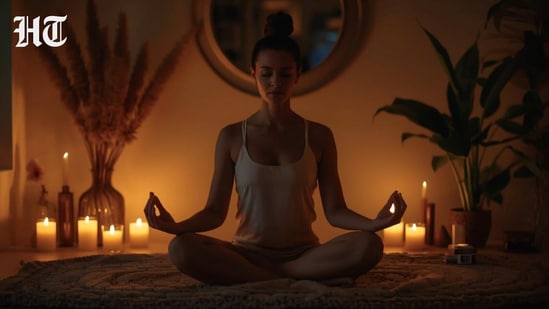
You can pay attention to your breathing while you move. You can notice how your body responds to a difficult position without judging yourself. You can also spend a few moments sitting quietly after practice.
These choices do not turn a workout into a spiritual practice automatically. Instead, they can give you a chance to explore what yoga means to you.
Can you approach yoga differently?
The recent discussion around yoga also comes at a time when wellness culture often encourages constant improvement. The article describes yoga as a practice that can involve “letting go of ego and striving” and surrender, ideas that sit differently from the pressure to keep optimizing yourself.
So the next time you step onto a mat, you could try taking the focus away from how the pose looks.
Notice your breath. Move at a pace that feels natural. Give yourself a moment of stillness before returning to the rest of your day.
Also Read 54321 grounding technique: How to use this mindfulness method to cope with anxiety
Yoga does not have to mean the same thing to everyone. But looking beyond the poses can help you understand why the practice has carried spiritual meaning for many people, long before it became a familiar part of American fitness culture.