
 E-Paper



In Nepal, Buddha's birthplace Lumbini throngs with tourists again after Covid pandemic hiatus

 Prefer HTon Google


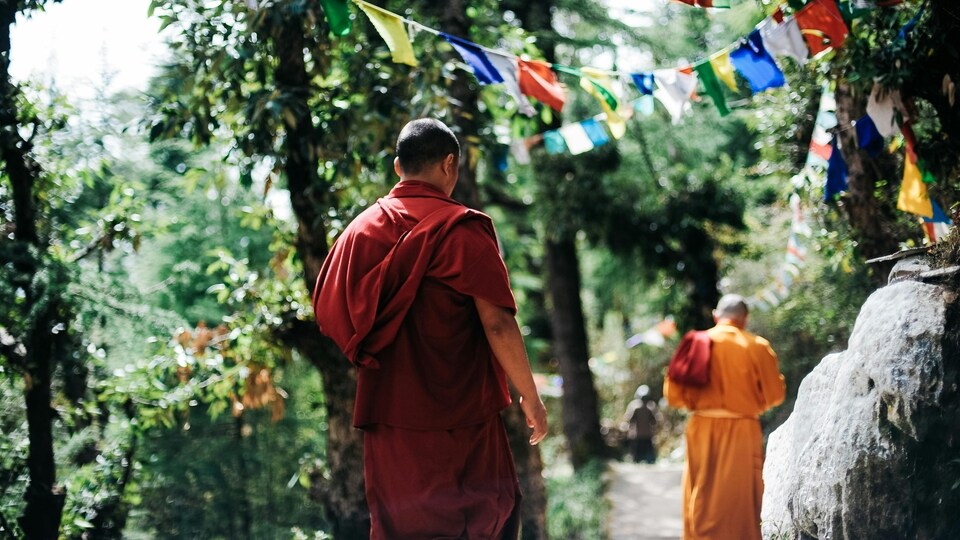
The UNESCO World Heritage Site, nestled in the Southern Plains of Nepal, is gradually regaining its allure as religious tourism returns.
Tourists have once again started to throng the Maya Devi Temple in Lumbini considered the birthplace of Gautam Buddha, after two silent years prompted by the Covid pandemic. The UNESCO World Heritage Site, nestled in the Southern Plains of Nepal, is gradually regaining its allure as religious tourism seems to have gained traction again has returned. (Also Read | Recreate The Holiday when you travel: How home swapping became the trendy alternative to Airbnb)
"It was going great until 2019 when the COVID-19 pandemic struck. There were about 1.6 million visitors annually, with a strong presence of domestic visitors followed by Indians and visitors from many Buddhist countries - Thailand, Sri Lanka, Myanmar, and China. During the COVID-19 pandemic, there were few visitors; sometimes it was countable," Gyanin Rai, Senior Director-Administration at the Lumbini Development Trust (LDT) to ANI.
"Currently, we have a rapidly increasing number of visitors. In 2023, we had about 1.2 million visitors. Especially from India, we have exceptional guests these days," he added.
Lumbini welcomed approximately 70,000 Indian tourists in the first quarter of this year.
As per LDT records, 19,360 Indian tourists visited the UNESCO-listed World Heritage Site in January 2024, followed by 20,489 in February and 30,670 in March. These figures show an increase compared to 2023 when Indian tourist numbers stood at 61,122.
"The birthplace of Gautam Buddha, Lumbini, is renowned worldwide. Nepal hosts and preserves this Buddhist heritage, which is famous globally. Knowing that Gautam Buddha was born here, all relics related to him are preserved here. Other countries have also joined hands for the development of this place. Hearing all these things, I had the desire to visit this place, and here I am," said Ashiq Jadav, an Indian tourist, to ANI.
The number of tourists from other parts of the world has also significantly increased at the birthplace of Gautam Buddha, known as the Light of Asia. According to LDT records, during the first quarter of 2024, 11,668 tourists arrived from Thailand, 8,986 from Sri Lanka, 6,915 from Myanmar, 2,155 from South Korea, and 2,419 from Vietnam, most of them crossing via border checkpoints from India.
In comparison, the numbers in the first quarter of 2023 stood at 7,760 from Thailand, 5,158 from Sri Lanka, 4,342 from Myanmar, 2,911 from Vietnam, 2,885 from South Korea, and 369 from China.
"Lumbini, the birthplace of Gautam Buddha, the founder of Buddhist teachings, is a very serene and peaceful place where one can find inner peace, contemplate the beauty of the earth, and focus on the teachings of Buddhism," said Anisa K Mbega, Tanzania's High Commissioner to India told ANI earlier, during her visit.
Lumbini hosts numerous stupas that represent various nations, making it a hub of Buddhist studies. The Maya Devi Temple, the heart of Lumbini, is a major attraction for tourists. It houses the Marker Stone, the Nativity Sculpture, and the structural ruins associated with the birth of Lord Sakyamuni Buddha. The Marker Stone identifies the exact birthplace, while the Nativity Sculpture depicts the birth scene of Prince Siddhartha.
Archaeological excavations have revealed that the structural ruins belong to different phases of the construction and restoration of the Maya Devi Temple over centuries. Emperor Ashoka, during his visit in the 3rd century BC, built a platform using burnt bricks to protect the Marker Stone and the Nativity Tree under which Mayadevi gave birth to Prince Siddhartha.
The temple, painted entirely in white, was rediscovered in 1896 by General Khadga Shamsher and Dr Anton Fuhrer, who identified Lumbini as the birthplace of Lord Sakyamuni Buddha with reference to the Ashoka Pillar. Later, Keshar Shumsher excavated the early Maya Devi Temple mound and reconstructed it in 1939. The present-day Maya Devi Temple was rebuilt in 2003 by the Lumbini Development Trust.
Buddha, born in the royal family of King Suddhodhan and Queen Mayadevi, renounced his palace at the age of 29 for asceticism. He is also revered as the 'Light of Asia'.
Buddhist philosophy is taught at internationally acclaimed universities such as Oxford, Cambridge, and Harvard. Additionally, master's level programs on Buddhist philosophy are offered at Tribhuvan University, Nepal Sanskrit University, and Lumbini Bauddha University in Nepal.
"We appreciate the surroundings and the environment of Lumbini. Lord Buddha was born here, and we come here to pay homage and bow at the place where Siddhartha (Gautam Buddha) was born. We are always excited to visit this place. It's not just me; people from Maharashtra also aspire to come here," Indian tourist Hansraj, who is part of a visiting group told ANI while standing in front of the Maya Devi Temple.


