
 E-Paper



Lock-down impact: Zoo carnivores forced to eat frozen meat
The carnivorous inmates of the Nawab Wajid Ali Shah Zoological Garden in Lucknow are forced to feed on frozen meat.


The pan-India lock-down to contain spread of Sars-Cov-2 has not only brought human life to grinding halt but also adversely affected animals, both strays and caged.
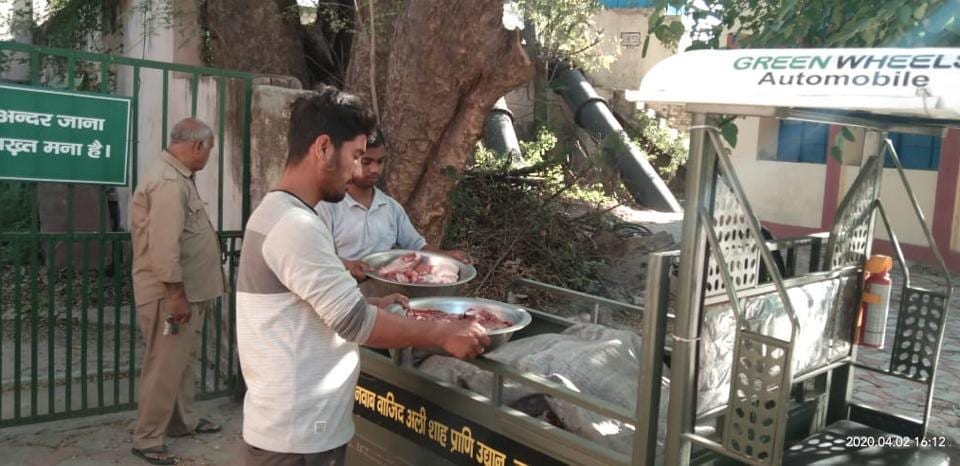
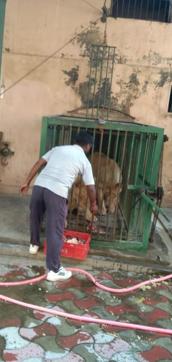
The carnivorous inmates of the Nawab Wajid Ali Shah Zoological Garden in Lucknow are forced to feed on frozen meat instead of fresh, which they got earlier.
Zoo officials said the lockdown had badly affected the supplies of fruits, veggies, fodder and meat to the zoo that houses 1,000 animals, including birds and reptiles. The zoo authorities managed to restore the supplies of fodder, vegetables and fruits since the local markets are allowed to operate during lockdown. But the supply of meat is yet to be restored to normal.
Of the total animals lodged in the zoo, around 45 are carnivorous. Zoo officials said around 200 kg meat per day was needed to feed the animals once. But the supply first got disrupted on March 22, when Prime Minister Narendra Modi gave the ‘Janata Curfew’ call to laud the efforts of medics. “On that day, we somehow managed. But a day after (on March 23) the UP government announced three-day-lockdown (till March 25) in around 16 districts of Uttar Pradesh to contain the virus outbreak and a day later the PM announced the national lock-down. Hence all the local meat suppliers refused to meet the whopping demand of 200kg meat a day.
“It was a panic situation for us. We tried contacting a few slaughterhouses in neighbouring districts. In Unnao we finally found a slaughterhouse which agreed to supply us frozen meat. It indeed turned out to be a saviour,” said RK Singh, zoo director.
Some officials said the effect of feeding on frozen meat was quite visible on the animals also . Mubarak Ali, one of the oldest zoo staffers who has been feeding carnivores for almost 30 years now, too believes the same. Some officials said, “Unlike previous days when the fresh meat used to be served, the animals, eating frozen meat, no more greet the feeders with excitement.”
Apart from the ‘meat crisis’, financial issues are an added problem.
“Ours is not a state government zoo. It’s managed by the Prince of Wales Zoological Garden Trust and we solely depend upon the ticket income. But following the lock-down, our income came to a standstill. The director said following the closure of the zoo it had become difficult to pay the salaries of the staff. “We pay around Rs 55 lakh as salary and spend Rs 35 lakh on food and repairs every month. Hence it would be tough for us to survive if the condition persists,” he added.
As per historians, Nawab Wajid Ali Shah Zoological Garden was initially a zoological park and was established on November 29, 1921 in order to commemorate the arrival of the Prince of Wales to Lucknow.
“The park was conceived by the then Governor Sir Harcourt Butler and the complex was established in the 18th century by Nawab Nasiruddin Haider, the then nawab of Oudh. Initially, it was known as Banarasi Bagh and the Nawabs of spent their leisure time amid lush greenery,” said Padmashree Yogesh Praveen, a noted historian.
During the British rule, the nobility spent their evenings here, added Praveen. The zoo records suggest that the park was established between 1921 to 1926, comprising 26 buildings, at the total cost of Rs 2,08,800. In 1966, its administrative control was given to the forest department and the advisory was reorganized and the principal secretary, forest and chief wildlife guardian was made the administrator of this advisory. In 2001, the zoological park was changed from ‘Prince of Wales Zoological Gardens Trust’ to Lucknow Zoological Garden.
The zoo management said it would approach the chief minister, demanding adequate meat supply to feed the animals. “This is the only option left with us to save our zoo,” officials added.


