Uttar Pradesh’s cities continued to be plagued by polluted air on Sunday, too, with some of them recording the worst air quality in the country, the Central Pollution Control Board (CPCB) data revealed.
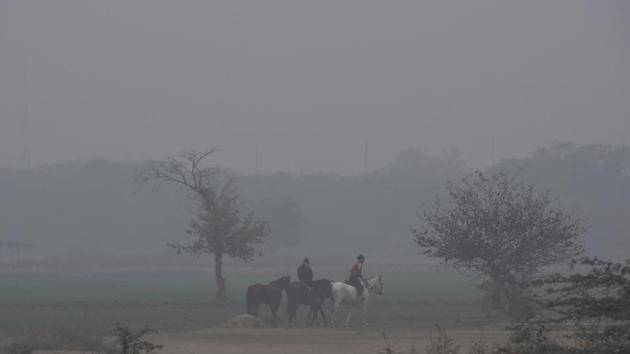
Lucknow, which was the most polluted city on Saturday, recorded an air quality index (AQI) reading of 406 on Sunday to become the second-worst polluted city in the country. Muzaffarpur of Bihar recorded the worst AQI reading of 453.
An AQI reading of above 401 is considered “severe”, which not only affects healthy people but severely harms those with pre-existing breathing issues, children and the elderly.
Lucknow was followed by Moradabad (391), Kanpur (364), Bulandshahr (364), Varanasi (358), Ghaziabad (346) Greater Noida (346). The AQI reading in these cities was categorised as “very poor”.
Also Read: Air quality in Noida and Ghaziabad slips again, enters ‘very poor’ zone
Meerut, Baghpat, Aligarh, Agra and some other cities of Uttar Pradesh recorded higher than normal AQI readings.
{{/usCountry}}Meerut, Baghpat, Aligarh, Agra and some other cities of Uttar Pradesh recorded higher than normal AQI readings.
{{/usCountry}}Particulate pollutants like PM2.5 and PM10, along with vehicular and industrial emissions, comprised the major pollutants that contributed to higher AQI readings. According to experts, the cold weather also contributed to these factors and lead to higher AQI readings.
“Particulate matter takes longer to settle down in cold weather because the air becomes dense. This not only causes a rise in AQI readings, but also leads to smog formation,” said senior environmentalist Devesh Kumar.
The Uttar Pradesh Pollution Control Board, like previous years, has largely been ineffective in controlling the spike in air pollution. Though the board has issued directions to districts and government bodies suggesting ways that could improve air quality, the measures seem to have failed to show results.