Trypophobia or aversion to holes such as those of a honeycomb, a lotus seed pod or even aerated chocolate, is driven by disgust rather than fear, a study has found.
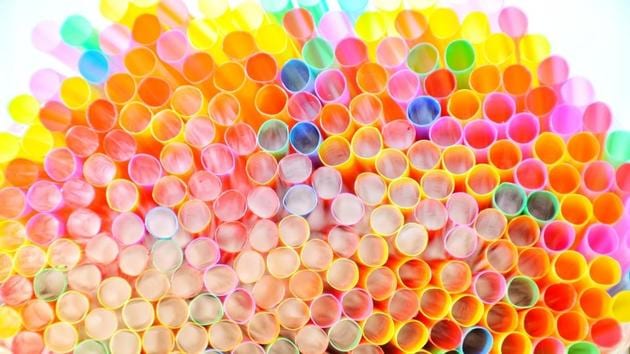
Previous research linked trypophobic reactions to some of the same visual spectral properties shared by images of evolutionarily threatening animals, such as snakes and spiders.
The repeating pattern of high contrast seen in clusters of holes, for example, is similar to the pattern on the skin of many snakes and the pattern made by a spider’s dark legs against a lighter background.
“Some people are so intensely bothered by the sight of these objects that they can’t stand to be around them,” said Stella Lourenco, a psychologist at Emory University in the US. “The phenomenon, which likely has an evolutionary basis, may be more common than we realise,” said Lourenco.
It is well-established that viewing images of threatening animals generally elicits a fear reaction in viewers, associated with the sympathetic nervous system. The heart and breathing rate goes up and the pupils dilate. This hyperarousal to potential danger is known as the fight-or-flight response.
The researchers wanted to test whether this same physiological response was associated with seemingly innocuous images of holes. They used eye-tracking technology that measured changes in pupil size to differentiate the responses of study subjects to images of clusters of holes, images of threatening animals and neutral images.
{{/usCountry}}The researchers wanted to test whether this same physiological response was associated with seemingly innocuous images of holes. They used eye-tracking technology that measured changes in pupil size to differentiate the responses of study subjects to images of clusters of holes, images of threatening animals and neutral images.
{{/usCountry}}Unlike images of snakes and spiders, images of holes elicited greater constriction of the pupils - a response associated with the parasympathetic nervous system and feelings of disgust.
“On the surface, images of threatening animals and clusters of holes both elicit an aversive reaction,” said Vladislav Ayzenberg, lead author of the study published in the journal PeerJ.
“Our findings, however, suggest that the physiological underpinnings for these reactions are different, even though the general aversion may be rooted in shared visual-spectral properties,” said Ayzenberg.
In contrast to a fight-or-flight response, gearing the body up for action, a parasympathetic response slows heart rate and breathing and constricts the pupils. “These visual cues signal the body to be cautious, while also closing off the body, as if to limit its exposure to something that could be harmful,” Ayzenberg said.
The researchers theorise that clusters of holes may be evolutionarily indicative of contamination and disease - visual cues for rotten or moldy food or skin marred by an infection.
Follow @htlifeandstyle for more