
 E-Paper



BMC to focus on Mumbai slums with possibility of Covid-19 surge due to reverse migration
Anticipating reverse migration after Diwali and a resurgence of Covid-19 cases, the Brihanmumbai Municipal Corporation (BMC) will refocus its Covid containment efforts


Anticipating reverse migration after Diwali and a resurgence of Covid-19 cases, the Brihanmumbai Municipal Corporation (BMC) will refocus its Covid containment efforts on slums, where the spread of the infection has been brought under control. BMC says it is preparing to handle a surge of 40,000 active cases in the city and health infrastructure set up for Covid-19 will not be deactivated despite the current dip in recorded cases.
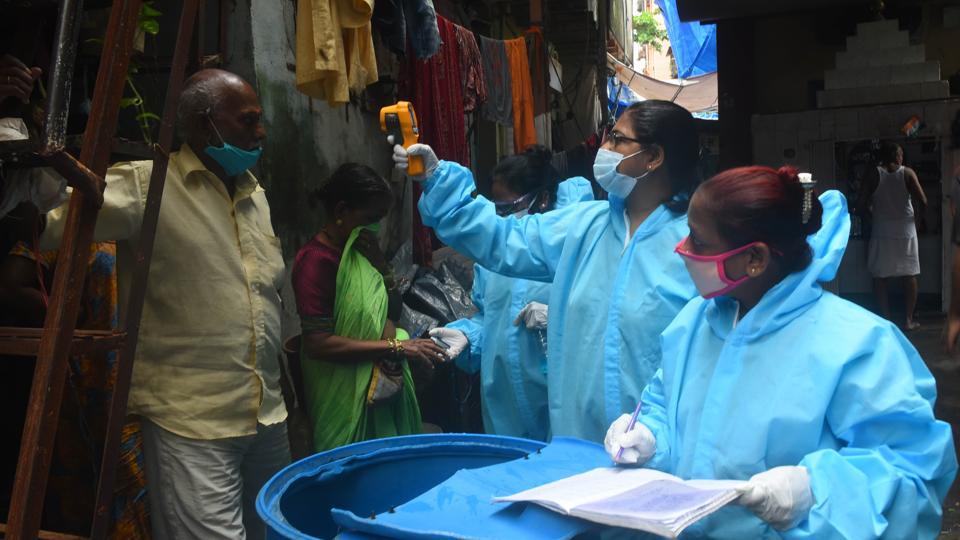
In a meeting undertaken by guardian minister Aaditya Thackeray on Wednesday, it was decided that along with a focus on high-rises, attention upon slums will be increased. Thackeray posted on Twitter about the review meeting, saying, “We discussed multiple scenarios, our preparations to control an expected surge in Covid-19 cases in a review meeting. Post the festival season and a lot of reverse migration going on, we must ramp up our surveillance, awareness and screening.”
BMC officials said facilities would be ramped up to handle around 40,000 active cases at a time. The highest number of active cases in Mumbai so far was over 34,000 in September.
Additional municipal commissioner Suresh Kakani said, “We have decided to be ready for 40,000 active cases in the city, in case there is a surge post-Diwali.” He added, “We have around 150 facilities active and around 400 facilities are on standby for handling any possible surge. The focus will also be on slums considering there is a possibility of reverse migration post-Diwali. We will be stationing mobile testing vans in areas with a high population of slums.”
Areas like Borivli, Kandivli, Malad and Andheri were also reviewed at the meeting. Kakani said, “In western suburbs, we used to earlier have 500-550 cases daily, but that has now gone down to 200-250. This indicates it has gone down, but the numbers are still high, and we are taking measures to control the spread.”
Testing figures, which reduced in November, will be increased to around 12,000 to 15,000 tests daily. Till now, 17.07 lakh tests have been completed, and the positivity rate is 15.85%. The average period of doubling of Covid-19 cases is 320 days, and the average growth rate is 0.22%.
Dr Siddarth Paliwal, a city-based physician, said, “It has been a global trend that post unlock, a surge or second wave is witnessed in three to four months. In the case of Mumbai too, there is a possibility of a surge unless we take proper precautions. However, authorities need to ensure that daily testing is the same or increased in the coming days. If we test less during cross migrations, we might miss out on cases.”
Two weeks ago, the state had warned of a possible second wave in January and February, owing to relaxation of lockdown restrictions.


