Over the past six years, the Government Railway Police (GRP) has been able to solve just 866 cases of chain-snatching out of the 2,084 registered cases on suburban local trains. The detection rate has plummeted in 2018 to just 27.8% after having been at a steady 40% since 2015. The GRP has begun a public awareness programme against theft, especially if commuters are wearing or carrying gold. To report a theft, commuters should dial the helpline number 1512.
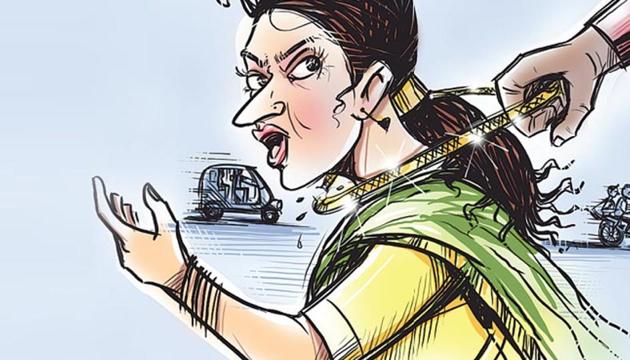
Of the 334 cases registered in 2018, the GRP managed to detect only 93 cases. In 2017, the GRP had detected 150 out of 367 registered cases in 2017 and 129 of 317 registered cases in 2016. According to GRP statistics, between 2013 and 2018, the police recovered property worth ₹3.32 crore out of reported robberies by chain snatchers worth ₹8.28 crore.
Experts said that in spite of CCTVs installed by the police, the crime rate has been increasing on the railway premises and the detection rate is low. “The police are reluctant to register cases of chain-snatching and lethargic in investigating and arresting the robbers,” said railway activist Shakil Ahmed Shaikh.
Statistics show that in 2013, out of 335 cases, just 167 were detected and property worth ₹6,93,250 was recovered out of a reported ₹2,03,7885.
The GRP officials said each station has four officers who are a part of the crime prevention and detection team. These officers study dossiers of criminals on record and are in charge of tracking their present activities. These officers also maintain surveillance of station premises to spot these criminals.
{{/usCountry}}The GRP officials said each station has four officers who are a part of the crime prevention and detection team. These officers study dossiers of criminals on record and are in charge of tracking their present activities. These officers also maintain surveillance of station premises to spot these criminals.
{{/usCountry}}Authorities said the majority of chain-snatching is committed by youngsters between the ages of 16 and 25 years. Most often, they are not residents of Mumbai. They come to the city, target crowded trains and return to their villages afterwards. “The booty robbed by them is sold within just two to three days of the crime, which makes it difficult to trace them and recover the booty,” said Machindra Chavan, assistant commissioner of police (GRP).
Prasad Pandhare, senior police inspector of Dadar GRP, said commuters need to be “cautious”. “We can keep a check on beggars and vagabonds who could be suspected of thefts, but teenage boys from reputed families too are caught, which is a cause of worry,” he said.
At Dadar, the GRP is trying new methods to deter chain snatchers. “We have stationed two constables near the entry points of each platform where the constables blow into their whistles as soon as the train stops at the platform to alert robbers that they are being watched,” said Pandhare.
Stay updated with all the Breaking News and Latest News from Mumbai. Click here for comprehensive coverage of top Cities including Bengaluru, Delhi, Hyderabad, and more across India along with Stay informed on the latest happenings in World News.
Stay updated with all the Breaking News and Latest News from Mumbai. Click here for comprehensive coverage of top Cities including Bengaluru, Delhi, Hyderabad, and more across India along with Stay informed on the latest happenings in World News.