On December 11, professors from Wilson College and the principal of a Zoroastrian religious school led a group of 25 people, including a few foreign travellers, on a one-hour tour of Doongerwadi, the Zoroastrian forest cemetery on Malabar Hill.
The walk should have been an inconsequential one – like the many others organised in Mumbai by urban heritage enthusiasts, but the event escalated into a major controversy, with some community members filing a complaint with the police, accusing the cemetery’s managers of hurting religious sentiments by allowing a public tour in a sacred area. The community’s worldwide diaspora, connected though social media, joined the debate and community forums last week were abuzz with accusations and counter-allegations.
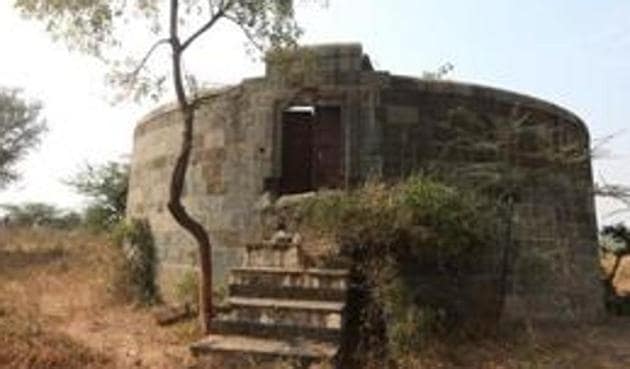
The three-century-old cemetery has prayer halls, a fire temple and circular stone structures known as Dakhmas, or Towers of Silence, where the dead are laid out for sky burial. Zoroastrian tradition requires the corpses to be disposed of by natural elements like the sun and carrion birds, though the near-extinction of vultures in India has jeopardised the arrangement. Non-Zoroastrians are allowed entry into some parts of the cemetery, including one prayer hall, and only Zoroastrians pall-bearers enter the Dakhmas.
The funeral rituals have interested students of religion, and travellers have written about the cemetery – though visits to most sections are prohibited. Since 2007, Ramiyar Karanjia, a priest and principal of Dadar Athornan Madressa — a religious school – has been taking students of comparative religion from Wilson College for an annual tour of the cemetery. The walks have been conducted without any problems. This year, the Mumbai Research Centre of the Asiatic Society of Mumbai, joined the tour. The event has the approval of the Bombay Parsi Punchayet (BPP), the trust that manages the cemetery. The number of participants is restricted to 30 and the group avoids areas that are out-of-bounds, like the Towers and the paths leading to them. The protests this year, therefore, surprised many.
{{/usCountry}}The funeral rituals have interested students of religion, and travellers have written about the cemetery – though visits to most sections are prohibited. Since 2007, Ramiyar Karanjia, a priest and principal of Dadar Athornan Madressa — a religious school – has been taking students of comparative religion from Wilson College for an annual tour of the cemetery. The walks have been conducted without any problems. This year, the Mumbai Research Centre of the Asiatic Society of Mumbai, joined the tour. The event has the approval of the Bombay Parsi Punchayet (BPP), the trust that manages the cemetery. The number of participants is restricted to 30 and the group avoids areas that are out-of-bounds, like the Towers and the paths leading to them. The protests this year, therefore, surprised many.
{{/usCountry}}A day before the walk, a complaint was filed at Malabar Hill police station. Anahita Desai of World Alliance of Parsi-Irani Zarthoshtis, who is the wife of BPP chairperson Yazdi Desai, said that she received a call in the evening from a resident of Godrej Baug, a community housing estate near the cemetery. She was told that the police wanted to speak to someone from the trust. “We were given a letter and were asked why the police was not informed of the tour. We said we did not foresee any problem,” said Desai. “Ramiyar Karanjia is a scholar-priest and knows what is open to the public. Doongerwadi is a sacred ground and we trust his learning and scholarship.”
Protestors tried to stop the tour, and though the walk could be completed with the police watching from a distance, the event was acrimonious. People who were opposed to the tour said that they were stopped by the police from joining other protestors. Inside a funeral hall – the one open to non-Zoroastrian friends and relatives of the deceased, as Karanjia explained the Zoroastrian idea of life, death, the etymology of the phrase ‘Tower of Silence’, and the importance of the cemetery as a historic site, he was asked whether the women in the tour group knew about rules that prohibited them from entering a sacred place when they were menstruating.
Shehernaz Nalwalla, professor at Wilson College and a member of the team that organised the walk, said, “Patriarchy stills dominates, whether it is menstrual taboos or keeping women married to non-Parsees out of the fold. But what is surprising, or perhaps not so, was the vociferousness of the women who vehemently believed that menstruating women defile sacred spaces.”
Those who opposed the tour accused their opponents of being ‘fanatic’ supporters of religious conversions. “This is due to the influence of the pro-conversion people, who say that there are no rules of purity, no rules at all in our religion,” a community member wrote from New Zealand.
Stay updated with all the Breaking News and Latest News from Mumbai. Click here for comprehensive coverage of top Cities including Bengaluru, Delhi, Hyderabad, and more across India along with Stay informed on the latest happenings in World News.
Stay updated with all the Breaking News and Latest News from Mumbai. Click here for comprehensive coverage of top Cities including Bengaluru, Delhi, Hyderabad, and more across India along with Stay informed on the latest happenings in World News.