Even as various outfits and political parties seek amendment to Article 31(b) of the Constitution to get quotas for Marathas, experts are unsure if the basis of their demand – economic backwardness and up to 69% reservation granted in Tamil Nadu – can stand the legal test.
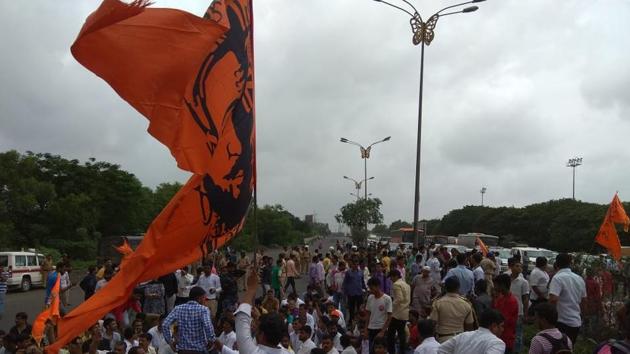
According to experts, reservation granted on the basis of economic backwardness also has been struck down in the past. They feel backwardness of communities that were given reservation in Tamil Nadu can’t be compared with Marathas.
TAMIL NADU NOT THE SAME AS MAHARASHTRA
Most politicians cite the example of Tamil Nadu, where the percentage of reservation was increased to 69% (SC: 18%, ST: 1%, OBC: 30% and MBC: 20%) in 1989. This was before the Supreme Court’s decision in the Indira Sawhney case in 1992, which capped the reservation percentage to 50. Consequently, in 1994, the TN reservation was put in Schedule 9 of the Constitution to safeguard it from legal scrutiny.
Currently, Maharashtra has 52% reservation. Taking the SC order into account, Nationalist Congress Party (NCP) chief and Maratha strongman Sharad Pawar suggested the amendment, on the grounds that it would be out of bounds of legal scrutiny.
Experts offer another viewpoint. “The backwardness of other backward classes in TN is more than 90%, which made it an exceptional case. Secondly, the reservation was granted before the 1992 verdict. The TN reservation, too, has been challenged in the Apex Court and the case is pending. So any such decision will be open to legal scrutiny,” said an official from the social justice department.
{{/usCountry}}Experts offer another viewpoint. “The backwardness of other backward classes in TN is more than 90%, which made it an exceptional case. Secondly, the reservation was granted before the 1992 verdict. The TN reservation, too, has been challenged in the Apex Court and the case is pending. So any such decision will be open to legal scrutiny,” said an official from the social justice department.
{{/usCountry}}Moreover, the official said the SC, while hearing a case in 2006, clarified the protection given to the amendment in Schedule 9 was “no more free of legal scrutiny”. “Even an amendment to Article 31(b) with protection of Schedule 9 of the Constitution will be subject to challenge in the SC. The move may prove to be futile,” he said.
A CASE IN POINT
Pallavi Renke, legal expert and former member of the Maharashtra State Commission for Backward Classes (MSCBC), said, “The reservation given by the Narasimha Rao government in 1991 was struck down by the SC within months, stating the absence of any such Constitutional provision. The Maharashtra government cannot think of giving reservation on economic backwardness.”
Experts feel although it has been challenged in the SC, reservation on the basis of social backwardness could be the way out for Maharashtra.
“If the commission’s report proves social backwardness on the basis of the social discrimination, the Centre can make Constitutional changes to allow the state to cross the reservation limit. The report should prove while Kunbis and Marathas are treated equally in several areas, Kunbis get reservation under OBC, while Marathas don’t. In such a situation, a new category of OBC-B can be allowed with the additional reservation of 16%,” said Pravin Gaikwad, Maratha leader and an expert in reservation studies. Renke, too, said the Centre can make an amendment to the Constitution to lift the cap.
Stay updated with all the Breaking News and Latest News from Mumbai. Click here for comprehensive coverage of top Cities including Bengaluru, Delhi, Hyderabad, and more across India along with Stay informed on the latest happenings in World News.
Stay updated with all the Breaking News and Latest News from Mumbai. Click here for comprehensive coverage of top Cities including Bengaluru, Delhi, Hyderabad, and more across India along with Stay informed on the latest happenings in World News.