The state public works department (PWD) has started to study the vehicular movement on the eastern express highway and western express highway to ascertain the current traffic pattern and estimate its rise over the next decade, as part of its plan to construct elevated roads over the two roads.
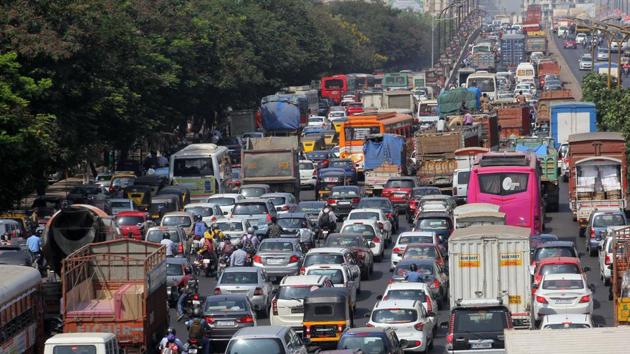
The two elevated roads will go over the flyovers and Metro corridors planned on the two express highways, PWD officials said. The 26.5-km WEH connects Dahisar toll naka and Bandra, and the 23.5-km EEH stretches from Mulund toll naka to Sion. The elevated roads are proposed to be built over the entire length of the existing highways—Dahisar to Bandra on WEH and Mulund to Sion on EEH.
The PWD, in-charge of the two express highways in the city, has appointed STUP Consultants Pvt Ltd to study the feasibility of the plan and prepare a detailed report.
The department is using unmanned aerial vehicles or drones to shoot videos of vehicular movements on various stretches of the highways, senior PWD officials said.
“We are studying each junction on the two roads to get the number of vehicles passing through them. During peak hours, we use drones to shoot videos to see the traffic patterns. Transport experts from the Mumbai Metropolitan Region Development Authority (MMRDA) are being consulted. We will also rope in experts from IIT-Bombay for proof-checking. We want to plan for the next 50 years and a thorough study is required before we proceed,” said CP Joshi, secretary (roads), PWD.
{{/usCountry}}“We are studying each junction on the two roads to get the number of vehicles passing through them. During peak hours, we use drones to shoot videos to see the traffic patterns. Transport experts from the Mumbai Metropolitan Region Development Authority (MMRDA) are being consulted. We will also rope in experts from IIT-Bombay for proof-checking. We want to plan for the next 50 years and a thorough study is required before we proceed,” said CP Joshi, secretary (roads), PWD.
{{/usCountry}}The report of the study is expected to come by January 2019.The two highways ferry a substantial amount of the city’s traffic every day.
According to senior PWD officials, the idea is to deal with the increasing traffic on the two roads. The two elevated roads are expected to have entry and exit ramps at key locations.
Apart from the two express highways, Mumbai has three arterial roads – SV Road and Link Road and LBS Marg – but have a much lower carrying capacity, as they are two-three lane carriageways.
Stay updated with all the Breaking News and Latest News from Mumbai. Click here for comprehensive coverage of top Cities including Bengaluru, Delhi, Hyderabad, and more across India along with Stay informed on the latest happenings in World News.
Stay updated with all the Breaking News and Latest News from Mumbai. Click here for comprehensive coverage of top Cities including Bengaluru, Delhi, Hyderabad, and more across India along with Stay informed on the latest happenings in World News.