
 E-Paper



Summer crops bring winter woes to Maharashtra’s farmers and politicians
A record bumper crop of garlic has similarly led to plummeting prices and there is no outlet for the excess pomegranate crop as Pakistan and Bangladesh, the major importers of onion, garlic and fruits, have ceased lifting stocks due to India’s foreign policy glitches with the neighbours


Tomato, onion, garlic, pomegranate, grape — you name it, the farmers got it in the neck this season, this year.
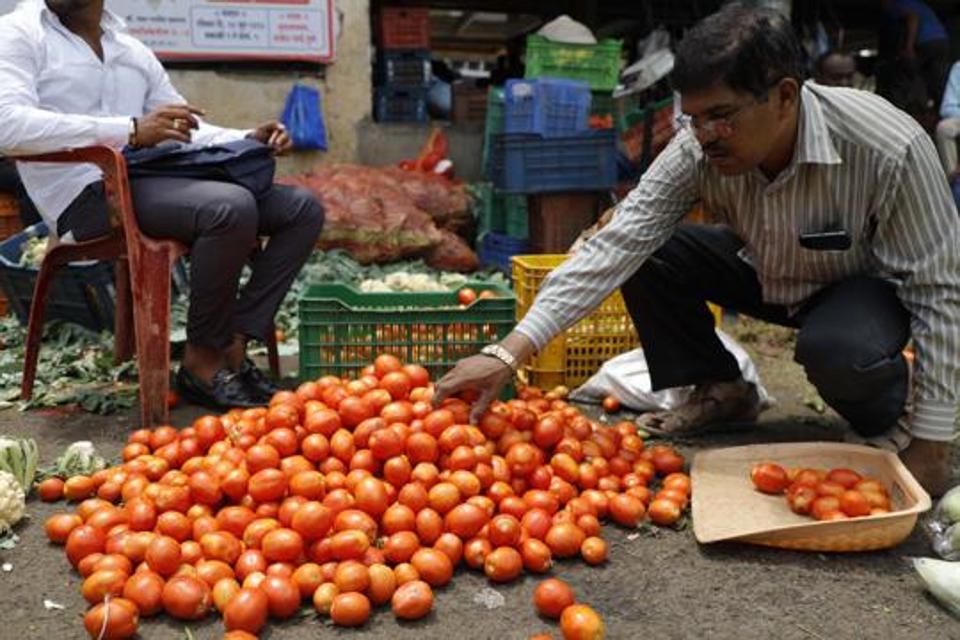
The lush tomato fields were thrown open to grazing cattle by farmers in Nashik, supposed to be the greenest belt of Maharashtra, outside the fruit orchards of the Konkan. Wholesale prices were so low in all the marketing committees across the district that farmers who had hopefully planted various crops in summer found they could not cover even the transportation cost for their produce after the winter harvest.
Nothing happened even after a farmer who got less than ₹1,000 per quintal for his summer crop of onions wired the entire meagre amount to the Prime Minister’s Office. Prices have continued to crash but that has not benefited the end consumer either. A record bumper crop of garlic has similarly led to plummeting prices and there is no outlet for the excess pomegranate crop as Pakistan and Bangladesh, the major importers of onion, garlic and fruits, have ceased lifting stocks due to India’s foreign policy glitches with the neighbours as well as bumper produce of some of these crops in their own countries. Strangely, they are exporting their own produce to India despite the troubled foreign relations but it is a one-way traffic with farmers in India, suffering from the government’s apathy in stopping these imports and helping its own farmers in the domestic market.
In this dismal scenario, grapes were the great white hope for farmers who export the fruit to European nations. But now there seems to be a double conspiracy — by the government and by nature — against them. Powdery mildew, a fungal disease, has gripped the crop, it has got too cold too soon, and unseasonal showers have brought their own peril.
However, while farmers may or may not be able to battle nature — for example, some do succeed in warming their grapes with sacks and blankets to keep the berries from cracking, while others have innovatively used sugarcane leaves to restore the depleting water content in the soil — some government policies remain beyond their understanding.
Last year, they were encouraged to export their onion crop and planted more this summer hoping the winter harvest will bring them greater returns. But far from easing their exports to Pakistan, the government has allowed Pakistani imports into Punjab, Haryana and Kashmir — three states that account for almost 30% of their onion sales. Now, these states have no need of Lasalgaon onions (from Lasalgaon, Nashik, which has the biggest onion market in India) as they have ample stocks from the neighbouring country.
The situation has gotten so bad this year that for the first time in living memory, India was in danger of seeing farm riots in various areas of Nashik district, between farmers and their workers. The farm labourers see only the bumper crops of the farmers and were demanding double the wages from their employers for helping produce the bountiful harvest. Farmers who could not recover even transportation costs, let alone that of the harvest, simply found themselves in no position to pay. Last week, this led to a stand-off between labourers and farmers with emotions boiling over and a couple of workers beaten up by their potential employers.
Fortunately, the situation was resolved by the police before matters got out of hand — labourers were made to see reason about how they would suffer the more if they did not get a wage at all, let alone the higher wages they were demanding. Those farmers who could afford to pay more were told to do so but the police still had to keep a vigil to ensure that the labourers were not stopped by other farmers who could not afford the higher wages to seek employment on farms of their choice.
This has led to all-round resentment among farmers, creating bad blood among many. The farmworkers have no reason to be any less resentful either, given their belief that they are being cheated out of good earnings despite bumper harvests on the farms.
It is a classic case of shortages in the midst of plenty. No wonder the rural distress has been compounded and led to the unity of farmers and workers that manifests itself in not just the kisan morchas across India but also a swing in the electoral fortunes of various political parties across states in recent elections. As the French would say - guard your onions. They can cause more than just some tears.


