Believe it or not, unregulated parking on the streets of Mumbai could be doing grave damage to your health. A study has revealed that traffic congestion caused by indiscriminate parking of vehicles has taken Particulate Matter (PM) in the air to 17 times the safe limit and carbon monoxide (CO) to six times the acceptable level.
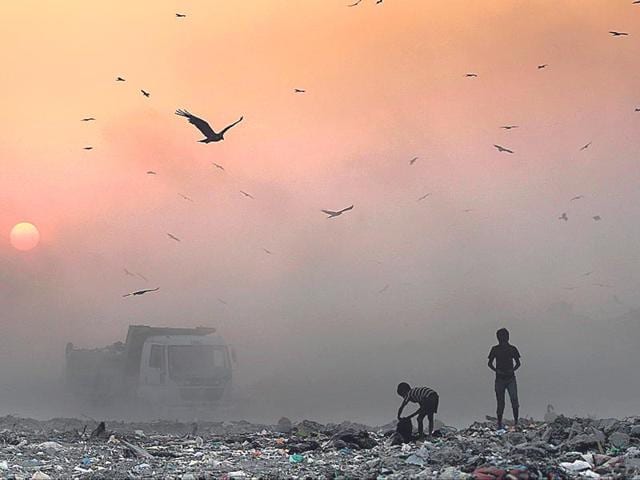
PM is a mixture of pollutants, which are small enough to be inhaled and cause damage to health. The finest of the particles – PM2.5, which has a diameter of 2.5micrometres or less – can go deep into the lungs.
The study, conducted by the Mumbai Environmental Social Network (MESN), also found that the parking problem, which results in unnecessary honking in congested road conditions, is pushing up sound pollution to levels that are almost twice what is prescribed as safe. The study was funded by the Mumbai Metropolitan Region Environment Improvement Society.
“Substantial increase in parking of private vehicles on one or both sides of the road leads to traffic congestion and a grid-lock situation, thus reducing the carriageway,” said Ashok Datar, chairman and founder, MESN. “Vehicles are driven in start-stop mode, half-clutch mode at slow speeds, which lead to partial combustion of fuel, increasing levels of pollutants.”
The study looked at several busy roads – such as NC Kelkar Road, Dadar, Linking Road, Bandra, E Moses Road, Worli and Mohammed Ali Road. These have vehicles parked on both sides. The findings were compared with that of Dr Annie Besant Road, Worli, on which parking is not allowed. The study said 12% to 35% of road space on major arteries and smaller lanes is occupied by parking, a three-fold increase since 2006. The maximum particulate matter emission was found at E Moses Road in Worli and Mohammed Ali Road, where parking occupies 60% and 75% space respectively.
{{/usCountry}}The study looked at several busy roads – such as NC Kelkar Road, Dadar, Linking Road, Bandra, E Moses Road, Worli and Mohammed Ali Road. These have vehicles parked on both sides. The findings were compared with that of Dr Annie Besant Road, Worli, on which parking is not allowed. The study said 12% to 35% of road space on major arteries and smaller lanes is occupied by parking, a three-fold increase since 2006. The maximum particulate matter emission was found at E Moses Road in Worli and Mohammed Ali Road, where parking occupies 60% and 75% space respectively.
{{/usCountry}}The parking on congested roads has led to a deterioration in the air quality in the surrounding localities. The permissible limit set by the Central Pollution Control Board for PM2.5 is 60 micrograms/cubic metre (ug/m3). The limit for PM10 – pollutants with diameter of 10 micrometres or less – is 100 ug/m3. According to levels measured by the Environment Policy and Research India, during peak hours, PM10 levels at E Moses Road rose to 2,160 ug/m3, while PM2.5 was 1,010 ug/m3. Level of ultrafine particles with diameter less than 0.1 micrometres was 1,470 ug/m3.
The safe limit for Carbon Monoxide (CO) is 3.5 parts per million (ppm), but at Mohammed Ali Road the level of the poisonous gas was more than six times higher, at 22.6ppm,followed by NC Kelkar Road at 16.8pmm. At the control site (Annie Besant Road), the CO emission level was as low as 2.9ppm. Against the permissible limit of 55 decibels (dB) between 6am and 10pm, noise levels recorded at both E Moses Road and Mohammed Ali road was 95-100dB.
Rakesh Kumar, head, National Environmental Engineering Institute, in Worli, said, “With encroachments on footpaths and parking on roads, people end up walking on roads, leading to multiple levels of congestion. This is bound to have impact on the health of locals.”
Stay updated with all the Breaking News and Latest News from Mumbai. Click here for comprehensive coverage of top Cities including Bengaluru, Delhi, Hyderabad, and more across India along with Stay informed on the latest happenings in World News.
Stay updated with all the Breaking News and Latest News from Mumbai. Click here for comprehensive coverage of top Cities including Bengaluru, Delhi, Hyderabad, and more across India along with Stay informed on the latest happenings in World News.