There are moments when clinical legalism can obscure human suffering. In March 2025, a ruling by the Allahabad High Court in a POCSO case served as a chilling reminder. The case involved a 14-year-old girl subjected to a harrowing sexual assault after being lured onto a motorcycle. The accused broke the string of the girl’s pyjama to “bring down” the garment and groped her. Yet, the High Court characterized these acts as “mere preparation” rather than an “attempted rape.” The Supreme Court swiftly intervened, setting aside the order and describing the reasoning as reflective of a “totally insensitive and inhuman approach.”
Recognising that earlier attempts at sensitising the judiciary had not produced the expected results, the Court asked the National Judicial Academy to constitute an expert committee to examine what had worked, what had failed, and on-ground experiences. Its task was to improve courtroom terminology and help move them beyond procedural compliance towards an approach that places human dignity at the heart of judicial reasoning.
The resulting 2026 handbook titled Judgments and Gender: Sensitivity and Compassion in Writing Judgments recognises that words are not neutral. Terms such as “helpless female”, “lost her chastity” and “outraging modesty” are patriarchal and may reintroduce trauma. The guidelines ask judges to leave that language behind. Its recommendation to move away from the archaic term “prosecutrix” and use terms such as “survivor” or “complainant” finally aligns court vocabulary with constitutional promises.
The need for such a recalibration is long overdue. But it is only the beginning. The Handbook itself identifies a persistent “Language-Justice Gap.” A softer vocabulary cannot, by itself, undo stereotypes of the “ideal victim”— distrusting a survivor for delayed reporting, a lack of visible injuries, or behaving calmly after trauma. The deeper shift, therefore, must be in how the law understands sexual violence. It must move away from treating it as an injury to a woman’s “chastity” or honour and recognise it as a violation of her bodily autonomy. The law must not allow patriarchal assumptions about women to determine legal reasoning.
{{/usCountry}}The need for such a recalibration is long overdue. But it is only the beginning. The Handbook itself identifies a persistent “Language-Justice Gap.” A softer vocabulary cannot, by itself, undo stereotypes of the “ideal victim”— distrusting a survivor for delayed reporting, a lack of visible injuries, or behaving calmly after trauma. The deeper shift, therefore, must be in how the law understands sexual violence. It must move away from treating it as an injury to a woman’s “chastity” or honour and recognise it as a violation of her bodily autonomy. The law must not allow patriarchal assumptions about women to determine legal reasoning.
{{/usCountry}}The focus on expression and language, though well-intentioned, only addresses part of the problem. Conventional jurisprudence has historically failed vulnerable litigants through gender-insensitive logic, clinical detachment, and moral judgement of survivors. Perhaps the most tangible contribution of the 2026 handbook is the “witness as guest” mechanism. It recognises that survivors can experience a second form of victimisation within the courtroom itself, particularly when their needs and dignity are treated as secondary to that of the accused.
The committee’s recommendations, grounded in an empirical study of trial court judgments and stakeholder responses, seek to strengthen these protections. One startling finding was that four of every five stakeholders were entirely unaware of the Witness Protection Scheme. For many survivors, then, rights exist only on paper. The new guidelines seek to change this by shifting the responsibility from the survivor to the State. Judges are now legally obligated to inquire about a victim’s safety and legal representation at the very first instance. The requirement of written compliance within 48 hours for providing legal assistance could help turn legal aid from a distant entitlement into an immediate procedural guarantee.
This shift is a necessary response to a scarred history of gender jurisprudence.
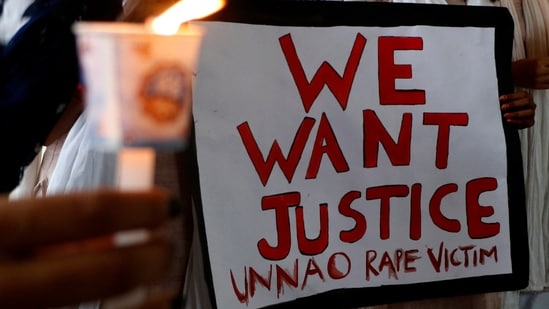
It is a painful line that connects the 1992 brutalisation of Bhanwari Devi to the Vishakha Guidelines of 1997, from horrifying tragedies in Delhi, Unnao, Kathua, Hathras, and Kolkata to the legislative responses that followed. Each episode has demanded reform. Each reform has promised that the system will do better next time. The difficulty is that there is always a “next time.”
For too long, the judiciary has been a site where public morality and judgements about women were allowed to outweigh constitutional rights. We must arrive at a system where women do not have to bleed before the law takes notice. Protecting the rights of survivors is not an act of paternal sympathy for helpless victims; it is a rigorous, evidentiary method that takes trauma seriously while protecting the dignity of the survivor as a non-negotiable constitutional right.
The handbook may change how the courts speak; but we will have to wait to see if it changes how they listen.
Ashish Bharadwaj is the pro vice-chancellor of WPU Goa. Insiyah Vahanvaty is a socio-political commentator and author of ‘The Fearless Judge’. The views expressed are personal