
 E-Paper



Ambedkar’s swaraj: Social justice and republicanism
Ambedkar’s vision of swaraj called for a radical transformation of social and political structures in favour of the historically marginalised.

 Prefer HTon Google


In social science discourse, BR Ambedkar is hailed for advancing the idea of equal human rights and for promoting India as a democratic nation-State committed to the values of social development. Ambedkar is also widely seen as the visionary architect of the Constitution of Independent India, which lays the ground for inclusive State policies that accommodate marginalised social groups within emerging institutions of power and privilege. While these points are crucial in assessing Ambedkar’s contribution to building India as a modern democracy, such an assessment remains incomplete, as it often overlooks his core political ideas for liberation, termed swaraj. These ideas envisioned the rise of socially marginalised groups as new claimants of political power and class privileges.
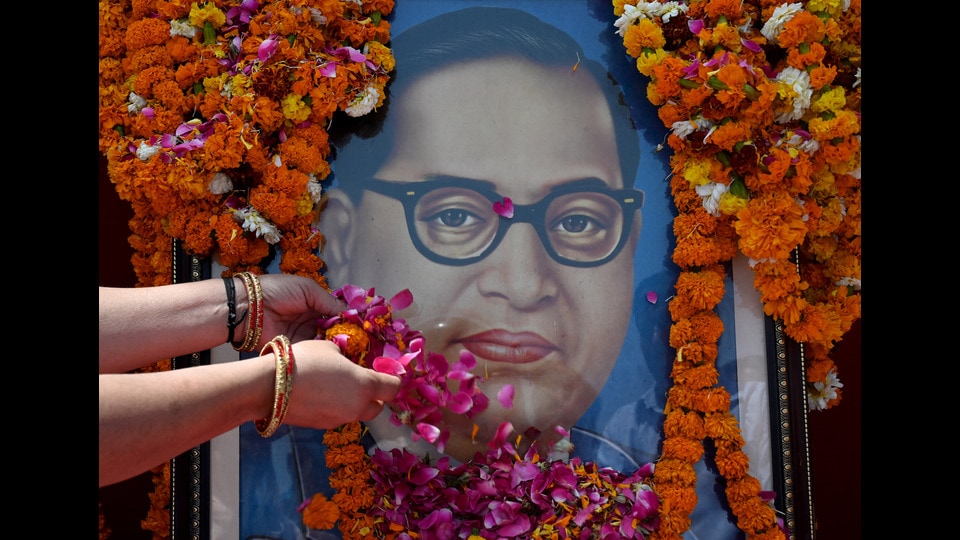
Ambedkar made significant contributions to strengthening the idea of social equality. He recognised that the conventional social order, based on hierarchical and oppressive caste divisions, was fundamentally at odds with the modern values of human freedom and self-respect. Alongside prominent nation-builders like Jawaharlal Nehru, Ambedkar hoped that the modern discourse of equal rights and citizenship would dismantle traditional caste-based divisions, allowing individuals to explore their full human potential as free beings.
Ambedkar further emphasised that it was the responsibility of the new State to act as a guardian institution, carrying the ethical burden of social transformation. He acknowledged that social life in India remained burdened by feudal and Brahmanical structures, which continued to oppress marginalised groups. The State, therefore, had to address social and class inequalities, activating all its institutions to promote the welfare and empowerment of these groups. Beyond merely ensuring equality, the State was also tasked with preventing traditional social norms from harming vulnerable communities and focusing on improving their socio-economic conditions.
Ambedkar called for the State to follow the principles of distributive justice, providing relief and support to the most disadvantaged groups. In this vision, the democratic process of modern India was rooted in the value of equitable political representation for the historically marginalised, particularly the Scheduled Castes and Tribes. Ambedkar promoted policies of social justice, such as the reservation policy, to democratise the workforce by ensuring that marginalised groups could access opportunities in the new power structures. These policies enabled them to emerge as new bearers of power and privileges, making State institutions more inclusive and pluralistic. Social justice, as promoted by Ambedkar, was about creating institutional arrangements that ensured equitable participation of marginalised groups in the functioning of the State.
While the policies of social justice and the accommodative arrangements of democratic institutions are crucial components of the new nation-State, they often result in passive and slow changes to traditional power structures. Such constitutional arrangements position the State as a master institution in the hands of conventional ruling elites, defining historically marginalised groups as perpetual claimants of material assistance. The dalits, adivasis, and Other Backward Classes (despite being in the majority) are reduced to dependent subjects, reliant on the mercies of a benevolent, parent-like State. This large population remains a subjugated, powerless mass, unable to overcome their servitude without the aid of State institutions.
Ambedkar acknowledged that the procedural mechanisms of the modern nation-State could only bring about symbolic changes in power structures. To challenge the passivity and dependency of the majority on institutions controlled by social elites, Ambedkar proposed a revolutionary conception of liberation. Though his idea of swaraj supplements procedural institutional practices, it does not endorse them as the ultimate paradigm for democratic activism. Instead, his conception of swaraj is rooted in the transformative values of republican democracy, which would empower the formerly depressed classes to act as agents of social and political change. Ambedkar envisioned a united force of oppressed communities that would challenge the legitimacy of conventional social elites, breaking their hold on power in the modern world.
Republicanism, in its essence, signifies the overthrow of the old elite rule (such as the collapse of monarchy in the European context) and the emergence of the people as a collective force, capable of organising modern institutions of power, such as parliamentary democracy. It envisions the people as self-conscious citizens, awakened to their passive subjection, now ready to challenge the conventional political elites. Ambedkar hoped that marginalised social groups would not remain dependent on the State for their welfare, but would recognise themselves as conscious political agents capable of using democratic institutions to claim State power.
For Ambedkar, swaraj meant the awakening of the people to their social servitude and political dependency. It represented the courage and confidence to challenge conventional elites and imagine themselves as capable of holding the reins of power. Swaraj was the rejection of historical subjugation under social elites, and the assertion of a dalit-bahujan-adivasi collective to define the State’s responsibilities. It called for a radical transformation of social and political structures in favour of the historically marginalised.
In today’s context, however, Ambedkar’s vision of swaraj — rooted in the values of social justice and democratic republicanism — finds few advocates. With the rise of neoliberal economic policies, the State has abdicated its responsibility for the welfare of the most disadvantaged groups. Meanwhile, the politics of Hindutva cultural nationalism has co-opted these marginalised groups, undermining the possibility of dalits, adivasis, and OBCs uniting under the bahujan banner to challenge the dominance of social elites. Ambedkar’s conception of swaraj, therefore, remains strikingly relevant in today’s social and political landscape, as it underscores the passivity and dependency of the majority, and calls for their empowerment to break free from elite control.
Harish S Wankhede is assistant professor, Jawaharlal Nehru University. The views expressed are personal


