The political view is that Budget 2022 will be an election budget as five states, including Uttar Pradesh, go to polls in the next two months. The economic view is that it is difficult to use the Union Budget to benefit the citizens of just five states, and there isn’t enough money to give the pre-2009 election farm loan waiver-equivalent to everybody. The direction of the government spends and reliefs are a manifestation of the core idea that drives that
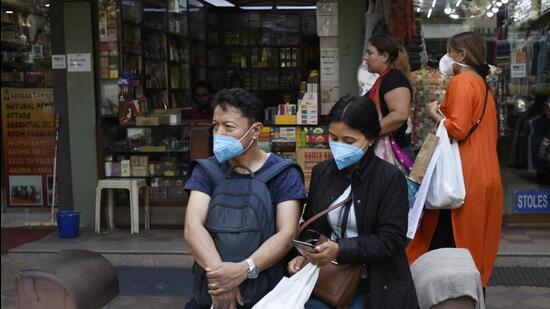
The political view is that Budget 2022 will be an election budget as five states, including Uttar Pradesh, go to polls in the next two months. The economic view is that it is difficult to use the Union Budget to benefit the citizens of just five states, and there isn’t enough money to give the pre-2009 election farm loan waiver-equivalent to everybody. The direction of the government spends and reliefs are a manifestation of the core idea that drives that year’s budget. By all indications, Budget 2022 is going to be a helping hand budget — a budget that has proposals to stop the slide back into poverty of the newly non-poor population cohort and to help lower- income households in the organised sector find the money to spend.
India needs a consumption spend boost to continue the momentum to business created by the increased spend by the government in the pandemic years. The big push to capital expenditure by the Union government in Budget 2021 will begin to show its multiplier impact in the next few months. The next round of investments must be done by the private sector to take the baton of growth forward. For that to happen, consumption must be buoyant. But deeply stressed household balance sheets, according to the ICE360 Survey 2021, and rising inflation is raising concerns about the slip back into poverty of a fifth of Indian households and for another fifth to cut down on consumption drastically.
But the policy question for a 1.3 billion heterogeneous population is this: How do you solve for a country that has a per capita income of $2,000 (World Bank), but has more than 20% below the poverty line (Reserve Bank of India), some of the world’s richest people with over 100 dollar-billionaires and millions of mass affluent in the middle.
Those in the top 40% of households have increased their income and wealth. Revenge shopping by the rich has buoyed the luxury and high-end consumer goods markets. The mass affluent, most of who are in the organised sector, too, have largely kept their heads above the water. The middle 20% have suffered, but they have had some assets (gold holdings, for example) to fall back on. It is the next 40% that has suffered the deepest loss in income. For those below the poverty line, a mix of Mahatma Gandhi National Rural Employment Guarantee Scheme (MGNREGS) and free or highly subsidised food, helped by the one-nation-one-card, have got them through the pandemic without starvation. It is the quintile of population that is just above the poor that will slip back into poverty without some intervention. Also called the missing middle, this comprises the first-generation migrant who is just at the edge of survival, the low-income earners in the organised sector and the vast army of unorganised workers who need the helping hand badly this year.
There are two things the Union Budget 2022 can do to extend targeted help to the vulnerable sections and to give an income boost to those whose purchasing power has gone down due to lower incomes, higher medical costs and inflation. And one way to get those with the money to secure their savings with the government, which needs it to fund its deficit.
One, for the organised sector workers who are a part of the Employees Provident Fund Organisation (EPFO), give a two-year contribution holiday to those who want to avail it. EPFO contributions (12% of basic salary by the employee matched by the employer) are voluntary after a threshold of ₹15,000 a month of income. However, most offices make it a mandatory cut. The government can advise firms to offer this option to eligible employees. However, the employer’s contribution continues. If the annual employee contribution is about ₹62,000 crore, and even half the people take this option, it is almost ₹30,000 crore of additional purchasing power in the wallets of the organised sector workers. This might get deployed in a mix of debt repayment and consumption. In May 2021, the employee EPFO contribution reduction by two percentage points from 12% to 10% did not move the needle too much in terms of consumption. It will have to be a big announcement that will get the attention of the people who might then push their employers to give them this option.
Two, extend the ₹5 lakh health insurance benefit through the Ayushman Bharat scheme that is available to the poor to the “missing middle” — the unorganised sector (drivers, domestic workers, hawkers and delivery staff to name a just a few). The challenge for any policy intervention has been the transmission of State benefits to this “missing middle”. To the 24 crore e-shram card holders, extend the benefit of this scheme. To pay for it, allow the rich to also avail, but pay double of what it costs the government. There is market failure in the private health insurance market, the rich will pay for a cover that works, even if the benefit is just ₹5 lakh.
Three, how to get the rich to make available their savings to the government rather than punt on the crypto casino? Make buying government securities through RBI Retail direct tax-free for investors. Encourage RBI to use a better retail interface to attract the retail investor into zero-risk government bonds. If held to maturity, there is no risk on these bonds of price fluctuations.
And finally, as we decode Budget 2022, we need to remember that India is just emerging out of a once-in-a-hundred-year catastrophic event. We need to just stay afloat rather than split hairs about pre-pandemic growth rate trend lines.
Monika Halan is an author and adjunct professor at NISM
The views expressed are personal
One Subscription.
Get 360° coverage—from daily headlines
to 100 year archives.
Archives
HT App & Website