
 E-Paper



Do we need a separate ministry to combat the climate crisis?
The daunting task of combating the climate crisis needs drastic institutional change, perhaps with a ministry that reports to the PM's office, works with other ministries, and has state-specific arms.

 Prefer HTon Google


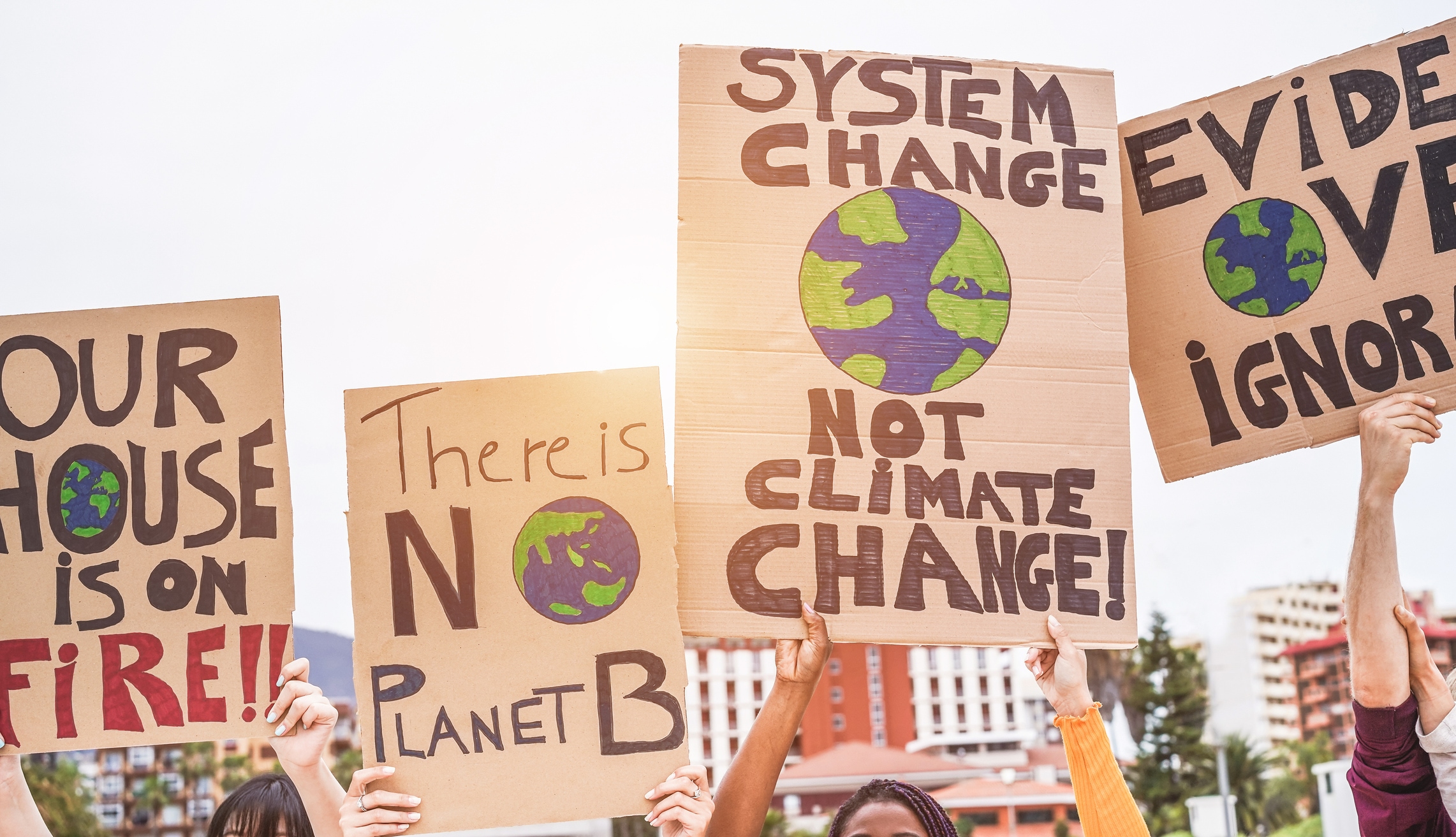
This year, the theme of the world environment day is – Only One Earth. This topic is not new to us, Indians. Our civilisation has known for centuries that there is no planet B. Our civilisational values, as passed on to us by our grandparents and parents, have instituted a strong sense of gratitude for respecting mother nature.
Let me give you one example. Just a week ago, women in North India and Nepal celebrated Vat Savitri Puja. On this day, Savitri is revered by women because she saved her diseased husband, Satyavan, from Yamraj, the lord of death. One of the rituals which are associated with this puja is to tie sacred threads around the Vata Vriksha (Banyan tree). The banyan tree is the longest-living tree, which can live for approximately 300 years.
Human activities today are putting around 40 billion tonnes of CO2 every year on the planet. A rough-cut estimate shows that on average a single banyan tree can sequester 7.5 tonnes of CO2 in its lifetime. Our foremothers already knew that the Banyan tree has the longest life span on earth than any living organism and its utility value. Tying a sacred thread around the tree means the reassurance that the tree will not be cut and could continue to fix CO2 for humanity. This is how the scientific knowledge was passed on from generation to generation leading to the Indic civilisation revering almost all living and non-living beings.
The impacts of the climate crisis are encircling India
But today’s time is different. We not only lost the knowledge of reverence, but continue to pollute our environment without any remorse. The recent three-part report of the Intergovernmental Panel on Climate Change (IPCC) has not only been an eye-opener, but also a sounding board that if we do not act now, we will miss the bus. The report painted code red for humanity, stating that the window for action is limited to only one and half decades from now.
Much of what is projected in IPCC reports as climate catastrophes, India is at the helm of it already. We are not saved from any side. In the north, the Himalayan glaciers are retreating and changing the water regimes of lifeline rivers such as the Ganga, Brahmaputra, and Indus. The coastlines are in severe danger due to sea-level rise and an increase in the frequency of cyclones due to a warmer ocean. Half of India has an arid and semi-arid climate which is prone to severe heat stress as we have experienced this summer. The IPCC report shows out of four billion people living under severe water scarcity worldwide, nearly half live in India and China. Around 33% of Indians live in a water-scarce situation which will go up to 40% by 2050 under a 1.5-degree global warming situation.
Warm temperatures are melting Himalayan glaciers, resulting in changing water regimes of rivers that cannot be reversed. Sea level rise is driving saline water into coastal aquifers, contaminating a major source of fresh water for hundreds of millions of people in India who live beside 7500 km of coastlines. India’s rainfall is getting increasingly unpredictable. Crop production is already being slowed by rising temperatures and more severe droughts are predicted in future.
The daunting task of combating the climate crisis needs drastic institutional change.
At COP 26, last year, Prime Minister Narendra Modi announced that India will achieve net-zero by 2070. The announcement created a buzz among concerned individuals in India and abroad. India, at last, had a target that it has committed to, voluntarily. However, the target is big and the present institutional structure for achieving this is hugely inadequate.
Human resources: Climate crisis issues are handled by the ministry of environment, forest and climate change (MOEFCC). As a subject, the issue is addressed through a group which is one among 20 divisions within the ministry. If we count the subdivision of the environment, climate crisis issues are tackled as one of its seven focus areas. In total, seven officials look after the division for a subject that is touching billions of people in India. Out of these, none are climate scientists, and some are retired officers or consultants who are on a yearly contract. In terms of the programme, the national and state adaptation plans are outdated and do not have the resources or teeth to make any significant changes on the ground.
Trans-disciplinarity and coordination with other line ministries: Today’s climate crisis problem in India goes beyond the issue that could be tackled by forest bureaucracy. They are closer home academically, but not fully equipped. The climate crisis is much more than the environment and forests. It’s a transdisciplinary subject that requires multiple disciplines to come together. It would need coordination with other ministries such as water resources, energy, housing and urban affairs, rural development, women, child development and so on.
A separate ministry: When the problem is so stark that it is touching the lives of people in every aspect, we must carve out a separate set of people who come with fresh ideas and knowledge of climate science, acumen of adaptation and mitigation with a central mission of how lives of millions could be saved from the climate led extreme events. The recent attempt to bring three ministries as a consortium to coordinate the climate crisis issue is a positive development in this direction. However, these are band-aid solutions which will not work for a country as large and ecologically as diverse as India.
We need a separate ministry to combat the climate crisis that directly reports to the PM's office, works in coordination with other ministries, and has separate state-specific arms that deal with the issue head-on.
Anjal Prakash is the Research Director of the Bharti Institute of Public Policy at the Indian School of Business (ISB). He is the lead author of recent IPCC reports
The views expressed are personal


