The Supreme Court of the United States of America (SCOTUS) handed the Trump administration, arguably, its biggest institutional pushback by striking down the tariffs that the US had imposed under the International Emergency Economic Powers Act of 1977. Given that these tariffs have been the centrepiece of President Trump’s economic policy in his second term, the legal setback now raises myriad issues spanning administrative details, policy options and political fallouts.
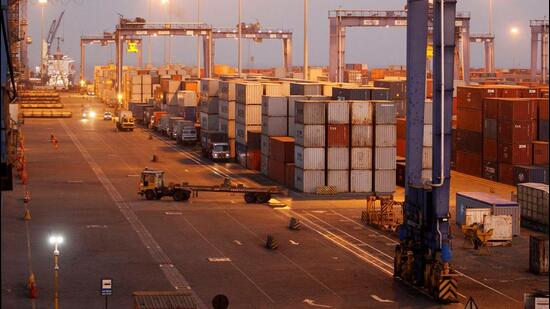
The administrative challenges thrown up by the SCOTUS ruling are with regard to the almost $300 billion in revenue that has been collected by the US government since the tariffs went into effect. Given the ruling, the tariffs that were collected potentially have to be refunded. This presents a formidable challenge in terms of the records that have to be organised in order to send the refunds to the right businesses and in the correct amounts. Moreover, since some businesses may have passed on the tariffs to their consumers, the refunds also raise a secondary issue of equity: Money that should be going to consumers will end up with businesses, representing, in effect, a redistribution from consumers to firms. Some of these issues will likely end up in court, sooner or later.
On the policy front, the SCOTUS ruling raises two crucial issues. The first is about the options available to the administration to reintroduce the tariffs. President Trump has announced a 15% global tariff under Section 122 of the 1974 Trade Act, which allows for tariffs to deal with “large and serious” BOP problems, but this has a 150-day limit. Extending tariffs under this clause beyond the 150-day period would require renewal authorisation through a vote of the US Congress. It is unlikely to pass in the US Senate. The administration could also invoke Section 301 (also of the 1974 Trade Act), which allows the government to use tariffs to respond to unfair trade practices by America’s trading partners. But this requires investigation. It is time-consuming and difficult to do such wide investigations across many products and countries, though President Trump has announced that such investigations are being initiated.
{{/usCountry}}On the policy front, the SCOTUS ruling raises two crucial issues. The first is about the options available to the administration to reintroduce the tariffs. President Trump has announced a 15% global tariff under Section 122 of the 1974 Trade Act, which allows for tariffs to deal with “large and serious” BOP problems, but this has a 150-day limit. Extending tariffs under this clause beyond the 150-day period would require renewal authorisation through a vote of the US Congress. It is unlikely to pass in the US Senate. The administration could also invoke Section 301 (also of the 1974 Trade Act), which allows the government to use tariffs to respond to unfair trade practices by America’s trading partners. But this requires investigation. It is time-consuming and difficult to do such wide investigations across many products and countries, though President Trump has announced that such investigations are being initiated.
{{/usCountry}}The administration could also expand its use of Section 232 of the Trade Expansion Act of 1962, which allows for tariffs by the President for national security reasons; for example, the 25% tariffs imposed on aluminium, steel, copper, automobiles etc. These remain in effect and unaffected by the SCOTUS ruling. However, further expansion of tariffs under this section will need new investigations, followed by a certification by the US secretary of commerce. Any serious investigation to prepare a report covering many products and countries will take time and resources.
There is also Section 338 of the Tariff Act of 1930, which allows the administration to retaliate with a tariff if there is discrimination by a trading partner against the US relative to other countries. This has never been used. In today’s world of Most Favoured Nation rates, this is going to be difficult to show, and if used, almost surely, will end up in litigation.
In summary, while the administration certainly has alternative levers to pull to resuscitate the tariffs, they all have limitations and imply reduced flexibility relative to the way Trump had been using tariffs to bend countries to the US’s will on myriad trade and non-trade issues.
The second policy issue that the ruling has thrown up is the status of the various trade deals agreed to or currently under negotiation. The legal standing of these deals from the US side was always uncertain, especially with respect to whether they needed Congressional ratification.
Now, there is secondary confusion from the perspective of the partner countries as well. If they agreed to tariff rates higher than 15% (such as India and Indonesia), will they remain bound by the terms that they “voluntarily” signed on to? At the very minimum, the uncertainty surrounding the status of the tariffs will likely slow down any legislative ratification of the agreements by US trade partners.
The biggest impact of the SCOTUS ruling, though, may be on the political fallout that it could unleash. Two things that have marked Donald Trump throughout his political career (as well as his public pronouncements before running for public office) are his unquenchable desire to be perceived as a “winner” and his affection for tariffs as a policy instrument. The ruling hits both simultaneously. While normal political actors would react to such a setback by quietly using other avenues to reimpose their policy vision, Trump’s persona makes it unlikely that he will go this route. The State of the Union address suggests that he will stay on this path. His desire for revenge and quick victories opens up the possibility that his words or actions in the coming days could create a backlash both from the courts as well as the non-MAGA wing of conservative America, many of whom have already soured on his two major policy initiatives: Immigration enforcement and tariffs.
The possibility of having to refund the tariffs also raises an additional political unpleasantness for Trump. A big part of his pitch for tariffs to the American public was based on the assertion that the tariffs would be paid by foreigners. Having to refund tariffs to domestic businesses would give the lie to these claims. That too is loaded with consequences given the upcoming midterm elections in November.
Having just recently agreed to a framework for a trade agreement, India now has to decide how to proceed. Perhaps, the prudent approach is to let uncertainties resolve themselves to the extent possible before finalising the deal, including parliamentary ratification, factoring in, of course, possible US retaliation under sections 232 and 301 in case of a long delay in ratifying on India’s part. However, the Trump tariff assault did have the effect of reversing creeping protectionism in India, and possibly catalysing a few domestic policy reforms. It is important that India does not reverse itself on those trade and other reforms.
Amartya Lahiri is Royal Bank Professor of Economics at the University of British Columbia and Devashish Mitra is Professor of Economics and Cramer Professor of Global Affairs at Syracuse University. The views expressed are personal