Legislatures have been called the “grand inquest of the nation”. About 270 years ago, British parliamentarian, William Pitt used the expression to describe the House of Commons. The occasion was the proposed investigations into Sir Robert Walpole’s government. Pitt told his colleagues, “We are called the grand inquest of the nation, and as such it is our duty to inquire into every step of public management, either abroad or at home, in order to see that nothing has been done amiss.” Parliament, this institution of the grand inquest, continues to weaken in India.
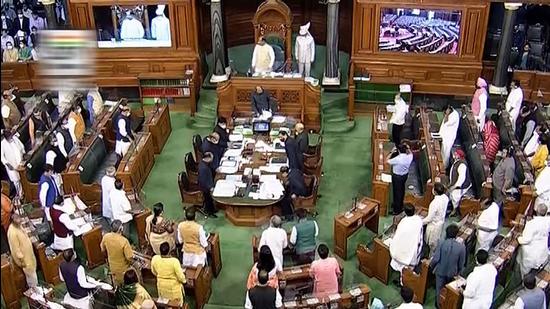
Last week, protests by the Opposition, demanding a discussion on rising fuel prices, led to disruptions in Parliament. The two Houses were barely able to work for three hours each over the first three days. The fourth day was a holiday, and parties agreed to cancel the proceedings for Friday. Media reports suggest that parties now want the budget session cut short for campaigning in assembly polls.
The first casualty of a non-functioning Parliament is accountability of the government. Question Hour, where Members of Parliament (MPs) quiz ministers about the functioning of their ministries, is the most visible mechanism for this. Last week, Question Hour barely took place. The second casualty is Parliament’s ability to debate the budget and scrutinise pending bills. Last week, Parliament passed a bill in each House, after discussing them for only half an hour. Suppose disruptions continue, and the session ends early, crucial bills will either get passed in the din without adequate discussion or get delayed till the monsoon session.
Upset by interruptions, Rajya Sabha chair M Venkaiah Naidu asked MPs whether they wanted discussion or disruption. The key here is strengthening the scrutinising and deliberative ability of Parliament, which requires an overhaul of some parliamentary processes. For example, Parliament passed an amendment to the arbitration law last week. Since 2015, this is the third amendment to the principal act of 1996. The legislative journey of the three amendments is similar. Parliament passed the first amendment in 2015 in less than 30 days. It resulted in some “practical difficulties”, leading to the second amendment in 2019, which was approved in under 20 days. The third amendment sailed through during this session in less than a week. Multiple changes to a law suggest that just a debate on the House floor does not have the thoroughness required for scrutinising a bill.
{{/usCountry}}Upset by interruptions, Rajya Sabha chair M Venkaiah Naidu asked MPs whether they wanted discussion or disruption. The key here is strengthening the scrutinising and deliberative ability of Parliament, which requires an overhaul of some parliamentary processes. For example, Parliament passed an amendment to the arbitration law last week. Since 2015, this is the third amendment to the principal act of 1996. The legislative journey of the three amendments is similar. Parliament passed the first amendment in 2015 in less than 30 days. It resulted in some “practical difficulties”, leading to the second amendment in 2019, which was approved in under 20 days. The third amendment sailed through during this session in less than a week. Multiple changes to a law suggest that just a debate on the House floor does not have the thoroughness required for scrutinising a bill.
{{/usCountry}}Parliamentary committees did not examine any of the three amendment bills. Its scrutiny has multiple advantages. The process builds a bridge between Parliament and citizens. Experts and concerned citizens can make their voices heard before the committee. It can also allay fears about the intent and the working of the law. Requiring all government bills to be looked at by a parliamentary committee is an easy step in strengthening Parliament’s deliberative ability.
Another low-hanging fruit is significantly increasing the meeting days of Parliament and making its calendar inviolable. It will provide more time to debate laws. MPs and presiding officers have, often, suggested that Parliament should sit for at least 100 days a year. But more time for deliberation in itself will not solve the problem of disruptions, for the behaviour of parties is crucial.
Meaningful discussions in Parliament hold the key to India’s democracy. In 2003, Prime Minister Atal Bihari Vajpayee said, “In a democracy, there are bound to be differences among political parties, and there is bound to be vigorous debate among divergent viewpoints in Parliament. Differences and their well-researched, articulate expression both inside and outside Parliament is the very stuff of democracy.” He went on to say, “But the vitality of democracy also demands discipline, constructive approach, and a readiness to contribute to consensus-building on pressing issues before the nation — and adherence to rules.” He also championed the need to protect the institutions of democracy. He said, “Our ancient seers taught a guru mantra: Dharmo Rakshati Rakshitah. Dharma, protected, protects. In the same way, institutions, protected, protect.” Heed the message.
Chakshu Roy is the head of legislative and civic engagement, PRS Legislative Research
The views expressed are personal