
 E-Paper



In Uttar Pradesh, a new political chapter
For the BJP, the political goal is 2024. Its governance goal should be bridging divisions, improving health and education, and boosting incomes

 Prefer HTon Google


With Yogi Adityanath being sworn in as the chief minister (CM) of Uttar Pradesh (UP) for the second time, this round of the electoral cycle in India’s largest state is over. But it only inaugurates a new phase of politics in the state — for, as all serious politicians know, the task of attaining (and in this case retaining) power is only the first step. Exercising power — when, how, for whom, and with what goal — is a 24/7 job.
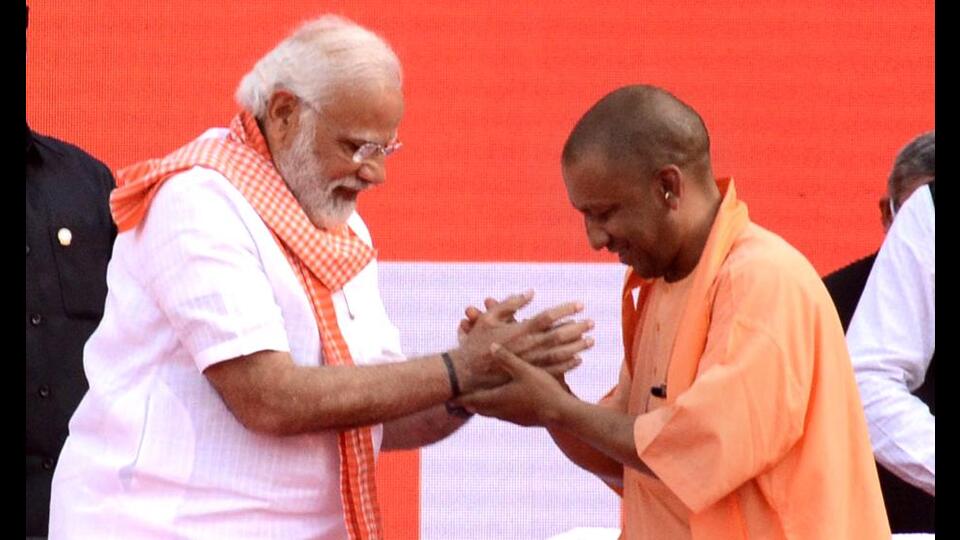
For the Bharatiya Janata Party (BJP), the political goal is clear: Ensuring that the momentum generated by the 2022 win is used to sustain its electoral hegemony in the state in 2024. The target has already been set, of winning over 75 of the 80 seats on offer. Till a decade ago, such an ambition would have been laughable. But the BJP has, in 2014, 2017, 2019, and 2022, shown that it can set audacious goals and achieve them.
For the residents of the state, the normative goal is clear — order, peace and justice through a more effective State machinery, harmony through better management of inter-community relationships, a better quality of life through access to improved public services, and higher income levels through more employment opportunities.
In this quest, there are two empirical political challenges, and three normative governance challenges for the party.
Yogi Adityanath’s first political challenge is to maintain the inclusive Hindu social coalition that brought him to power. Sustaining the support of all upper-caste groups at a time when contradictions among them were visible in the run-up to the polls; reassuring other backward class (OBC) sub-groups of the BJP’s commitment to their political empowerment at a time when they await delivery on the promise of a change in the affirmative action architecture through sub-categorisation; and expanding the party’s support among all Dalit sub-groups, both Jatav and non-Jatav, who continue to suffer from both identity and class-based deprivation, will continue to require careful political management and organisational outreach.
On this count, the BJP has started well, as seen in the composition of the council of ministers. With 21 representatives from upper-caste groups, including a Brahmin deputy CM, 20 from OBC groups, including a Maurya deputy CM, and nine Dalit ministers, including two Jatavs, the party has sent out a clear signal. Unless there is a major social churn, the BJP should be able to maintain this coalition at least till 2024.
The fact that the politics of UP has now turned fundamentally bipolar — with the Samajwadi Party (SP) as the other pole — is the second challenge. Akhilesh Yadav’s decision to quit his Lok Sabha seat and lead his party by staying on in the legislative assembly shows a higher level of political commitment than the former CM displayed so far. And his campaign vocabulary, where the SP did make a conscious effort to create a wider social coalition of backward communities, indicated that Yadav recognises the need to break out of the old, largely Muslim-Yadav social coalition, that propelled the SP to power repeatedly in the past, but is now too limiting to enable its growth.
On this count too, the BJP starts with a tremendous advantage. 2024, in some ways, will be easier for the party than 2022 — the electoral campaign will be largely fought on national issues where regional parties have a tougher time framing their challenge; the election will be a direct referendum on Narendra Modi, whose appeal remains intact; and no other leader, including Yadav, is seen as national-level contender for print ministership and therefore, even those, except the most loyal party voters, willing to give him a chance at the state-level will rethink their support when it comes to the Lok Sabha.
The fact that the BJP is politically strong should give the party the confidence to think about a set of normative goals that will help the state.
The first such normative goal is reconciliation among UP’s Hindus and Muslims. The BJP has succeeded in UP without winning the Muslim vote; in fact, it has won without even appealing to the minority vote. And therefore, it will find no reason to change its formula. But the lack of engagement between the BJP and Muslims, and even the active effort to stoke hostility against Muslims, has resulted in 20% of the state’s population finding themselves unrepresented in power structures. In a system where voters often rely on intermediaries for access to power — especially for employment opportunities and justice — this deprives them of a link to the State structure. They have also found themselves as the target of laws and policies. On the other side, the lack of deep engagement and deep roots in the community also deprives the BJP of an effective channel to hear grievances and aspirations of Muslims.
On this count, as tempting as it is for the party to continue with status quo, the BJP must use its fourth consecutive electoral victory in the state to fashion a more confident political vocabulary. The appeal of its leadership, its organisational machine, its deep penetration among Hindu social groups, and the disarray in the Opposition leaves the BJP in a pole position to win in 2024. Its challenge is finding a way to do so without taking recourse to the kind of sharp rhetoric that marked the campaign, or divisive policies that marked the last tenure. Yogi Adityanath should have a personal incentive to do so too; if he is eyeing a larger national role, he has to go beyond appealing to the party’s base to coming across as a figure not wedded to a certain form of politics that can often be laced with bigotry. Whether the BJP is confident enough, and the CM is willing enough, to do so has to be seen.
The government’s second policy challenge is improving public education and health care. Covid-19’s second wave was a stark manifestation of the deficits in the state’s health care mechanisms; and any visit to any village across the state is enough to show the crisis in government schools . Surveys have indicated that the pandemic has led to a shift, where due to reduced income levels, poorer families are sending their children back to government schools — even though the aspiration to send kids to private schools is now universal.
On this count, the BJP has the opportunity to go a step beyond its remarkably effective policies of cash transfers for gas cylinders, house and toilet construction, and provision of piped water connections and free ration. The task of improving public education and public health is much harder because of the investments it requires in infrastructure, quality of personnel, and a reset in incentive mechanisms for those who are responsible for these services. But if India is to meet its developmental goals at the national level, the residents of UP need to be able to access education and health — not just through private operators but through the State, given the scale of the challenge. And if the BJP is able to veer public policies to focus on these goals, it will mark a new chapter in the state.
And the final normative goal for the BJP has to be improving incomes. For decades, UP’s best have left the state. Adityanath’s focus on enhanced investments in the state is a good step. But a single-minded pursuit to improve incomes — through investment in infrastructure, targeted boost to manufacturing plants in every regional hub of the state, smarter agricultural practices, skilling, among other moves — is essential if India is to achieve its national goals.
A new term for the Yogi government catapults the BJP into pole position for 2024. Politically, this will require work and deft social management. But beyond the electoral calculus, if the state government can reduce divisions and make a concerted outreach to Muslims, improve health and education, and work on enhancing incomes, it will change UP, for the better.


