After the Independence Day euphoria, let’s now ponder over some complex issues facing the nation. What are these?
Let me take you back to Uttar Pradesh of the 1960s. My generation was born in this decade. Our democratic values had been strengthened after conducting two general elections and many epoch-making works were initiated.
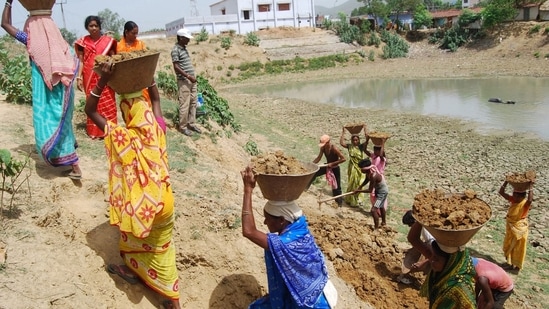
Cities, at the time, didn’t get electricity for hours, and most of the villages were batti-vihin (without electricity). During this time, India suffered catastrophic droughts and famine. Ganga’s flow almost dried up.
I have vivid recollection of ration shops that would shut before many in the long queues could secure their ration. That decade, India and Pakistan got into a war. The exemplary bravery of our soldiers assuaged, to some extent, our deep hurt from the defeat at the hands of the Chinese some years ago.
Also Read | Freedom the same night, but different dates: Why Pakistan marks its Independence Day on August 14
Prime Minister Jawaharlal Nehru too passed away during the decade. His replacement Lal Bahadur Shastri’s tenure was short. Indira Gandhi’s ascent was the result of Shastri’s untimely death. The emergence of dynastic politics can be traced to this. In those times, Dalits couldn’t fetch water from many wells and lakes, and couldn’t ride a horse for their wedding procession. Muslims were relatively better placed, but were weighed down by the unnecessary guilt of Partition. The country got the first Muslim president and its only woman prime minister (till date) in the same decade. During the same decade, the backward classes’ impact on politics in the southern states signalled a change in future political equations.
{{/usCountry}}Prime Minister Jawaharlal Nehru too passed away during the decade. His replacement Lal Bahadur Shastri’s tenure was short. Indira Gandhi’s ascent was the result of Shastri’s untimely death. The emergence of dynastic politics can be traced to this. In those times, Dalits couldn’t fetch water from many wells and lakes, and couldn’t ride a horse for their wedding procession. Muslims were relatively better placed, but were weighed down by the unnecessary guilt of Partition. The country got the first Muslim president and its only woman prime minister (till date) in the same decade. During the same decade, the backward classes’ impact on politics in the southern states signalled a change in future political equations.
{{/usCountry}}Baby steps were taken in the field of sports, education, technology, and science. In the 1960 Rome Olympics, Milkha Singh won hearts globally though he failed to secure a medal. It was the golden era of Indian hockey and football. In cricket, India defeated New Zealand under the captaincy of Mansoor Ali Khan Pataudi. It was the time when the Indian Institutes of Management (IIMs) were established. The first rocket was fired from Thumba space centre and the Indian Space Research Organisation came into existence. Landmark progress was made in nuclear energy, and India’s historic Green Revolution also took off.
Today, India is on its way to become an economic superpower. But disparities remain.
Also Read | Free coaching classes, AI training: PM Modi's big Gen Z outreach in Independence Day speech
New Delhi has witnessed a string of powerful governments since 2009. Great progress has been made in the field of access to electricity, health and education. But there’s still a wide chasm between government data and the ground reality. We have the world’s largest pool of graduates, but 45% of them can’t secure a job commensurate with their degree.
Even nature seems to be adversely disposed towards us. The monsoon season is on, but 26 rivers in Bihar are almost dry. Reports from Uttarakhand suggest it has lost 25% of its forest cover. Today, the rains soak the bare hillside, creating havoc. On the eve of Independence Day, 14 people are battling for life, victims of debris flow in a tunnel in Chamoli.
In such times, I am reminded of those small towns where I grew up. Though electricity or tap water wasn’t available in every house, but rains didn’t lead to deadly water-logging either. Today, even in the financial capital Mumbai, water-logging becomes a life threatening event for the commuters. While villages are emptying out, tier 2 and tier 3 towns are witnessing a boom in multi-storied apartment complexes.
If we need to maintain a balance in our demography, we must create employment opportunities in the villages. Along with secure borders, we need to ensure social and environmental security with equal sensitivity. Since the economic liberalisation of 1991, we have tried to turn Bharat into India. Economic inequality has gone through the roof. Such inequality led to the demise of the Soviet Union and has redrew the maps of many European nations.
Also Read | The next frontier for Indian science on the 80th Independence Day
But there’s no need for pessimism. We know how to move ahead, breaking the chains of adversity. Many rulers came to this land and became a part of this country. We learnt from everyone and internalised those teachings.
Seventy-nine years of Independence have progressively added strength to the narrative.
Today, those born in the 1960s, living in the sixth decade of their lives, draw joy from the fact that we are still a young nation. Opportunities, energy, and youth are complementary to each other. But there’s another side to the same story. We will start aging in the next decade. Three decades from now, India will have more aged than young. Are we ready to face that challenge? We’ll need to think about it today. Why not begin the process today? We will have to think about how we can bring along those who are left behind.
There can be no better start to the 80th year of our Independence.