Despite global headwinds, India’s economy has demonstrated resilience, supported by sustained manufacturing performance and strong growth in the services sector. Today, services contribute about 52.9% of Gross Value Added (GVA), employ nearly 30% of the country’s workforce and have made India one of the world’s leading exporters of services. The sector deserves a renewed focus and better monitoring in consonance with its role in the economy.
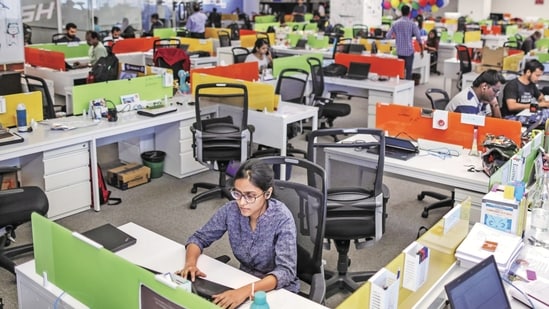
There is no high-frequency indicator for service-sector performance. To address this gap, the ministry of statistics and programme implementation (MoSPI) launched the Annual Survey of Incorporated Services Sector Enterprises (ASISSE) and the Index of Services Production (ISP). These seek to improve the quality, frequency, and coverage of service-sector statistics. Unlike manufacturing, where production volumes are directly observable, services, being intangible, require indirect measures to capture output. Earlier efforts explored appropriate data sources, variables and methodologies, and proposed a phased approach beginning with segments within the sector — such as banking, insurance and telecom — where reliable data are available. However, the absence of comprehensive and consistent data sources for other service segments posed serious challenges. In 2025, MoSPI constituted a committee to decide on a conceptual and methodological framework based on availability of new datasets (given India’s rapidly evolving digital data ecosystem) and design a monthly ISP.
The utilisation of Goods and Services Tax (GST) data for statistical purposes marks an important advancement in leveraging administrative data for strengthening India’s statistical system. Since GST data are already collected, this approach imposes no additional reporting burden on businesses. MoSPI has used product-level aggregate GST data to compile the ISP. For market-based services, outward supplies reported through GST closely reflect production because services are typically produced and consumed simultaneously. By deflating outward supplies with suitable price deflators, service sector output in real terms can be estimated. The coverage of services in GST data is extensive enough to enable ISP development.
{{/usCountry}}The utilisation of Goods and Services Tax (GST) data for statistical purposes marks an important advancement in leveraging administrative data for strengthening India’s statistical system. Since GST data are already collected, this approach imposes no additional reporting burden on businesses. MoSPI has used product-level aggregate GST data to compile the ISP. For market-based services, outward supplies reported through GST closely reflect production because services are typically produced and consumed simultaneously. By deflating outward supplies with suitable price deflators, service sector output in real terms can be estimated. The coverage of services in GST data is extensive enough to enable ISP development.
{{/usCountry}}That said, some services remain outside the GST framework: health, education, a large chunk of railways, life and health insurance, non-AC public transport and transport of essential commodities. Here, two other sources of information — administrative datasets from railways, aviation, banking and insurance and ASISSE for health and education — are of use. In that sense, ISP will be a unique blend of multiple data sources and methodologies tailored for India’s needs.
The proposed ISP adopts FY25 as the base year because it represents a relatively normal economic period and offers the most detailed GST data. It also aligns with the 2024 base year for the new Consumer Price Index series, enabling consistent use of price deflators for estimating real output.
The ISP should cover the entire services sector. Initially, however, its coverage will primarily reflect the formal economy because GST is the principal data source. Some activities, including enterprises below the GST threshold (mostly informal sector) and exempt-categories such as government-provided health and education services, will require supplementary datasets for full coverage. MoSPI’s ongoing Annual Survey of Unincorporated Sector Enterprises (ASUSE) will pave the way for indices on informal sector in the long run. The ISP’s use of GST data rather than the traditional frozen-panel methodology used for production and price indices is significant. The GST database automatically incorporates newly registered firms, captures diversification, and reflects business closures. So, the ISP maintains representative.
The weights to be used in the ISP will be derived primarily from the GVA of different service activities. National Accounts Statistics and ASISSE will provide the basis for estimating these weights. Since GST data are organised according to Service Accounting Codes, these are mapped to the National Industrial Classification (NIC) for aggregation.
However, for trial indices, until detailed ASISSE based weights become available, GST-based weights will be used for aggregation of NIC 2-digit level into broad tabulation service categories. Initially, indices will be released at the broad sub-sectoral level, and after studying their stability, the overall ISP will be brought out.
MoSPI plans to release the ISP initially on a trial basis with a lag of 60 days. The ISP will strengthen evidence-based policymaking, support business decisions and enhance macroeconomic analysis.
Co-authored with Neha Srivastava, deputy director general, MoSPI. Saurabh Garg is secretary, and Dalip Singh is additional director general, MoSPI. The views expressed are personal