
 E-Paper



Marriage equality around the world
34 countries recognise marriage equality – of them, 23 have legalised marriages through legislation, while 10 legalised marriages through court decisions.

 Prefer HTon Google


On Tuesday, the Supreme Court of India began hearing a clutch of petitions seeking marriage equality for lesbian, gay, bisexual, transgender, queer and intersex (LGBTQI) persons. The petitions have challenged several laws, including the Special Marriage Act, the Hindu Marriage Act, and the Foreign Marriage Act, stating entitlements, which are otherwise available to heterosexual married couples, are denied to them.
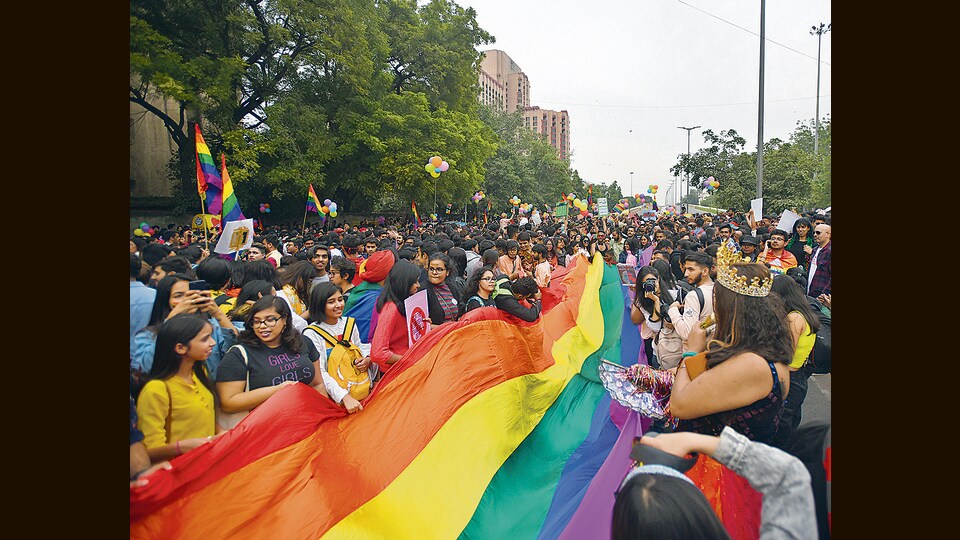
The Centre, however, has objected to the petitions on the contention that personal laws govern marriages, and it is a matter for Parliament to consider.
According to the Human Rights Conference, 34 countries recognise marriage equality – of them, 23 have legalised marriages through legislation, while 10 legalised marriages through court decisions.
In 1993, Norway passed a law permitting civil unions among same-sex partners, followed by Sweden in 1995, making them the first two countries to recognise marriage equality.
Based on information from the Pew Research Centre, here’s a quick look at some countries.
Netherlands and Belgium legalised marriage in December 2000, and 2003, respectively, and Slovenia was the latest to sanction it on October 4, 2022.
In May 2020, Costa Rica became the first Central American country to legalise same-sex marriage. The country’s highest court in 2018 ruled that the nation’s law banning same-sex marriage was unconstitutional and said the ban would be nullified in 18 months, unless the legislature acted before then, which it did not.
In October 2019, same-sex marriage became legal in Northern Ireland. It was the last constituent of the United Kingdom where same-sex marriage was banned; England and Wales moved to allow gay and lesbian couples to wed in 2013, and Scotland followed in 2014. Catholic-majority Ireland legalised same-sex marriage through a popular referendum in 2015.
On June 12, 2019, Ecuador’s Constitutional Court ruled that same-sex couples have a right to marry.
On May 17, 2019, Taiwan’s legislature passed a law legalising same-sex marriage, making the island nation the first country in Asia to permit gays and lesbians to wed.
In 2017, the Constitutional Court struck down a law defining marriage as between a man and a woman.
On January 1, 2019, Austria legalised same-sex marriage. The country granted gay and lesbian couples the right to enter a civil partnership in 2010. But in 2017, Austria’s highest court ruled that these partnerships are inherently discriminatory and ruled that unless a law to the contrary were passed, marriage equality would prevail from January 1, 2019.
On December 7, 2017, the Australian Parliament passed legislation allowing gay and lesbian couples to legally wed three weeks after Australians voted in favour of legalising same-sex marriage in a nationwide referendum. New Zealand passed a law legalising it three years ago.
Malta’s Parliament voted to legalise same-sex marriage in July 2017, despite opposition from the Catholic Church in the small Mediterranean island.
On June 30, 2017, Germany became the 15th European country to enact legislation allowing same-sex couples to wed.
On April 28, 2016, Colombia became the fourth country in Catholic-majority South America to legalise same-sex marriage, following Argentina, Uruguay and Brazil.
In 2015, the United States’ Supreme Court ruled in the Obergefell versus Hodge case that the Constitution-guaranteed protection for same-sex marriage in all the country’s states. This overturned a bill signed in 1996 by then-president Bill Clinton called the federal Defense of Marriage Act, which upheld states’ right to ban same-sex marriage and prohibited the federal government from recognising same-sex marriage.
Greenland, an autonomous territory of Denmark, passed a law in May 2015, to legalise same-sex marriage. In 2017, Finland became the last of the five Nordic countries to legalise same-sex marriage, joining Denmark, Iceland, Norway and Sweden. In 2008 and 2009, Norway and Sweden respectively allowed gay and lesbian couples to marry in both religious and civil ceremonies.
On June 18, Luxembourg’s Parliament, the chamber of deputies, approved legislation to allow gay and lesbian couples to wed and adopt children. The bill, which took effect in early 2015, was championed by the country’s prime minister, Xavier Bettel, who is openly gay.
On July 17, 2013, the late Queen Elizabeth II gave her “royal assent” to a bill legalising same-sex marriage in England and Wales. The day before, after months of debate, the measure had won final passage in the British Parliament. In addition, the Scottish Parliament passed a bill to legalise same-sex marriage in February 2014. However, the law prohibits same-sex weddings within the Church of England, which continues to define marriage as between one man and one woman.
On May 14, 2013, Brazil’s National Council of Justice ruled that same-sex couples should not be denied marriage licences, allowing same-sex marriages to begin nationwide. Previously, about half of Brazil’s 27 jurisdictions had allowed same-sex marriage.
On May 18, 2013, French President Francois Hollande signed a measure legalising same-sex marriage into law. The conservative Opposition party, the UMP, had challenged the law, and their petition was struck down. However, it was passed into law the following day.
On April 10, 2013, the lower house of Uruguay’s Congress passed legislation legalising same-sex marriage. Civil unions have been permitted in Uruguay since 2008, and gay and lesbian couples were given adoption rights in 2009. In July 2010, Argentina became the first country in Latin America to legalise same-sex marriage, despite vigorous opposition from the Catholic Church and evangelical Protestant churches. In June 2010, Portugal’s Parliament also passed the measure legalising same-sex marriage.
The South African Parliament legalised same-sex marriage in November 2006, one year after the country’s highest court ruled that the previous marriage laws violated the South African Constitution’s guarantee of equal rights. The new law allows religious institutions and civil officers to refuse to conduct same-sex marriage ceremonies, a provision critics claim violates same-sex couples’ rights under the Constitution.
Spain legalised same-sex marriage in 2005, guaranteeing identical rights to all married couples regardless of sexual orientation.
Same-sex couples in Canada gained most of the legal benefits of marriage in 1999 as gay and lesbian couples were allowed to undergo common-law marriages. In 2005, the Canadian Parliament passed legislation making same-sex marriage legal nationwide.


