
 E-Paper



Leveraging innovative disruptions in politics
Disruptive innovations usually enter the market at the low end, targeting customers who are underserved by existing products or services

 Prefer HTon Google


Once, a year-end study revealed that Ford vehicles sold the most globally. So, each of the global competitors of the time invested in technology, in marketing and in services to challenge Ford. However, Ford was miles ahead next year as well. The competitors went through another cycle of research and development and more investments, but the result was the same. This time, however, the competitors hit upon a disruptively innovative idea of combining their resources — men, material and labour — to develop a single consortium vehicle to compete with Ford. Yet again, Ford stood out with even bigger sales. The competitors then approached Ford for answers.
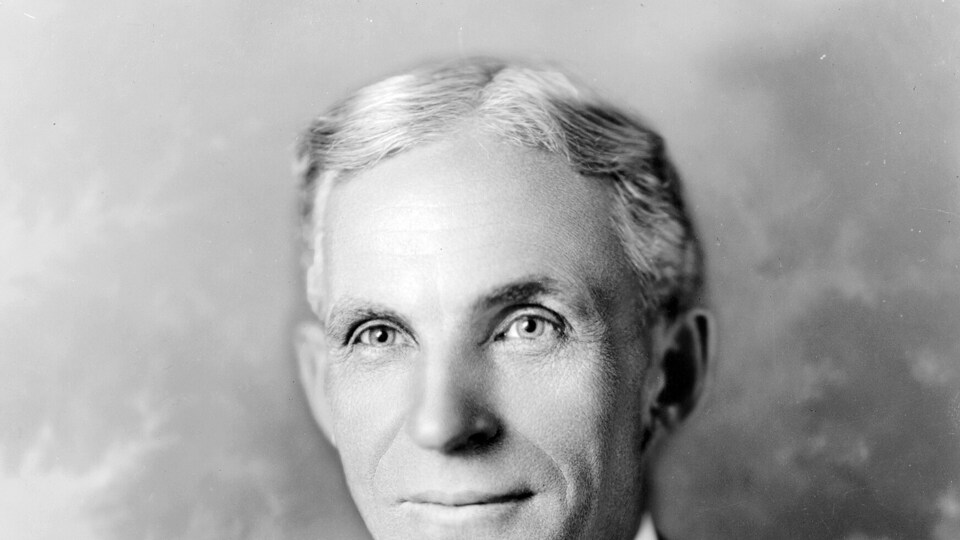
Henry Ford, confident as always, agreed to help the consortium and took them to his garage where his and the competitor’s vehicles were parked. Each aspect of the vehicle, the styling, the features, and after sales service, were all compared. To the competitor’s chagrin, it was agreed by Ford that the consortium’s vehicle stood out. Now was the time to check the engine and the bonnet was opened. Lo and behold, no engine in the Ford vehicle. The consortium was now truly perplexed and pleaded with Ford for an answer. Ford informed that his vehicle rode on his “name”. Though this is a parody, there are lessons here. All innovations do not work, disruptive or otherwise, and you need one charismatic leader to challenge the norms, not multiples of them.
Innovative disruption, or disruptive innovation, was introduced by Harvard Business School professor Clayton Christensen in 1995. It describes the process by which a new product or service emerges and eventually disrupts an existing market, displacing established market leaders and fundamentally changing the way business is conducted in that industry. However, disruption must be helmed by an effective leader. Politics too is business today. Are we seeing disruptive innovation in politics today?
Disruptive innovations usually enter the market at the low end, targeting customers who are underserved by existing products or services. This allows them to gain a foothold and gradually improve their offerings to appeal to a broader customer base. While the ideological arm ensured forays into the last mile, the political arm ensured success with targeted benefits. Soon, they captured a larger market share as they became more competitive. Smokeless “choola” was one such low-end service that got into the everyday psyche. Building toilets was another. The disruptions got even better. The discounted gas cylinders endeared rural women folk to the party forever.
Disruptive innovations often arise from the introduction of new technologies or the application of existing technologies in novel ways. This can lead to a significant transformation of the market landscape, with new entrants displacing established players. Any disruption to be effective must reach the last mile. Be it demonetisation or nationwide implementation of Goods and Services Tax, or the thrust on digital economy or the passing of the triple talaq bill, these were all massive disruptions that in some way benefitted the last mile in the supply chain. The political innovations now reached a point where they transformed the landscape and competed directly with the established political space. That the established players were steeped in their own mire only helped.
Established companies may initially dismiss or resist disruptive innovations, as they often disrupt existing business models and revenue streams. However, those that fail to adapt may find themselves marginalised or even pushed out of the market. Does India’s Grand Old Party, the Congress, find itself in this predicament?
Disruptive innovations often succeed by addressing the unmet needs of a specific customer segment. By providing a solution that is more affordable, convenient, or accessible, they can attract customers who were previously overlooked by incumbents. Some examples in the technology arena were personal computers disrupting mainframe computers, digital photography disrupting traditional film photography, online streaming services disrupting traditional cable TV or even ride-sharing services disrupting traditional taxi services. The PM Jan Dhan scheme, and the direct beneficiary scheme are examples in the political space.
Religion binds people like nothing else. Secularism has innate fallacies. While religion binds people, albeit to the extent of taking sides, secularism is loosely defined and often an abstract idea. So, what else can be a better tool for political disruption than religion? The Ram temple in Ayodhya is a case in point. That a majority of the Hindus instantly identified with the cause, was a success of religious disruption. All disruptions work on effective strategies. Effective strategies need effective leaders. Effective leaders create their own strategies.
The leader’s approach was simple and straight. It involved creativity, adaptability, and a deep understanding of market dynamics. He identified unmet needs, focussed on customer experience, started small and iterated, leveraged emerging technologies, collaborated and networked, kept disrupting own business models, built a culture of innovation, silently invested in political research and development, adapted to market feedback and scaled gradually while his lab did agile development and created prototypes.
All management principles, which we only teach in the classrooms, were practised to the T. “Dev to Desh”, “Ram to Rashtra”, “Vijay to Vinay”, “Ram is not conflict but resolution”, and “Tent to Temple” — are all aimed at maximising the returns of a calculated disruption. Doesn’t each of those statements touch some part of the soul?
Understanding and leveraging innovative disruption is crucial for both established companies and entrepreneurs, as it can open up new opportunities for growth and success. Organisations that embrace change and proactively explore innovative solutions are better positioned to thrive in dynamic and competitive markets. It is the same in politics.
SS Mantha is former chairman, AICTE. The views expressed are personal


