
 E-Paper



On marriage equality, a missed opportunity
Given the nuances of existing laws and the legislative vacuum, the Supreme Court could have resorted to judicial legislation of same-sex marriage,

 Prefer HTon Google


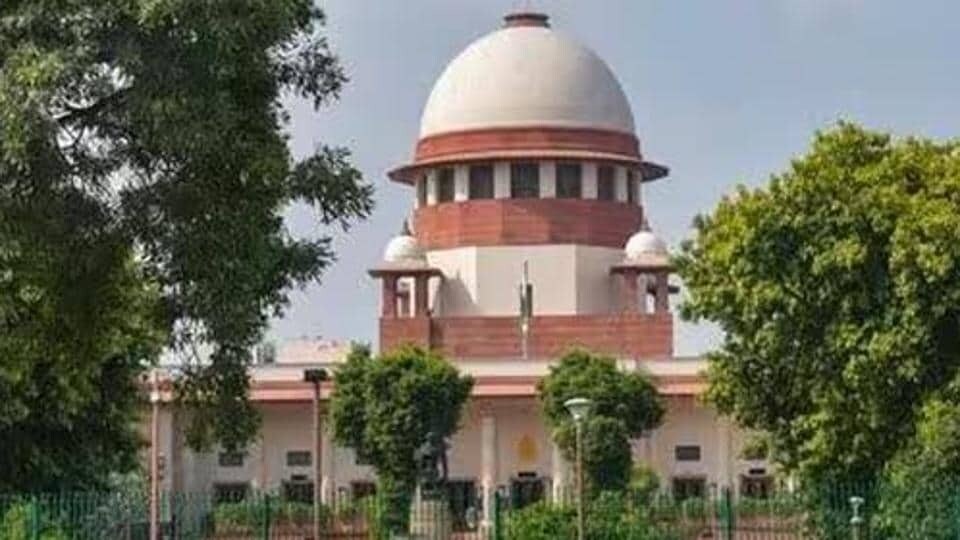
On October 17, 2023, the world’s most powerful Supreme Court (SC) expressed its inability to recognise same-sex marriage in Supriyo vs Union of India. The majority-minority distinction in the judgment is blurred in a way since no judge on the bench was willing to grant the substantial relief of recognising queer marriages in India by interpreting the relevant provisions of the Special Marriage Act (SMA), or by way of judicial legislation.
No one would dispute the relevance of Montesquieu’s doctrine of separation of powers and the role of the legislature in such a scenario. Philosopher Charles Taylor has compared the process of judicial decision-making with the act of legislation to highlight the wider canvas of the latter. He correctly explained that in an adjudication by the Court, either of the two sides is held to be correct (as happened in Supriyo), whereas the legislature can go into the different aspects of the issue and deal with them comprehensively. Yet, the question is about the Court’s role when the existing scheme of the laws results in blatant discrimination based on sexual orientation and gender identity.
The judgment makes for curious reading. The Chandrachud-Bhat disagreement on the question of the SC “alleviating discrimination” is ironic. Chief Justice of India (CJI) DY Chandrachud criticises Justice Ravindra Bhat for refusing to exercise the power under Article 32 of the Constitution by issuing an appropriate writ, even after noting the discrimination against LGBTQ+ persons. Justice Bhat, on the other hand, takes a conventional view of relegating the whole issue to Parliament. But the CJI, in the case of substantial issues, does the same thing. Thus, the reliefs sought for in the batch of cases are essentially turned down by the SC, due to “institutional limitations”, to use the words of the CJI.
In the present case, the SC’s approach was very different from its line adopted while deciding the question of privacy in Puttaswamy (2017), the right to have intimate personal relations in Joseph Shine (2018) and Navtej Singh Johar (2018). Though, in theory, it is easy to say it is for Parliament to act, the track record of the Indian legislature in enacting radical laws as against the age-old ideas of social morality is dismal. This, in fact, was the cause of action for the present batch of petitions before the SC. This was again the reason why judicial adjudication was required in Joseph Shine to decriminalise adultery as defined under the erstwhile Section 497 of the Indian Penal Code (IPC). Same-sex relations were decriminalised in Navtej Singh Johar (2018) by the SC by substantially reading down Section 377 of the IPC. A similar assertive posture is absent in Supriyo. Legislation by the Indian Parliament granting legal recognition to same-sex marriage is almost improbable, given its populist gesture in such contentious issues. The Centre’s stand as per the counter affidavit in the case that marriage is “an exclusively heterosexual institution”, further diminishes the legislative possibilities.
As it happened now, the SC was reluctant to interfere with the provisions of progressive legislation like the SMA, even while it accepted the concerns of the petitioners. Though one’s fundamental right to have intimate relations without harming society was accepted by the apex court, the right to enjoy the resultant rights, flowing from marriage, was not recognised. This makes the judgment incomplete in terms of relief.
CJI Chandrachud rejected the persuasive value of the verdicts from foreign jurisdictions like South Africa and the UK based on the differences in the legal landscape. Justice Bhat also agreed to this view citing “distinct contextual framework”. It is the universality of the ideas of equality and dignity that was sidelined in such a hyper-technical view.
Given the nuances of the existing laws and since there was a legislative vacuum as acknowledged in the judgment, the SC could have resorted to judicial legislation of same-sex marriage in line with the judgment in Vishakha vs State of Rajasthan (1997). Vishakha dealt with the safety of women in the workplace. It impacted other penal laws and service laws in the country. The complexity of the issue and ramifications on other laws by themselves do not create an embargo in legislation by the SC when constrained. Vishakha itself illustrates this point. Such a law could have been replaced by the law to be made by Parliament in the future at least under judicial compulsion. It is also this opportunity for a “counter-majoritarian legislation” that the SC has missed in Supriyo. Instead, the apex court went into the intricacies of the existing laws.
The sexual orientation of queer people is a reality that the Indian law has accepted and honoured. Recognition of these sexual minority rights is required to be taken to its full extent, by granting legal endorsement to same-sex marriage. Very many civil and personal rights including the right to property are interlinked with marriage.
Therefore, the non-recognition of same-sex marriage results in the deprivation of these rights. The majority judgment even rejects the right for adoption by same-sex couples, which, on the face of it, is unjust.
A report by Human Rights Campaign, a US-based LGBTQ+ rights group, titled ‘Marriage equality around the world’ says 23 countries gave recognition to same-sex marriage by legislation, 10 countries through court verdicts and two countries by way of enactments based on court decisions. With the dismal result in Supriyo, the Indian scenario would call for a long march for materialising the goal of legalised same-sex marriage. One can only paraphrase the famous words of Karl Marx and say that in Supriyo, the SC has only interpreted the law on marriage and adoption; the point, however, is to change it.
Kaleeswaram Raj is a lawyer at the Supreme Court of India The views expressed are personal


