
 E-Paper



Queen Elizabeth II will be a tough act to follow
While King Charles III will seek to emulate her sense of consistency and duty, this will be difficult to sustain in a divided UK and a changing world

 Prefer HTon Google


We live at a time of novelty. New assertions of political power, new forms of global conflict and new technologies can make the old seem quickly obsolete and leave us few points of visible continuity. Against this, Queen Elizabeth II was the embodiment of tradition. In 1952, while holidaying up a tree in the “crown colony” of Kenya aged just 25, she learned she had inherited the role of monarch following the death of her father, George VI.
Looking at photographs of the Commonwealth Prime Ministers’ Conference held the next year in London to coincide with her coronation, the Queen appears extraordinarily young, surrounded by men born in the 19th century. Yet even in those early days, constitutional change was in the air. When her uncle Edward VIII became king in 1936, his accession had been attended by the Indian jurist, Sir Shadi Lal, as a member of the judicial committee of the privy council, and the sovereign broadcast a message “To the Princes and Peoples of India.” By 1953, India was a democratic Republic, the princes were obsolete, and at Prime Minister Jawaharlal Nehru’s request, the term “Imperial Crown” was no longer used when the new reign was proclaimed.
Over the following two decades, countless countries across Asia and Africa declared independence. That era has come to an end: Queen Elizabeth II was on the throne not only through the long post-colonial eclipse, but for approaching one-third of America’s history as an independent nation. As head of State, she had an institutional knowledge and span of personal experience that was unparalleled: She had met everyone, and guided 15 prime ministers from Winston Churchill (born in 1874) to Liz Truss (born in 1975).
The response in Europe last week to her death — Germany lighting up the Brandenburg Gate with the Union Jack, President Emmanuel Macron speaking of the deep warmth of her ties to France, European Union flags flying at half-mast — is indicative of an entente that transcended tensions around Brexit. The Queen’s philosophy, increasingly rare in these times when people may share several irate opinions with the world before breakfast, was “never complain, never explain”. We know little of her views, except to say they were stoical, reticent, outwardly apolitical but socially conservative, and that she was pragmatic about adapting to changing circumstances. In the royal family, she was known for being an “ostrich” in response to tensions, and then moving ruthlessly to protect the monarchy, most recently by axing the public role of her grandson Prince Harry and son Prince Andrew.
Her humour was sharp. When she said that she wrote a diary every day, a nervous hanger-on responded: “In your own hand, ma’am?” to which the Queen replied: “Well, I could hardly use someone else’s.” During World War II, she became Britain’s first female royal in centuries to wear a military uniform, working as a truck mechanic in the Auxiliary Territorial Service. When Saudi Crown Prince Abdullah visited years later, she put her training to use. Knowing that women were then banned from driving in Saudi Arabia, she asked if he would like a tour of her estate at Balmoral. He agreed, to find the Queen climbing into the driving seat of his vehicle and turning on the ignition. “His nervousness only increased as the Queen, an Army driver in wartime, accelerated the Land Rover along the narrow Scottish estate roads, talking all the time,” a diplomat reported. “Through his interpreter, the Crown Prince implored the Queen to slow down and concentrate on the road ahead.”
The sense of duty and consistency that Elizabeth II projected, supported by a compliant British media, may be hard to sustain in the coming years. King Charles III will seek to emulate it, but the United Kingdom is a more ideologically divided realm than it was, even before we consider the economic disruption of the pandemic and surging energy prices. In Britain itself, and internationally, there is a wider understanding of the historic links between Empire, monarchy, enslavement, colonialism and legacies of racial injustice. This debate may be contested, but is active at government levels in a way that it was not in the past, and the conversation has become more challenging as information is revealed about the hidden histories of violence that accompanied decolonisation.
The compromises made by early nationalist leaders — many of whom endured lengthy stays in prison — to ensure a stable transition of power may look less appealing in a new global time. In 1957 when Ghana won independence, Queen Elizabeth II sent her cousin Marina, Duchess of Kent, to represent her. “The thing that impressed me more than anything else that night,” wrote Martin Luther King Jr., who was present at the ceremony in Accra, “was the fact that when Nkrumah walked in and his other ministers who had been in prison with him, they didn’t come with the crowns and all of the garments of kings, but they walked in with prison caps… On the night of the State ball, Prime Minister Kwame Nkrumah was there dancing with the Duchess of Kent. And I said, ‘Isn’t this something? Here it is the once-serf, the once-slave, now dancing with the lord on an equal plane.’” It was a distant era.
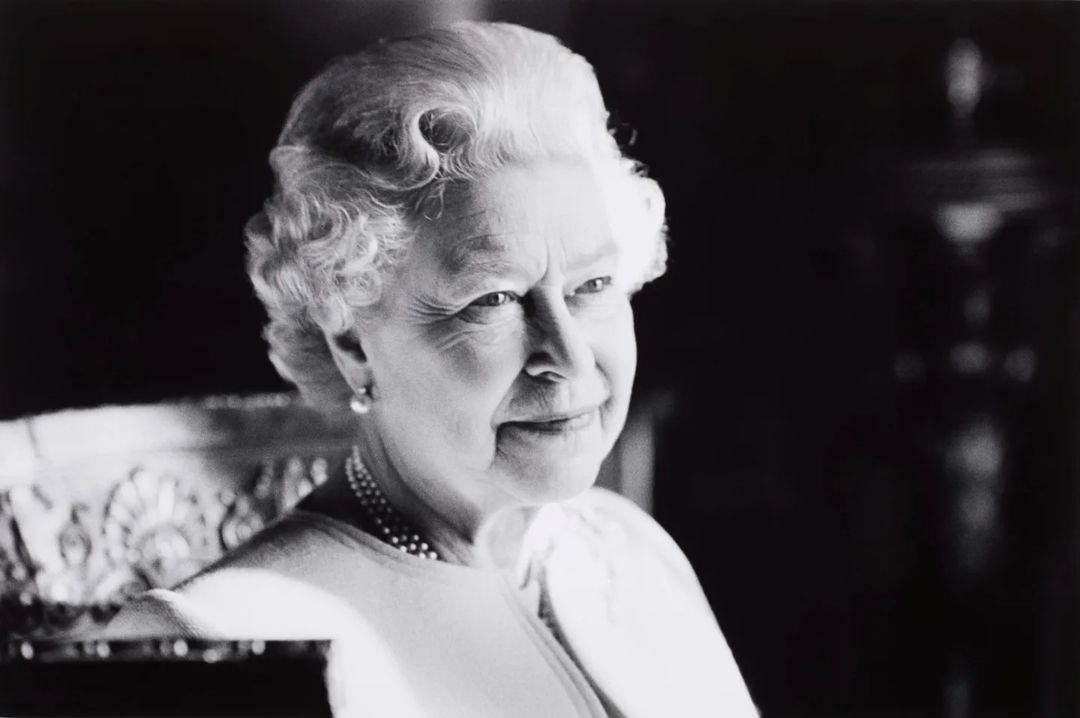
Through her air of permanence and silent continuity, Queen Elizabeth II retained popularity in Britain both among monarchists and those who favoured an elected head of State. She bridged differences that often looked unbridgeable, and King Charles III will be intensely aware of the scale of the challenge he and his descendants face in maintaining this achievement. When Queen Victoria died in 1901, the royal families of Europe referred for decades afterwards to the late monarch only as “The Queen”, as if there could be no other. The same may be true this time around: Queen Elizabeth II will be a tough act to follow.
Patrick French is a historian and biographer
The views expressed are personal


