
 E-Paper



Rooftop solar waits for its moment under the sun
Rooftop solar saves precious land and also generates seven times more jobs as compared to large ground-mounted ones and provides cost-effective power

 Prefer HTon Google


The spotlight has once again turned to solar rooftop installations with the government recently announcing a scheme to cover one crore households with rooftops in the next few years. Rooftop solar has been a policy priority in India given its multiple benefits. We had set a target of 40,000 MW of rooftop solar by 2022 against which we have achieved only 11,000 so far.
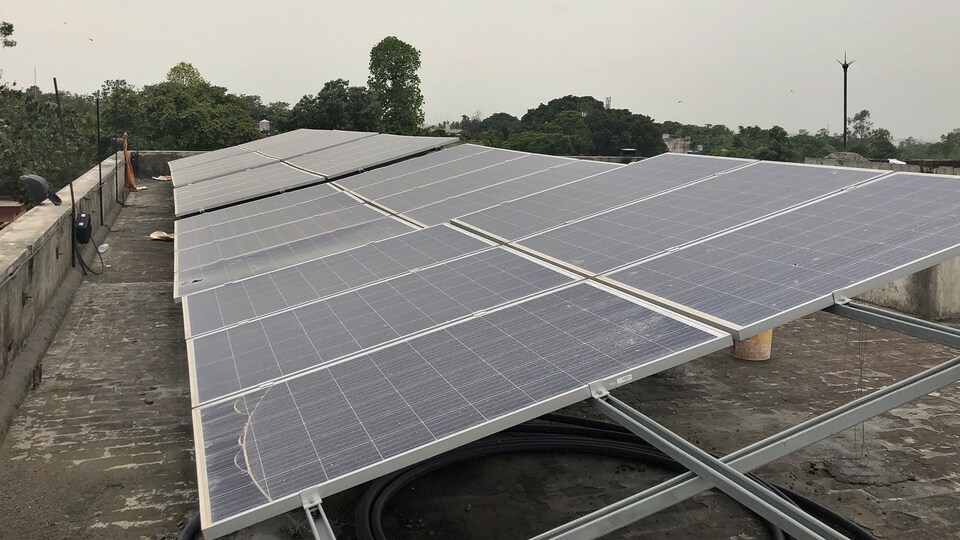
Let us look at its benefits first. It saves precious land and also generates seven times more jobs as compared to large ground-mounted ones. It provides cost-effective power at the consumption point. On average, the cost of one unit is ₹ 4 as compared to about the ₹ 6.5 average cost of power procured in India after factoring in transmission losses, carriage charges, and spillage in the networks. It can reduce the power bill of consumers and also bring down the overall cost of power as we will not have to build long expensive new transmission lines for delivering power from the deserts of Rajasthan.
But why is the share of the residential sector only one-fourth of all the solar power produced despite the higher level of subsidy (up to 40%) offered by the central government for small rooftop plants of up to three kilowatts, normally set up in households? There are two main reasons for this.
First, the financial gains from investing in rooftop plants depend on the rate of power being paid to the power utility. The tariff in the electricity bill has two parts. A fixed charge in terms of ₹ per KW per month computed on your contracted load, and the energy charge being paid for the units consumed in a month. The fixed charge is to be paid as such since a household with a rooftop solar would continue to be the consumer of the utility. What matters is the energy charge avoided on the electricity generated from the rooftop facility and consumed directly by the household. Energy charges vary not only for various consumer categories but also increase for residential consumers as consumption goes up.
In Delhi, the energy charge is ₹ 3 for up to 200 units in a month whereas it is ₹ 7 for the units consumed in the 800 to 1,200 units slab for households. It is ₹ 7.75 per unit for an industrial unit. Clearly, a large number of households consuming up to 200 units per month will have no savings from a solar rooftop as they have to pay one rupee extra for every unit, or else they get power free in several states.
Recently, there were reports of a decline in rooftop installation additions in Karnataka after the announcement of free power. Incentives from rooftop plants are positive and substantial for richer households consuming more and for industrial or commercial consumers.
Second, low-income households do not have much capital to invest in solar rooftops. A 3 KW plant would cost about ₹ 1.5 lakh after incorporating the subsidy. Further, bankers are not prepared to lend to small households as recovery of loans is difficult and uncertain. Utilities find it difficult to recover the bills even when there is a risk of disconnection.
But if larger households or industrial consumers continue to dominate rooftop additions, it will start impacting either poor households or state budgets adversely because the net savings made by these consumers will have to be made up by the regulators through overall tariff increases or the state government will have to provide extra subsidies.
Therefore, a way has to be found for the benefit of solar rooftops to reach a large number of smaller households. A new model where households rent out their roof area to credible government agencies who borrow the money required and set up rooftop plants could be tried. Power utilities buy the electricity generated from such plants at rates to recover the investment with an incentive of about a rupee per unit.
This incentive should be paid to the household for leasing the rooftop and also continuing to support the unhindered operation of the plant. Bankers will be comfortable lending to government agencies and the households will get incentivised in large numbers without any impact of low tariffs or free power. Government subsidy can, in addition, increase the incentive to the households and also further reduce the cost of power to the utilities.
Alok Kumar is former Union power secretary. The views expressed are personal


