To William Congreve is attributed the aphorism “Hell hath no fury like a woman scorned”. That’s also true of a spurned ambassador. Abdul Basit’s account of his three years as Pakistan’s high commissioner (HC) in India, aptly called Hostility, is suffused with hurt and smacks of revenge. No doubt, teeth are gnashing in Islamabad. They’ll soon be drowned by chortling in Delhi. The book starts with an account of how Nawaz Sharif told Basit he would be Pakistan’s next foreign secretary. But he never got the job. Nor any explanation. Delhi was the consolation prize. So, a wounded and humiliated man became Pakistan’s HC in March 2014. This sad story explains everything that followed.
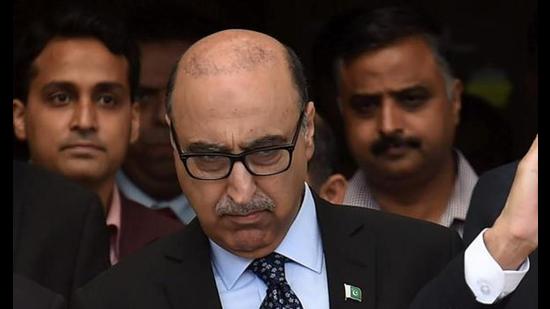
It’s hard to tell on whom the greater share of Basit’s wrath falls. Of Sharif, prime minister (PM) right through Basit’s tenure, he writes: “Sharif was overly inclined to pander to India unilaterally and unconditionally”. He even suggests the PM’s emotions were conflicted: “I could see that Sharif had an emotional attachment to India and Indians which, at times … went beyond his stature as the Prime Minister”.
Of Sartaz Aziz and Tariq Fatemi, Sharif’s special assistants, he’s not even polite. He calls them “brazenly apologetic and improvident”. “One thing that particularly struck me was their accepting (Narendra) Modi’s contentions readily and working quickly to assuage his concerns,” he writes. “They wanted to deliver no matter what”.
He doesn’t state it but the conclusion is obvious. Basit believes Sharif, Aziz, Fatemi and then foreign secretary, Aizaz Ahmad Chaudhry, were willing to compromise Pakistan’s interests. I can’t think of any diplomat who has targeted his government and colleagues so directly and brutally.
However, it’s the details that I find riveting if, at times, unbelievable. It seems Sharif and the foreign office either didn’t like or trust Basit. “I was considered to be an outsider … my own Ministry would prefer to conduct relations with India through its High Commissioner in Islamabad and would not even keep me posted”. When Sharif replied to a letter from Modi, it was given to the Indian HC, not Basit, thus denying him a chance to meet Modi. When Sharif and Modi agreed to meet in Paris, Aizaz was instructed not to inform Basit. Pakistan’s PM didn’t want his HC in the loop. That happened again when Modi visited Lahore. Basit was in the country but wasn’t included in the meeting. His presence wasn’t necessary.
{{/usCountry}}However, it’s the details that I find riveting if, at times, unbelievable. It seems Sharif and the foreign office either didn’t like or trust Basit. “I was considered to be an outsider … my own Ministry would prefer to conduct relations with India through its High Commissioner in Islamabad and would not even keep me posted”. When Sharif replied to a letter from Modi, it was given to the Indian HC, not Basit, thus denying him a chance to meet Modi. When Sharif and Modi agreed to meet in Paris, Aizaz was instructed not to inform Basit. Pakistan’s PM didn’t want his HC in the loop. That happened again when Modi visited Lahore. Basit was in the country but wasn’t included in the meeting. His presence wasn’t necessary.
{{/usCountry}}Things came to such a sorry pass that a junior officer in Islamabad told him that “the Foreign Secretary had instructed them not to send any communication to the High Commissioner in Delhi without his permission”.
Basit reveals Pakistan frequently preferred the good offices of the industrialist Sajjan Jindal. He, not Basit, arranged phone calls between the PMs, advised on prisoner releases, conveyed Modi’s messages not to meet Hurriyat, facilitated their meeting in Paris and was involved in the Kulbhushan Jadhav matter. At such times, Basit was unaware of what was happening.
So, on top of the humiliation of the foreign secretaryship, Basit was repeatedly insulted by his own government and his service colleagues. Yet the amazing thing is he took it on the chin. He refused to resign. He comes across as a sucker for punishment who swallowed his honour to continue in Delhi. Why?
My guess is Basit wanted to stand up to Modi at a time he felt no one else was willing to do so. He hints at this when he writes: “I … was not willing to pander to Modi at the cost of Kashmir”. He seems to confirm it when he adds he tried to convince his government “we should dispense with our delusional unilateral approach in the hope that Modi was some sort of a saint who would reciprocate and accommodate our concerns”.
Basit was the least liked Pakistan HC and the most disrespected by his own government. But he wasn’t deterred by that. His book is written with “hostility” to both.
Karan Thapar is the author of Devil’s Advocate: The Untold Story
The views expressed are personal