
 E-Paper



What the ICJ ruling means for climate action and justice
Amid failing multilateralism and a lack of political will, the ICJ’s ruling is likely to remain a rhetorical device rather than an operational tool

 Prefer HTon Google


Advocates for urgent climate action cheered the International Court of Justice’s (ICJ) advisory opinion, which held that climate action is a legal obligation of nation-States. The opinion is a ‘planetary’ victory at a time when Western governments are increasingly adopting anti-climate stances. Though non-binding, the judgment carries significant legal and moral authority, with the potential to influence future treaty negotiations, domestic legislation, and policy regulations.
Yet, it is essential to understand whether this opinion is merely a moral win or if it can provide impetus toward a new era of climate justice and action. The answer lies in how the world responds to four key areas addressed by the ICJ: legal obligations, differentiated responsibilities, loss and damage, and the right to remedy.
Vanuatu, a small island-nation in the Pacific Ocean facing an existential threat from the climate crisis, led a coalition of 132 countries in calling on the United Nations General Assembly to seek an advisory opinion from the ICJ. In the largest proceedings before the court, 97 States, including India, and 11 organisations made oral statements. The proceedings focused on two main questions: first, what obligations do States have to act on the climate crisis under international law? Second, what are the legal consequences if States fail to take the required climate action?
The court ruled that climate action is no longer optional. States have clear legal obligations under the United Nations Framework Convention on Climate Change (UNFCCC), the Paris Agreement, and customary international law to mitigate and adapt to the climate crisis. Additionally, countries must work together in good faith to implement measures to address these issues. Yet, a significant shortcoming is that the court did not provide precise benchmarks for the types of climate actions countries must undertake.
The imperative to act stems not only from the duty to protect the environment but also from core human rights treaties affirming the right to “a clean, healthy, and sustainable environment.” However, the court offered little clarification on how these human rights protections will be enforced. For instance, ICJ rulings that call on Israel to stop military conflict in Palestinian territory on human rights grounds have not been accepted by the Netanyahu government, and have not ended the conflict in Gaza.
In a diplomatic win for India, the ICJ acknowledged the principle of Common but Differentiated Responsibilities (CBDR). India has long championed CBDR in climate diplomacy. It has been an agenda-setter, building coalitions within the Global South to negotiate climate agreements that recognise the varying technological and financial capacities of countries. India has consistently insisted that developed countries bear a greater burden in reducing emissions, in proportion to their historical responsibilities. These arguments were put forth by New Delhi in its submissions during the ICJ proceedings.
The court called on developed countries to support the Global South through climate finance, technology transfer, and capacity building — particularly in adaptation efforts. However, it avoided any declaration on how the principle of CBDR should apply to growing emissions from emerging economies.
The judgment stated that developing countries are expected to act, albeit based on their capabilities. It also took a firm stance on the continued use of fossil fuels, declaring that the production, consumption, and granting of exploration licenses and subsidies constitute “international wrongdoing.” India currently derives more than two-thirds of its total primary energy from fossil fuels. In light of this judgment, New Delhi may find it difficult to justify its development-linked fossil fuel use, particularly in international groupings that include countries most vulnerable to the climate crisis, such as small island nations.
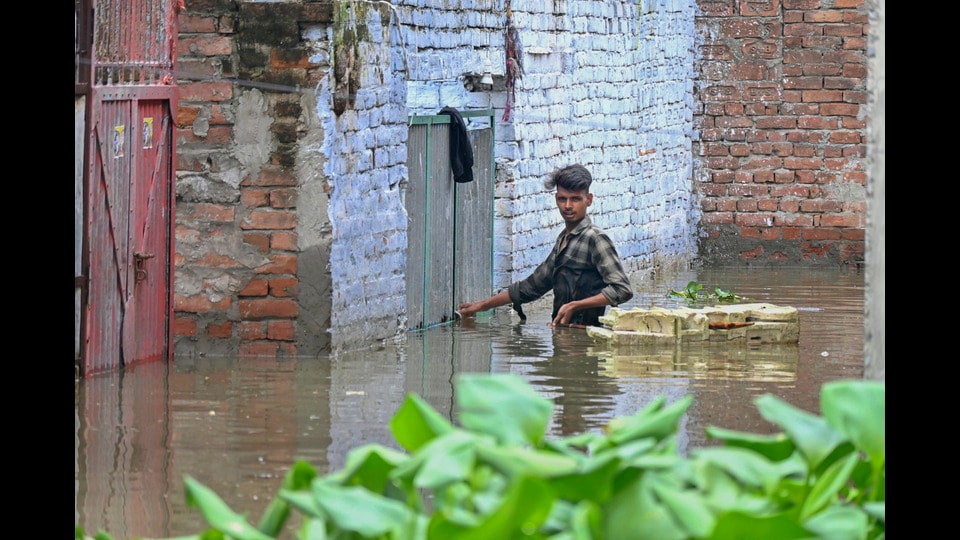
The advisory opinion also addressed one of the thorniest issues in climate diplomacy: loss and damage. For years, countries in the Global South have demanded compensation for the irreversible impacts of the climate crisis, including rising sea levels, devastating floods, and prolonged droughts. While acknowledging that treaty-based mechanisms like the Loss and Damage Fund play a role, the court ruled that injured States have the right to “restitution, compensation, and satisfaction.” This opens the door for States with low historical emissions — particularly those most vulnerable — to legally demand reparations from larger emitters if scientific links can be established between emissions and harm.
While the ICJ’s stance on reparations is progressive, it is unlikely to result in direct financial transfers. For example, in 1968, the ICJ asked the US to pay reparations to the Nicaraguan government for violating its sovereignty through armed interventions. The US refused to accept the court’s jurisdiction, citing legal caveats that enabled it to avoid paying reparations. The challenge lies in the absence of a roadmap for adjudicating legal claims when climate-vulnerable countries pursue litigation without an international enforcement mechanism to support them. At best, the ruling provides additional leverage for Global South countries to negotiate increased financial support from the Global North during climate talks.
In a world marked by failing multilateralism and a lack of political will, it remains unclear to what extent the ICJ’s ruling will influence the individual climate actions of States toward a deep and rapid transition to a low-carbon economy. It is likely to remain a rhetorical device rather than an operational tool. Nevertheless, it is a step in the right direction — offering a clear legal framework for how States can hold one another accountable for the climate crisis. Perhaps the most impactful outcome will be the advisory opinion’s influence in domestic lawsuits where citizens seek to hold their governments liable for climate inaction.
Pooja Ramamurthi has a background in climate and energy diplomacy. Abhinand Siddarth has a background in international law. The views are personal.


