Former United States (US) president, Barack Obama, was often called the first Indian-American president, given the large number of Indian-Americans in his administration, 2009 to 2017. That mantle, of an Indian-American president is ready to be passed on, with some distinguishing embellishment.
President Joe Biden’s administration has more Indian-Americans in the White House and in Senate-confirmed positions across federal agencies than any administration in the past — 70 appointed or nominated officials, according to Indiaspora, a leading advocacy group for
Former United States (US) president, Barack Obama, was often called the first Indian-American president, given the large number of Indian-Americans in his administration, 2009 to 2017. That mantle, of an Indian-American president is ready to be passed on, with some distinguishing embellishment.
President Joe Biden’s administration has more Indian-Americans in the White House and in Senate-confirmed positions across federal agencies than any administration in the past — 70 appointed or nominated officials, according to Indiaspora, a leading advocacy group for the community. But, in addition, members of the community also now speak of access to the centre of US power and influence that they have never had under any other president, of either of the two major parties in US politics.
Also Read | UNSG Antonio Guterres is set for a second term. This time, it will be different
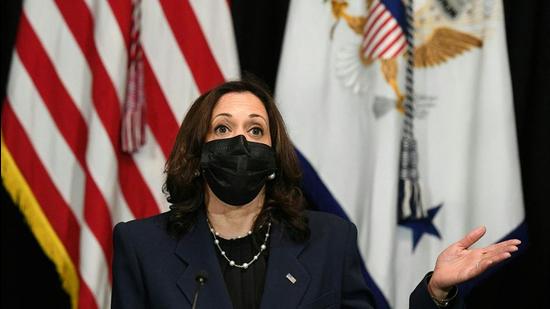
“The community’s access to the White House and the various parts of the administration is unprecedented,” said MR Rangaswami, founder of Indiaspora who participated alongside US Vice-President Kamala Harris in a recent event hosted by the State Department to raise aid for Covid-19 relief in India.
Harris, an Indian-American, had made a personal pitch speaking of her relatives still in India. This would have been unimaginable a year ago with vice president Mike Pence, or five years ago with even vice president Biden.
Today, it’s different. Shekar Narasimhan, a leading Democratic strategist and donor who has focused on a wider canvas of Asian-Americans, recounted a recent conversation with a reporter. The reporter had called Narasimhan for a story about the perception that the Biden administration was not responding to the devastating public health crisis visited upon India by the second wave of Covid-19 epidemic in the initial weeks. Images of crowded cremation grounds and patients dying in hospitals due to the lack of essential equipment such as oxygen cylinders, had been heartbreaking, and disturbing. And WhatsApp — where the diaspora connects with their childhood friends, mamas and chachas and chittis — brought the tragedy up close.
“What are you talking about inaction?” Narasimhan remembers asking the reporter. “When is the last time a problem occurred in India; three days later, we alert them (the White House) about it; three days later, they have a National Security Council (meeting) exclusively on this; one day later, they are acting; and two days later, planes are flying. Have you seen that before? Really, I said yeah it would take one week, well, start to finish.”
Relief was indeed on its way soon. An estimated $500 million worth of personal protective equipment, therapeutics, oxygen cylinders and converters have been sent by the US government ($100 million) and the private sector and individual contributors ($400 million).
Conversations between the community — around four million, including non-resident Indians — and the Biden White House and federal agencies have been far more intense than ever before. Most of it takes place off camera, off-page one. The Indian government pays professional lobbyists millions of dollars for this kind of access and influence. There is a new organic connection, which is both a reflection and rise of the Indian-American community in the corridors of power in Washington DC.
The views expressed are personal
One Subscription.
Get 360° coverage—from daily headlines
to 100 year archives.
Archives
HT App & Website