Digital technology has created new platforms for violence against women and girls — in the form of cyberbullying, deepfake pornography, image-based abuse, cyberstalking, and other manifestations of technology-facilitated gender-based violence (TF-GBV). According to the National Crime Records Bureau (NCRB), there has been a rise incyber-crimes against women.
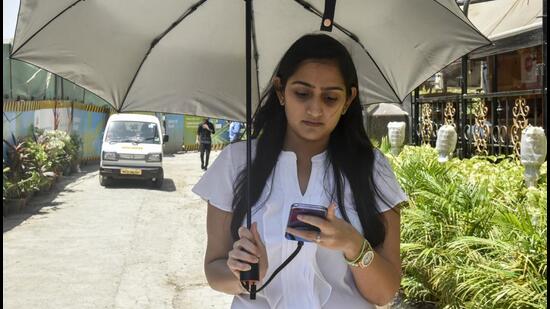
In Rajasthan, the YP Foundation documented young people’s (both men and women) perceptions, interpretations, and lived experiences of TF-GBV across social, cultural, and digital contexts through a survey. The aim was to map the TF-GBV ecosystem and accountability pathways — platforms, institutions, community actors, families, and informal networks — and identify gaps in redressal, prevention, and support. It was also aimed at understanding the emotional, social, psychological and behavioural impacts of TF-GBV on young women, girls, queer youth, and other marginalised groups, and the coping mechanisms they rely on. This was to strengthen YPF’s programmatic response to online and tech-mediated violence and generate actionable evidence and youth-validated design directions for YPF’s ongoing work on digital safety, gender justice and transformative masculinities in Rajasthan.
Women often lack autonomy over their digital spaces. Men cite protecting reputations and maintaining social respectability to justify monitoring and limiting women’s online visibility. The reasons also include preventing women of the household from accessing inappropriate content or talking to strangers.
{{/usCountry}}Women often lack autonomy over their digital spaces. Men cite protecting reputations and maintaining social respectability to justify monitoring and limiting women’s online visibility. The reasons also include preventing women of the household from accessing inappropriate content or talking to strangers.
{{/usCountry}}For women, harm from online spaces can lead to restrictions, reputation loss, blame, moral judgement, mobility restrictions, blackmail, stalking, violence, and withdrawal from online spaces.
System stakeholders are not very consistent in recognising abuse as a pattern of control. The biggest blind spots are relational, family-based, and everyday control harms. They may know these behaviours are wrong, but may not treat them as response-worthy, report-worthy, or intervention-worthy. These are exactly the behaviours that often precede or enable more severe GBV.
For minor girls, cyberbullying and abuse can lead to absenteeism, even school dropout. In Jaipur, a 12-year-old girl’s social media account was hacked and a photo doctored to misrepresent her. However, she took the system’s help, verified the image was fake, reported it, and the police traced the perpetrator. Not every such story has a happy ending. For adult women, online harassment diminishes their ability to speak freely and participate in public life.
Prabhleen Tuteja, executive director, YPF, says, “Safety cannot mean asking young people to shrink themselves online. It means building systems both formal as well as informal that recognise everyday harm before it escalates into crisis, and that respond with privacy, trust and choice instead of blame. Right now, the first and often the primary responder most survivors trust is their own phone. This needs to change because then we haven’t built a redressal system, we’ve built a reason to stay silent.”
Cyber abuse needs to be explicitly criminalised with substantial penalties when the victims are minors. Offensive content should be rapidly taken down. Law officers should be better equipped to deal with such crimes and trained on gender sensitivity. Parents and teachers must be trained to recognise signs of online abuse and on effective response. Helplines should be swift in dealing with reports of cyber-crime against women. Real change needs awareness against victim-blaming, targeted at men and boys who are invariably the offenders in such crimes. Inculcating responsible digital practices among them will go a long way in reducing the crime.
The views expressed are personal