
 E-Paper



Why did Naveen Patnaik government pass the OBC Bill in a hurry |Opinion
Faced with a political googly from Patnaik, the opposition could do little but support the Bill unanimously.

 Prefer HTon Google


The alacrity with which the ruling Biju Janata Dal got the Odisha State Backward Classes (Amendment) Bill passed in the state assembly early this week enabling the Backward Class Commission survey of the social and economic conditions of the backward classes in the State surely took opposition parties by surprise.
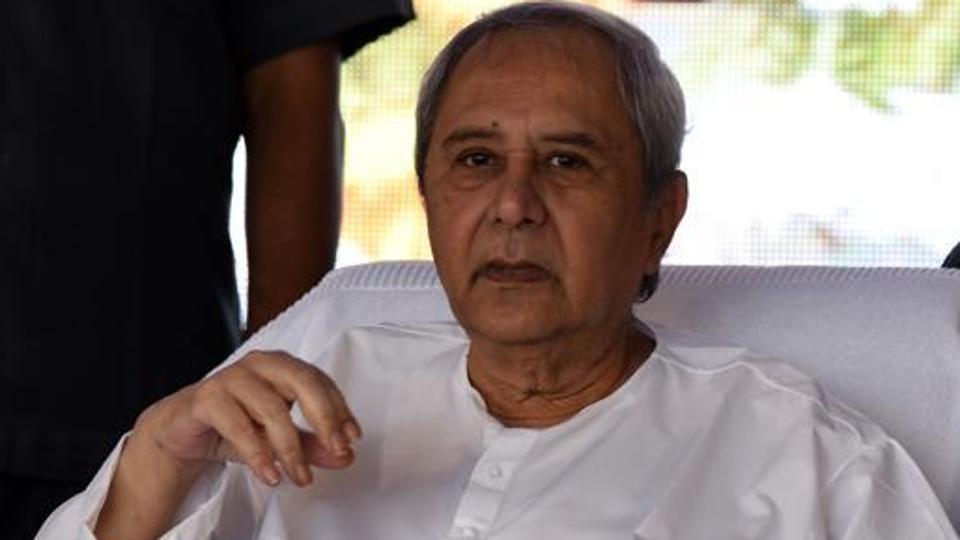
Tabling the Bill, Chief Minister Naveen Patnaik said it was important to have reliable data about the Backward Classes of the State. “But unfortunately, the State doesn’t have access to any recent data on this as the last census was done in 1931 which is almost 90-year old. This data is not enough for accurate and focused planning to reach out to the Backward Classes of the society,” he said.
Faced with a political googly from Patnaik, the opposition could do little but support it unanimously.
Caste has never been a factor in Odisha politics unlike the northern Indian States of Bihar and Uttar Pradesh or southern States like Karnataka. Though other backward castes account for 54 per cent of the state’s population, they have never ever voted en bloc in the past. For that matter, the tribal and Dalits, who form 24 per cent and 17 per cent of the State’s population respectively, have never voted along caste lines though they have supported BJD due to its specific welfare schemes for SCs/STs. There has not been any serious caste-based campaigning in any of the elections.
The ruling Biju Janata Dal which has been winning successive assembly elections since 2000 (first two elections in alliance with the Bharatiya Janata Party) has over the last couple of elections formed a woman vote bank through schemes like ‘Mission Shakti’. In the 2019 assembly election, the party won a handsome 113 seats with 44.6 per cent vote share, its highest so far. BJP, which has been mounting a stiff challenge since its sterling performance in the 2017 panchayat polls, was way behind with only 23 seats.
So, what prompted Naveen Patnaik to play the caste card? Political analysts say, though the BJP is unlikely to pose an immediate electoral threat to the BJD, the party did not want to leave anything to chance.
BJP is still the No 2 party in Odisha with 32.6 per cent vote share gathered in 2019 polls and its rise has been the most dramatic despite listless local leadership. In 2014 polls it had won about 18 per cent votes.
“BJD is acutely aware that Odisha is firmly on the BJP’s radar and the party may play the OBC card in the forthcoming polls. In the last Lok Sabha election, BJP stressed much on PM Modi’s OBC roots. Union petroleum and steel minister Dharmendra Pradhan, the party’s leading face in the State is also an OBC leader. The OBC Commission is a clever ploy by the BJD to deny BJP the first mover’s advantage in the race for backward class votes,” said Prabhat Mohanty, political science professor in Koraput.
Last month the State cabinet had passed a resolution requesting the Centre for enumeration of Socially and Educationally Backward Classes and Other Backward Classes/Castes during the 2012 general census, a proposal which was later turned down by the Ministry of Home Affairs.
The BJD’s fear of the BJP catching it unaware on the OBC front was not without a reason. Early this month, the chairman of National Backward Class Commission Bhagwan Lal Sahni during his visit to Odisha had slammed the State government for not having an OBC commission though the Odisha State Backward Classes Bill was passed in 1983. Too politically astute to not see through the BJP’s game plan, Patnaik may have decided to strike preemptively.
Many say Patnaik’s action is to prevent consolidation of Paikas or Khandayats (a militia caste) behind the BJP as a result of the party’s efforts in the last few years through several events including the 200th anniversary of the famous Paika rebellion against the British and a memorial for the fallen Paikas on the foothills of a mountain near Bhubaneswar. Khandayats are the martial race of Odisha who are also numerically superior with 22 per cent population. Though they figure in the Odisha’s list of SEBCs, they are not in the central list of OBCs and hence excluded from any reservation.
Activist Manoj Jena reasons that the survey by the OBC Commission may be a clever strategy to induct the Khandayats in the OBC list but exclude the creamy layer among them so as to prevent their future consolidation behind the BJP.
“He has already built the women vote bank, but it may be transient. The youth may not back his party in the next polls considering high unemployment. The caste factor may just help him,” said Jena.
Former union minister Srikant Jena, himself a backward caste leader, too, says BJD’s real motive was to garner more votes.
Jena says now that the OBC Commission has been formed, Patnaik can sit over the issue of OBC reservation and ask everyone to wait for its report.
“If he really wanted to help the OBCs, his government could have gone in appeal in the Supreme Court after the Odisha High Court in 2017 struck down the Odisha Reservation of Posts and Services (for Socially and Educationally Backward Classes) Act that provisioned for 27 percent reservations for the OBCs in government jobs. This is just public posturing,” said Jena.


