“End of an era,” tweeted Nigel Short soon after the ninth game between Magnus Carlsen and Viswanathan Anand. A pessimistic, negative view, I thought. This was more a return to the golden era of chess.
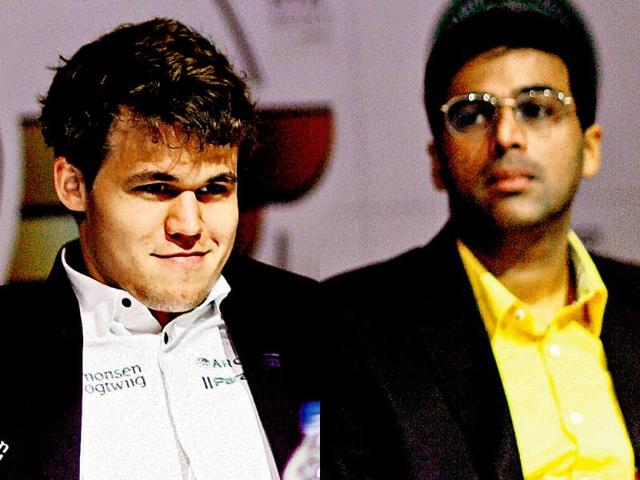
Magnus Carlsen. Perhaps this name will play the greatest role in the propagation and popularisation of chess after Bobby Fischer. Why, you may well ask? What is so special about the Norwegian?
To understand this, we need to look at the history of the development of chess, its strategy and theory. Though the game originated over 1700 years ago, it was really patronised around 400 years back when Europeans took it beyond an activity that merely killed time. It was felt that with method and better intelligence, one could beat others. It was at this time that the game was really recognised as a sport. The game flourished in Spain, France, Germany, England, Italy and even Russia in the next two hundred years.
The last few decades of the 18th century till nearly all of the 19th can really be termed the golden era of chess. Between 1760 and 1890, the game gained most in terms of beauty, creativity, art, logic, and sporting qualities. The most beautiful, brilliant and immortal games were played in this era by legends such as Paul Morphy, Adolf Andersen, Max Lange and Petrov.
{{/usCountry}}The last few decades of the 18th century till nearly all of the 19th can really be termed the golden era of chess. Between 1760 and 1890, the game gained most in terms of beauty, creativity, art, logic, and sporting qualities. The most beautiful, brilliant and immortal games were played in this era by legends such as Paul Morphy, Adolf Andersen, Max Lange and Petrov.
{{/usCountry}}Logic over creativity
Then came the so-called scientific era when top masters learnt to win by strategic study and homework. The game became more logical but the imagination went missing. The depth of the game increased but it came at the cost of creativity. Things really worsened since Garry Kasparov retired. “Safety first” became the top players’ motto. Most games started ending in draws. To those who didn’t play, chess became a boring sport.
Certainly a child doesn’t learn or play a game to carry out a scientific study. The child wants fun, wants to enjoy. With increased popularity of the game due to Fischer and Kasparov, more and more children started playing chess. Coaching flourished as a profession. But none of these made chess an enjoyable activity.
Naturally, this created rebels who challenge the boring bookish methods. They wanted enjoyable, creative, cutthroat, hair-raising battles in every game. They hated monotonous games and longed for true creative satisfaction more than success. So far, the masters of scientific play had prevailed over them. Carlsen’s changed that.
Now it is evident that the entire chess-playing generation with “modern classical” style will have to review its thinking. “I need to take stock” is what Anand said immediately after the match. After Kasparov, the modern classical school generation— Anand, Kramnik, Gelfand among others — have neglected the obvious. That is the objective of the game is to checkmate the enemy king. Now, they all “need to take stock”.
Of course, all these masters have great knowledge and playing strength. Surely they will adjust to the “Carlsen way”. Else, they will be among the top but not at the top.
It is for these reasons that Carlsen is an all-time great. Today, every chess player (even from my generation) wants to play fighting chess like Carlsen. It seems as if Morphy’s been reborn to bring back the golden era of chess.
The writer is India’s third GM and has been playing chess for 42 years