
 E-Paper



Photos: A look at Anupama Kundoo’s internationally acclaimed architectural work
The architect works with a small team, has done much of her work in Pondicherry and Auroville, and is committed to social and environmental principles in her work.
Updated on: Aug 30, 2021 12:28 PM IST


Share via


Copy link

1/10
 View Photos in a new improved layout
Updated on Aug 30, 2021 12:28 PM
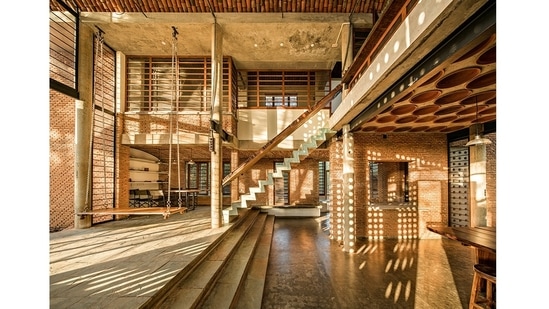
Anupama Kundoo, 54, was awarded the Auguste Perret Prize for Technology in Architecture by the International Union of Architects in May. Last week, the Royal Institute of British Architects chose her for the RIBA Charles Jencks Award, which she is set to receive in November. You may not have heard of her. But you’ve probably seen her residence, Wall House. It was showcased in the India episode of the Apple TV series Home last year. (Picture courtesy Javier Callejas)
2/10
 View Photos in a new improved layout
Updated on Aug 30, 2021 12:28 PM
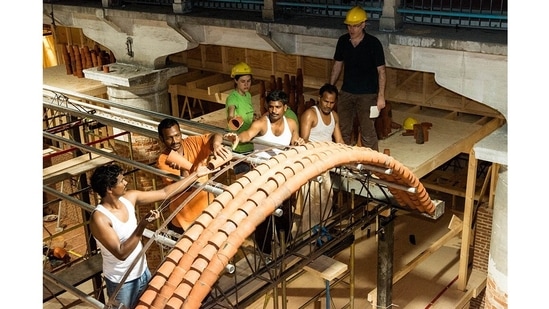
Wall House, constructed just outside Auroville, was made with handmade mud bricks using pre-industrial techniques instead of polluting factory-made ones. Its terracotta roof was developed with ideas from local potters. The result: a sleek, avant-garde home that is still indisputably Indian. She replicated her house, brick by brick at the 2016 Venice Architecture Biennale. (Picture courtesy Anupama Kundoo)
3/10
 View Photos in a new improved layout
Updated on Aug 30, 2021 12:28 PM
Pune-born Kundoo’s home, like her, is determinedly unique. She started her own practice straight after graduating from Mumbai’s Sir JJ College of Architecture in 1989 and worked with modernist architect Roger Anger in Auroville. It let her experiment with non-commercial, sustainable techniques long before green-building was a construction industry catchphrase. (Picture courtesy Andreas Deffner)
4/10
 View Photos in a new improved layout
Updated on Aug 30, 2021 12:28 PM
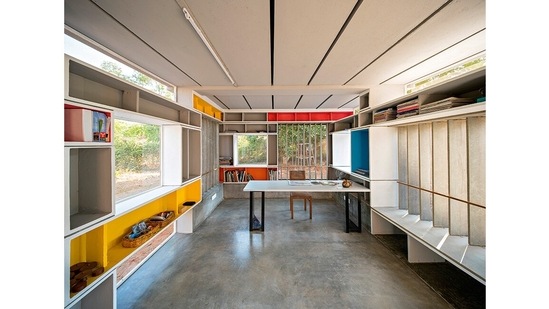
Among her acclaimed projects is Full-Fill Homes, modular crates cast in ferrocement, which can be assembled cheaply in about a week, with minimum construction experience. Most of the furniture is built-in, lowering costs further. (Picture courtesy Javier Callejas)
5/10
 View Photos in a new improved layout
Updated on Aug 30, 2021 12:28 PM
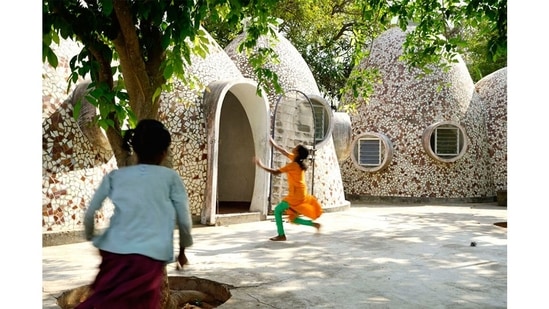
She has also developed and designed a shelter for homeless children in Puducherry. The domed rooms are made up of clay bricks handmade locally, and fired from within. So the rooms function as their own kiln. (Picture courtesy Javier Callejas)
6/10
 View Photos in a new improved layout
Updated on Aug 30, 2021 12:28 PM
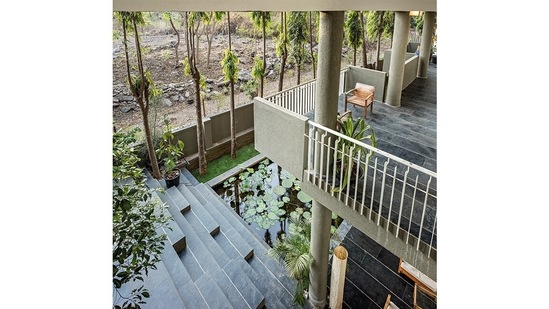
Most homes, like Kranti House, are designed for their location and using materials that are indigenous to the area. They make creative use of social spaces and the local climate. It’s a move away from commercial architecture that relies on templatized designed and following international trends. (Picture courtesy Javier Callejas)
7/10
 View Photos in a new improved layout
Updated on Aug 30, 2021 12:28 PM
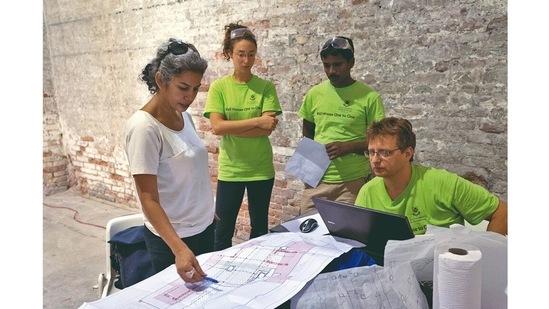
She works closely with a team of six artisans. One of them, Sekar Sokkalingam (third from left) has worked with Kundoo for 23 years, graduating from painter’s assistant to carpenter, plumber, electrician, contractor on Wall House, and is now a heritage conservator. “Anu is talented. But more than that, she has a good heart. She has credited us on every project, introduced us by name, treated us like equals,” he says. (Picture courtesy Anupama Kundoo)
8/10
 View Photos in a new improved layout
Updated on Aug 30, 2021 12:28 PM
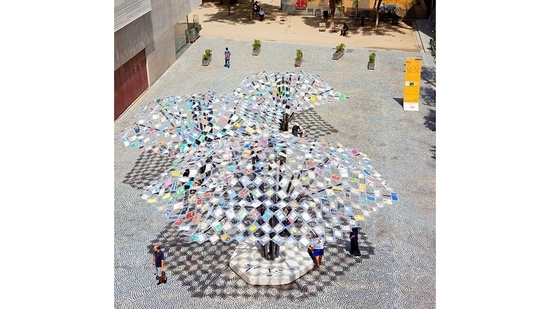
Her 2014 project in Barcelona, Spain, is called Library of Lost Books. Books locked in storage were brought out and used as construction material, to build an outdoor canopy for those reading underneath. After dismantling, the books used to construct the canopy were available to the public as a souvenir commemorating the event. (Picture courtesy Javier Callejas)
9/10
 View Photos in a new improved layout
Updated on Aug 30, 2021 12:28 PM
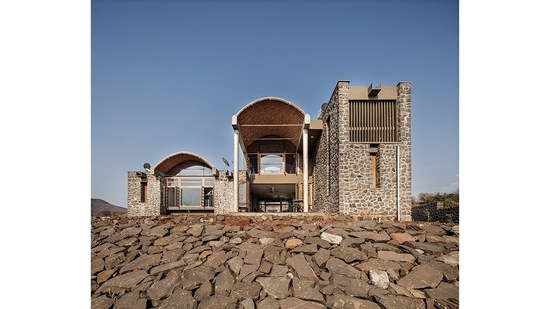
Shah House, built near Pune, stands at the edge of a river on agricultural land, the complex is shared by two residences. Locally available basalt stone is the primary building material and is combined with handmade terracotta hollow tubes for vaulted roofs as with Wall House. The design offers a continuous view of the waterfront through the selected axes of the house. (Picture courtesy Javier Callejas)
10/10
 View Photos in a new improved layout
Updated on Aug 30, 2021 12:28 PM


