
 E-Paper



Photos: A Ramayana where Ravana holds centre stage over Ram
Interpreted across countries, cultures, languages and art forms, the Ramayana has inspired art for centuries across the world. Where India extols Ram as the vanquisher of evil and the demon king Ravana, Sinhalese narratives invert the tropes –celebrating Ravana instead as a hero who stood against an alien invader.
Updated on: Sep 28, 2017 8:13 PM IST

Share via


Copy link

1/7
 View Photos in a new improved layout
Updated on Sep 28, 2017 8:13 PM
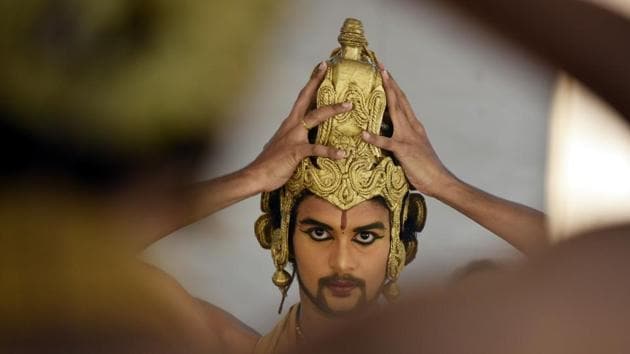
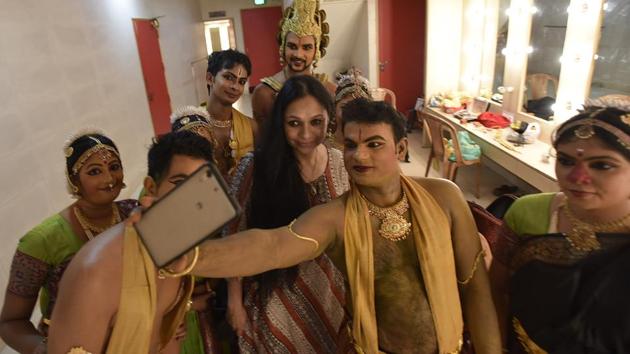
While in India, Ravana is considered a ‘demon,’ whose effigy is burnt with great fervour on the occasion of Dusshera –celebrating the victory of good over evil, the Sinhalese in Sri Lanka hold a different perspective. For them, Ravana is neither demon nor evil, rather a hero. He’s rather seen as a cult figure in Sri Lanka. Seen here, Dhakshith Samaraweera a Sri Lankan dramatist who has been performing in India for three years now prepares ahead of a show at the Kamani Auditorium, Delhi. (Raj K Raj / HT Photo)
2/7
 View Photos in a new improved layout
Updated on Sep 28, 2017 8:13 PM
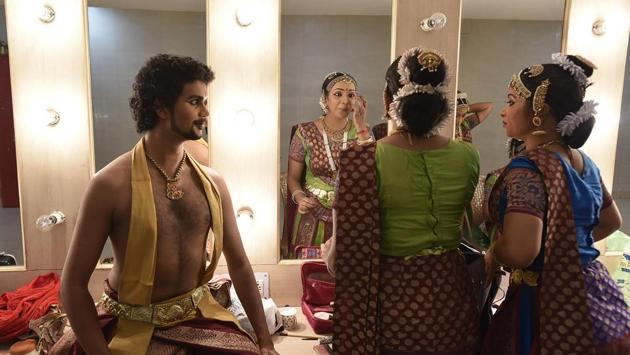
Artists impersonating Sita (R) and Ravana (L), prepare ahead of the 3rd International Ramayana Festival at Kamani Auditorium, Delhi. In modern Sri Lanka, there has been a movement to revive Ravana as a cult figure, who represents Sinhala or Sri Lankan nationalism because he was among the first in the island’s history to have resisted an alien/Indian invader. (Raj K Raj / HT Photo)
3/7
 View Photos in a new improved layout
Updated on Sep 28, 2017 8:13 PM
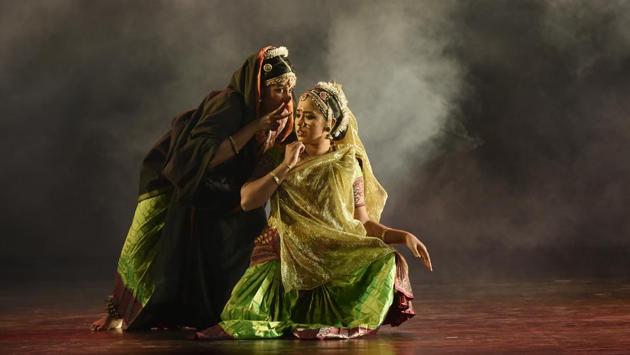
The characters in the performance, Kaikeyi (R) and Manthara employ dramatic devices such as sound and light & as well as slideshows in the background. According to the Hindu version of the Ramayana, Manthara was a domestic help who convinced Queen Kaikeyi that the throne belonged to her son Bharata, and not Ram- a conspiracy that resulted in Ram being sent to exile for fourteen years. (Raj K Raj / HT Photo)
4/7
 View Photos in a new improved layout
Updated on Sep 28, 2017 8:13 PM
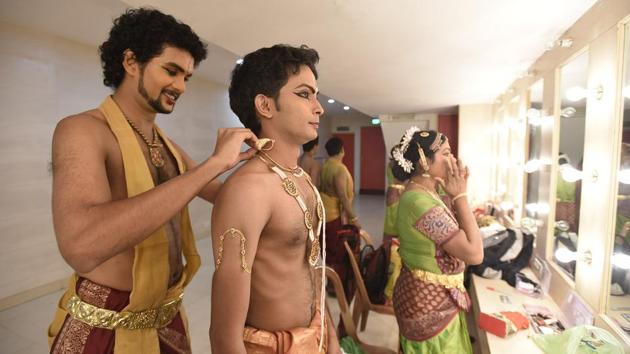
Artist Dhakshit (playing the role of Ravana) prepares Amila, impersonating the Indian mythological hero Ram. In this portrayal of Ravana, the ten heads represent the ten crowns he wore as a result of his sovereignty over ten countries. Sinhala lore has it that Sri Lanka under the scholarly Ravana, saw great advancements in science and medicine. (Raj K Raj / HT Photo)
5/7
 View Photos in a new improved layout
Updated on Sep 28, 2017 8:13 PM
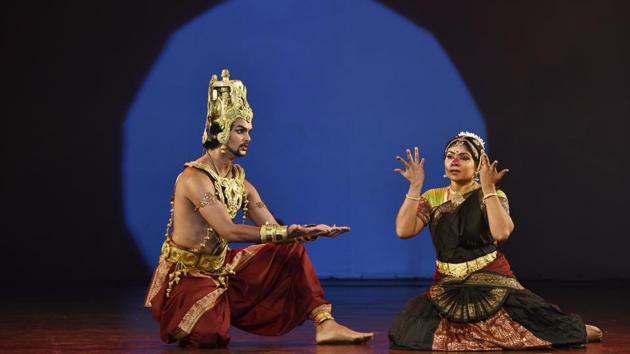
Even Indian lore extols Ravana as a Shiva Bhakta and as the composer of the Shivathandawa Stotra. He was a musician, who had fashioned his own stringed instrument, the Ravana Vina. The performance by the Sri Lankan artists was a dance recital, which included famous forms such as Bharatnatyam, Kokil and Kathak. (Raj K Raj / HT Photo)
6/7
 View Photos in a new improved layout
Updated on Sep 28, 2017 8:13 PM
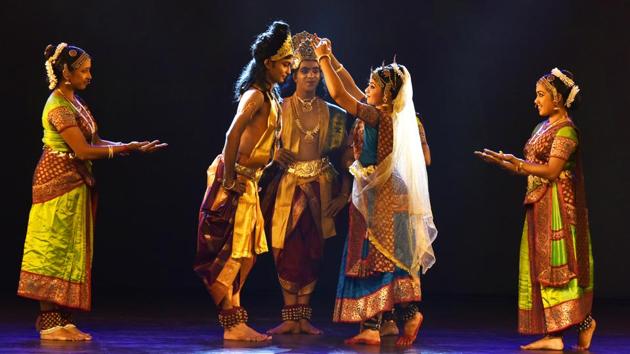
Artists depict a popular scene, ‘Ram Vivah,’ considered auspicious in India. Every year on the 4th of December, Hindus across India celebrate the divine marriage – of the eternal couple. (Raj K Raj / HT Photo)
7/7
 View Photos in a new improved layout
Updated on Sep 28, 2017 8:13 PM


