
 E-Paper



Photos: India’s national cancer grid takes off from Haryana’s Jhajjar
The 710-bed National Cancer Institute, which has been set up at a cost of Rs 2,035 crore in Jhajjar in Haryana, will focus on patient care, undergraduate teaching, research, and training specialists to provide cancer treatment in small towns, which will be networked with NCI to provide the best treatment modalities. NCI is not only the most advanced cancer centre in the public sector, it’s also the cheapest. Services will open in three phases, with the OPD, 250 beds, ICU and operation theatres getting operational in phase 1 (deadline ending March), 500 beds in phase 2 by December 2019, and 710 beds by 2020, when the institute will be fully operational.
Updated on: Mar 06, 2019 9:14 PM IST

Share via


Copy link

1/9
 View Photos in a new improved layout
Updated on Mar 06, 2019 9:14 PM
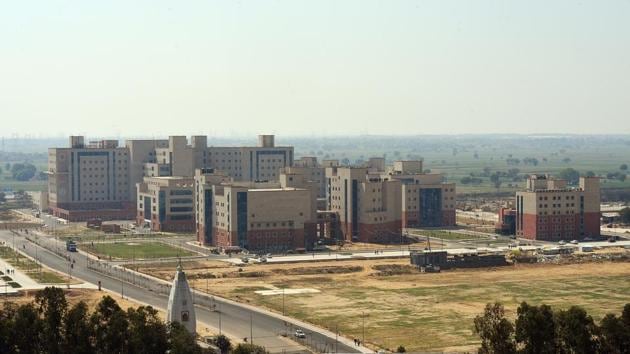
An aerial view of newly constructed All India Institutes of Medical Sciences (AIIMS) at Jhajjar, Haryana that houses the National Cancer Institure (NCI). The NCI is the first in a nationwide grid of high-end public hospitals being developed to offer affordable and quality cancer treatment at the district level. (Amal KS / HT Photo)
2/9
 View Photos in a new improved layout
Updated on Mar 06, 2019 9:14 PM
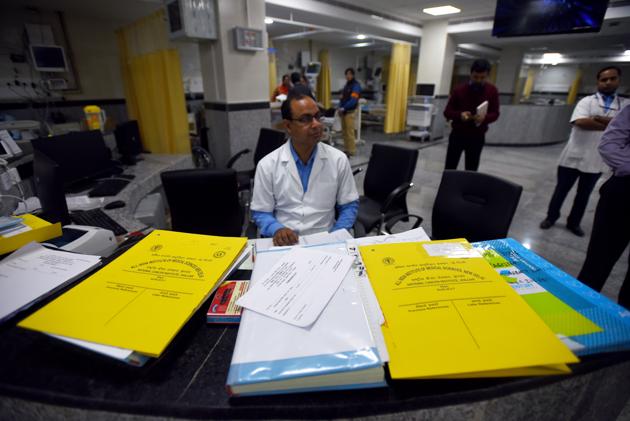
Staff seen at the NCI Jhajjar facility. Services will open in three phases, with the OPD (out-patient department), 250 beds, ICU (intensive care unit) and operation theatres (OTs) getting operational in phase 1, 500 beds in phase 2 by December 2019, and 710 beds by 2020, when the institute will be fully operational. (Amal KS / HT Photo)
3/9
 View Photos in a new improved layout
Updated on Mar 06, 2019 9:14 PM
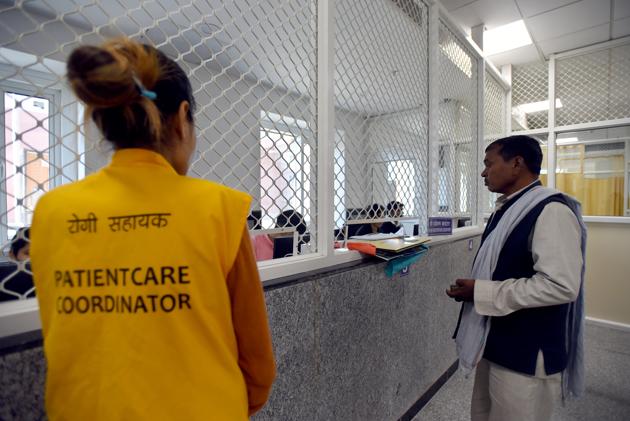
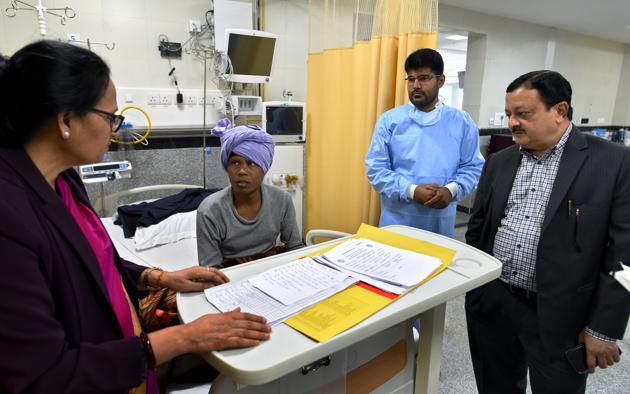
A view of the reception. With the phase 1 deadline ending in March, the NCI began admitting patients for chemotherapy and palliative care on February 22 and there are six to 10 patients in the emergency room at any given time. (Amal KS / HT Photo)
4/9
 View Photos in a new improved layout
Updated on Mar 06, 2019 9:14 PM
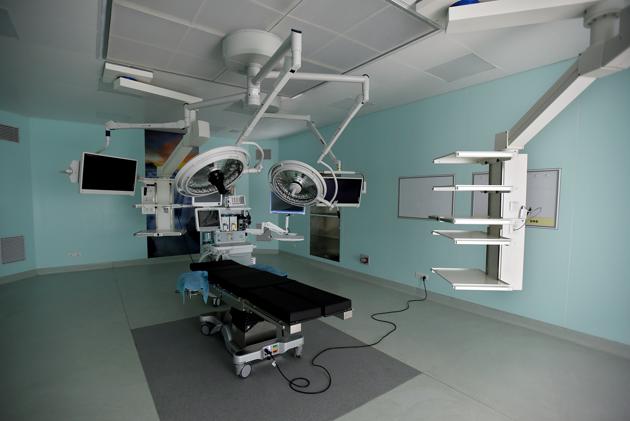
The surgical team headed by Dr SVS Deo, head of surgical oncology, AIIMS Delhi, and Dr Sushma Bhatnagar, head of onco-anaesthesia and palliative medicine, AIIMS, plans to start operating this week in some of the 25 modular OTs (pictured) designed for efficient workflow, precision surgery and optimal sterilisation to lower on-site surgical infections. (Amal KS / HT Photo)
5/9
 View Photos in a new improved layout
Updated on Mar 06, 2019 9:14 PM
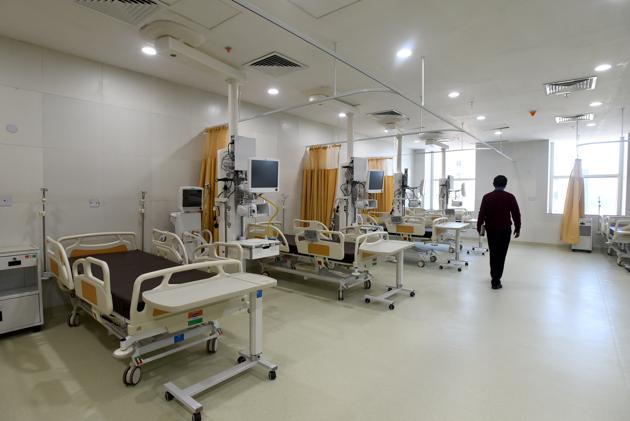
A view of the ICU unit at NCI Jhajjar. The 710-bed NCI, which has been set up at a cost of Rs 2,035 crore, will focus on patient care, undergraduate teaching, research, and training specialists to provide cancer treatment in small towns, which will be networked with NCI to provide the best treatment modalities. (Amal KS / HT Photo)
6/9
 View Photos in a new improved layout
Updated on Mar 06, 2019 9:14 PM
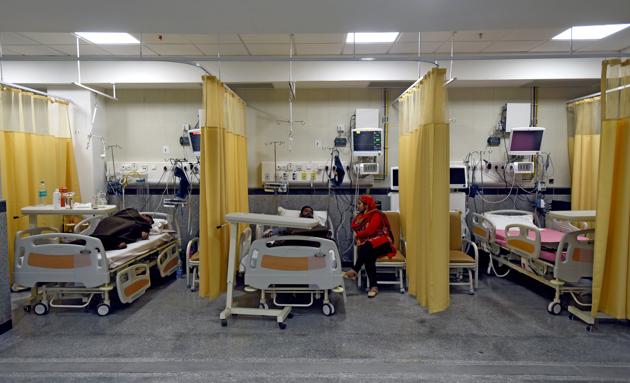
“The surgery and all communication in the OTs are recorded realtime and the surgical summary sent directly to the ICU, which is integrated with the OT. The medical records are digital, the only paper used is the final discharge summary given to patients,” said Dr Deo. Digitisation, he said, not only improves efficiency and lowers the chances of manual errors but also safeguards doctors against false allegations of negligence. (Amal KS / HT Photo)
7/9
 View Photos in a new improved layout
Updated on Mar 06, 2019 9:14 PM
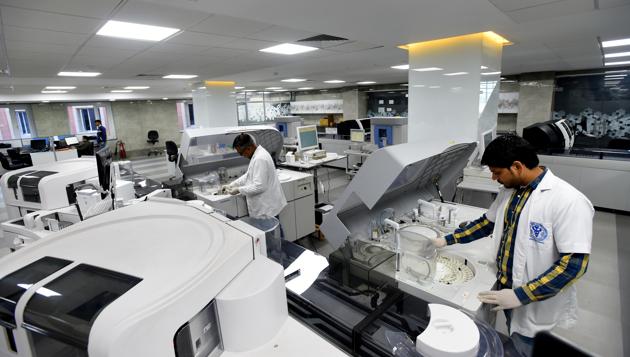
With its fully robotic automation track, standalone instrumentation and integrated workflow the Robotic Core Laboratory at NCI has a capacity to test 60,000 samples a day and run 24x7. It has an expanded menu of tests, including genetic screening for mutations and molecular diagnostic for personalised medicine, which does away with the need to send samples to peripheral labs. (Amal KS / HT Photo)
8/9
 View Photos in a new improved layout
Updated on Mar 06, 2019 9:14 PM
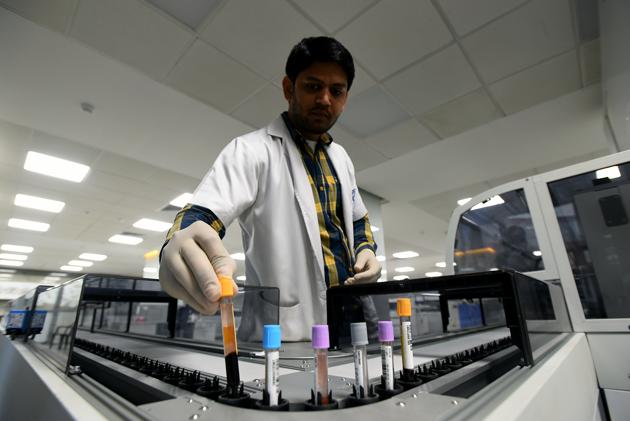
The automation also lowers manpower requirement and frees up technicians to work in shifts around the clock. Pneumatic chutes are used to propel containers with ampoules containing samples for testing between stations. We don’t have to waste time on sample transport, capping, sorting, sending reports and making registry entries,” said Dinesh Kumar, a lab technician. (Amal KS / HT Photo)
9/9
 View Photos in a new improved layout
Updated on Mar 06, 2019 9:14 PM


