
 E-Paper



Photos: Long hours, smog take a toll on Delhi Traffic Police, tests show
Beginning Monday, Delhi Traffic Police organised medical check-ups aimed at gauging the effect of prolonged exposure to Delhi’s polluted air on their health. Preliminary tests showed that 80 of the 516 who attended the camp held at the Traffic Police Headquarters in Todapur suffered from breathing problems with at least 15% testing positive for hypertension and diabetes.
Updated on: Dec 06, 2017 4:19 PM IST

Share via


Copy link

1/8
 View Photos in a new improved layout
Updated on Dec 06, 2017 4:19 PM
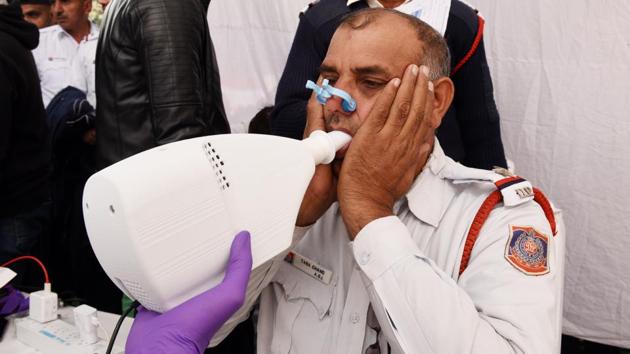
Amid Delhi’s air pollution crisis, the city’s traffic police organised a three day health check-up camp for its officers beginning Monday. Among preliminary findings, one in seven traffic policemen in Delhi was diagnosed with respiratory disorders, in the camp aiming to evaluate the effects of air pollution on the health of the force. (Raj K Raj / HT Photo)
2/8
 View Photos in a new improved layout
Updated on Dec 06, 2017 4:19 PM
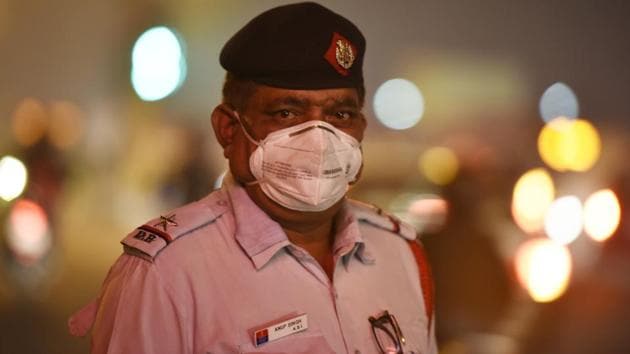
A traffic police man is seen wearing a breathing mask which have been provided to traffic personnel by the department. These policemen spend anywhere between 12 to 14 hours a day managing traffic on the congested roads of Delhi, where air pollution levels average three to four times above levels considered safe during this time of the year. (Raj K Raj / HT Photo)
3/8
 View Photos in a new improved layout
Updated on Dec 06, 2017 4:19 PM
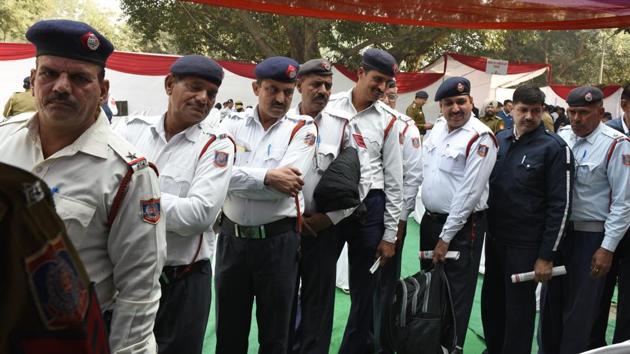
Traffic personnel queue up to get their tests done. Pulmonary function test (PFT) results of these traffic policemen done on Monday showed that 80 of the 516 who attended the camp held at the Traffic Police Headquarters in Todapur suffered from breathing problems. These issues ranged from throat irritation to lung congestion and asthma. (Raj K Raj / HT Photo)
4/8
 View Photos in a new improved layout
Updated on Dec 06, 2017 4:19 PM
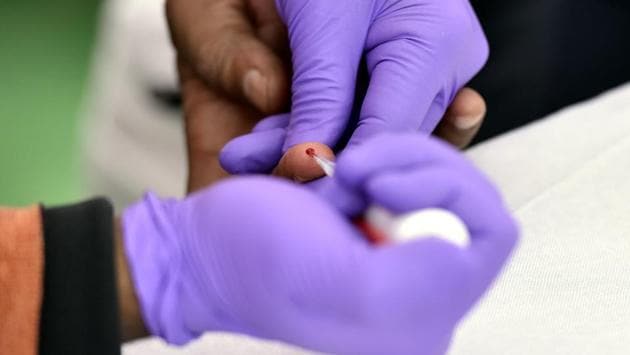
At least 15-20% of officers who attended the camp tested positive for hypertension and diabetes, doctors said. All 5,700 traffic personnel will have to undergo similar tests over the next 10 days. (Raj K Raj / HT Photo)
5/8
 View Photos in a new improved layout
Updated on Dec 06, 2017 4:19 PM
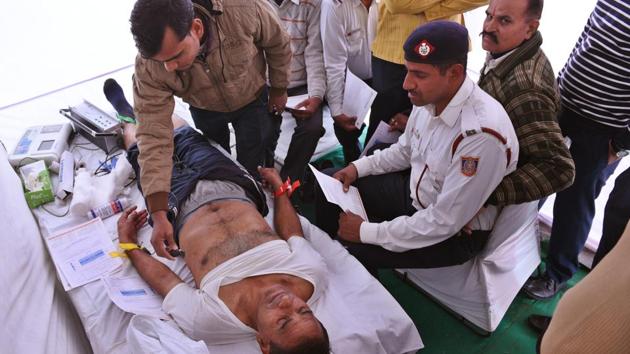
A traffic police personnel undergoes a check-up at the headquarters in Todarpur. Dr Sunny Kalra from BLK Super Speciality Hospital, who conducted these health check-ups, said most of the policemen reported that long hours in hazardous work conditions were taking a toll on their physical and mental health. (Raj K Raj / HT Photo)
6/8
 View Photos in a new improved layout
Updated on Dec 06, 2017 4:19 PM
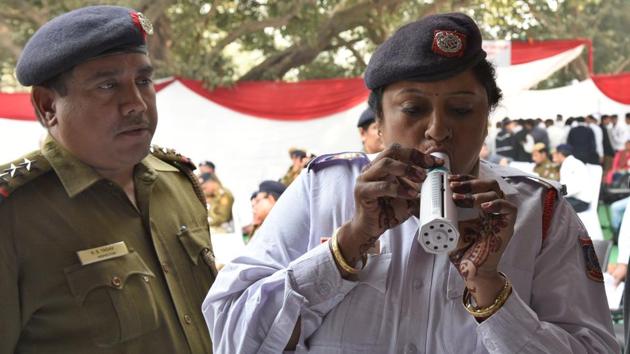
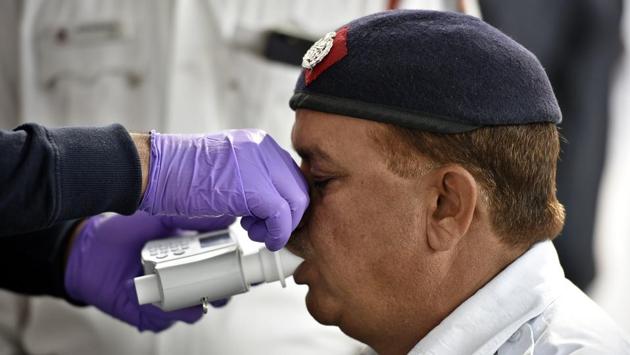
In a PFT test, a person has to exhale air into a hollow cylindrical device called a spirometer and the lung capacity is measured by the readings it provides. (Raj K Raj / HT Photo)
7/8
 View Photos in a new improved layout
Updated on Dec 06, 2017 4:19 PM
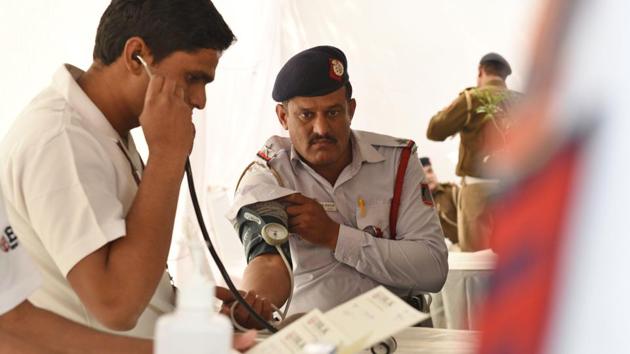
A traffic policeman gets his blood pressure checked during the camp. A cross-section of policemen, HT spoke to at the camp said fear for their safety caused the majority of their stress. They added that the demanding schedule and Delhi’s pollution in the recent weeks has also played a major role in aggravating the situation. (Raj K Raj / HT Photo)
8/8
 View Photos in a new improved layout
Updated on Dec 06, 2017 4:19 PM


