
 E-Paper



Photos: Making the Tumbaknari, the sound of Kashmiri folk music
An age old musical instrument native to Jammu and Kashmir, the Tumbaknari’s presence is a must at any celebration. This simple drum made from baked clay has maintained its form and position since medieval ages, with its roots believed to stretch far back into Iran or Central Asia. While newer instruments have gained prevalence, the tumbanari with its forgiving nature and easy lap positioned playing continues to be a hit among children and adults alike. HT photographer Waseem Andrabi traces the process of turning clay into music.
Updated on: Apr 28, 2018 10:13 AM IST

Share via


Copy link

1/7

 View Photos in a new improved layout
Published on Apr 28, 2018 10:13 AM
A potter works on an earthen tumbaknari, a goblet drum traditional to Jammu and Kashmir, at a workshop on the outskirts of Srinagar. This musical instrument has deep roots in the culture of Kashmir and is believed to have been brought to Kashmir by visitors and rulers who came in the olden days from Iran and the Middle East. (Waseem Andrabi / HT Photo)
2/7
 View Photos in a new improved layout
Published on Apr 28, 2018 10:13 AM
A woman spreads out clods of clay to dry in the sun before they’re sculpted into tumbaknaris and other earthenware. Once dry, water is added to mesh and crush the lumpy clay, preparing it into a pliable mass ready for the potter’s wheel. (Waseem Andrabi / HT Photo)
3/7
 View Photos in a new improved layout
Published on Apr 28, 2018 10:13 AM
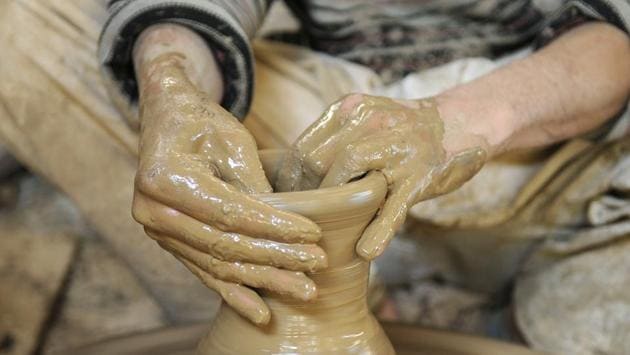
A craftsman shapes the distinctive elongated neck of the tumbaknari. The shape of this musical instrument is likened to that of a long gourd with a hollow, open back that amplifies the player’s taps on a leather membrane on the front, made traditionally from sheep or goat skin. (Waseem Andrabi / HT Photo)
4/7
 View Photos in a new improved layout
Published on Apr 28, 2018 10:13 AM
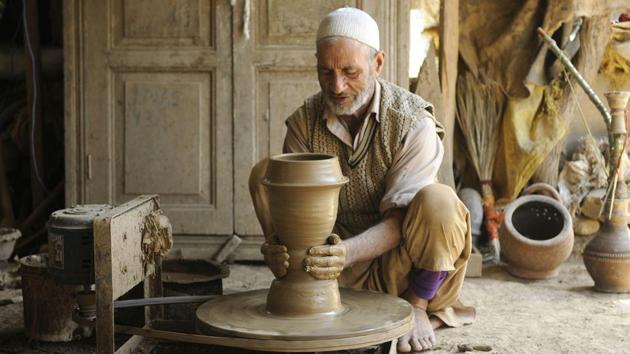
The final shape of the tumbaknari is a work of patience, a result of phases of shaping and reshaping on the potter’s wheel. Similar percussion instruments known as klong yao and glong are found in Thailand. And closer home in Andhra Pradesh, the gummeta also shares a resemblance with the tumbaknari. (Waseem Andrabi / HT Photo)
5/7
 View Photos in a new improved layout
Published on Apr 28, 2018 10:13 AM
A woman carries freshly made tumbaknaris to a furnace where they will be baked. This Indian cousin to the Iranian dumbek, while not common elsewhere in India, is essential to Kashmiri folk music. Celebrations on any auspicious day are incomplete without ‘chhakri’ singing, and the tumbaknaris a mainstay in the instrument lineup. (Waseem Andrabi / HT Photo)
6/7
 View Photos in a new improved layout
Published on Apr 28, 2018 10:13 AM
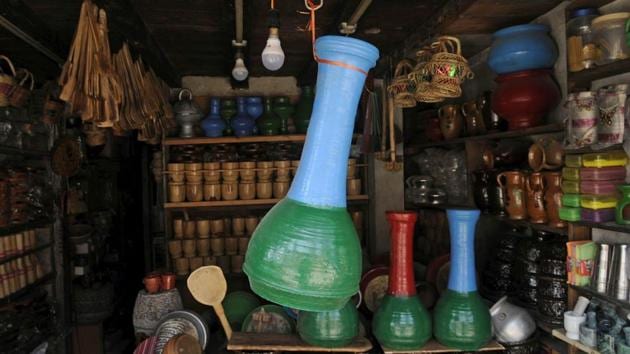
The membrane, applied after the baking stage is what turns these open ended vases into a musical instrument. The tumbaknari in India has been made from baked clay right from its earliest appearances. To the east, in Iran and Central Asia that tradition has now been supplanted by instruments made of wood or metal. (Waseem Andrabi / HT Photo)
7/7
 View Photos in a new improved layout
Published on Apr 28, 2018 10:13 AM


