
 E-Paper



Photos: Mumbai brings Ganesha home, 10 day festival begins today
Ganesh Chaturthi festival this year is being held between August 25 and September 5 as devotees throng pandals across Mumbai and other cities, and feast on sweets such as modak, believed to be Ganesha’s favourite.
Updated on: Aug 25, 2017 6:32 PM IST

Share via


Copy link

1/9
 View Photos in a new improved layout
Updated on Aug 25, 2017 6:32 PM
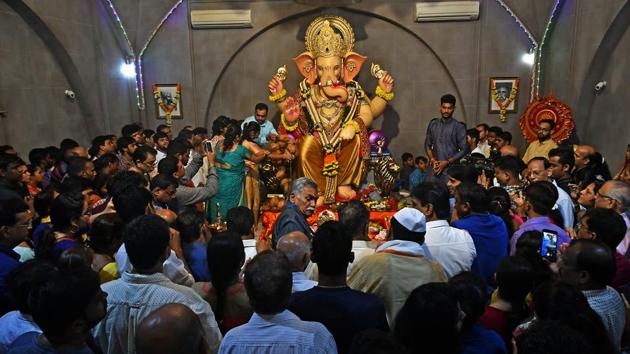
Devotees of Ganesha look forward all year to Ganeshotsav, a 10-day festival during which the idol is brought home or to public pandals and it is followed by festivities. This year, the festival is being held between August 25 and September 5. Some of the must visit pandals around Mumbai are Lalbaugcha Raja, Goud Saraswat Brahmin (GSB) and Keshavji Naik Chawl. (Sashui S Kashway/ HT PHOTO)
2/9
 View Photos in a new improved layout
Updated on Aug 25, 2017 6:32 PM
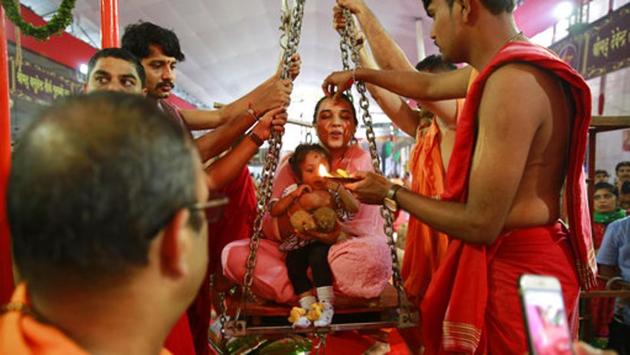
A woman and her child are weighed on a weighing scale to donate their equivalent weight in food items during Ganesh Chaturthi festival celebrations in Mumbai. Ganesh Chaturthi is believed to mark the birth anniversary of the deity and is celebrated on the fourth day (chaturthi) of the Hindu calendar month of Bhadrapada. (Rafiq Maqbool/AP)
3/9
 View Photos in a new improved layout
Updated on Aug 25, 2017 6:32 PM
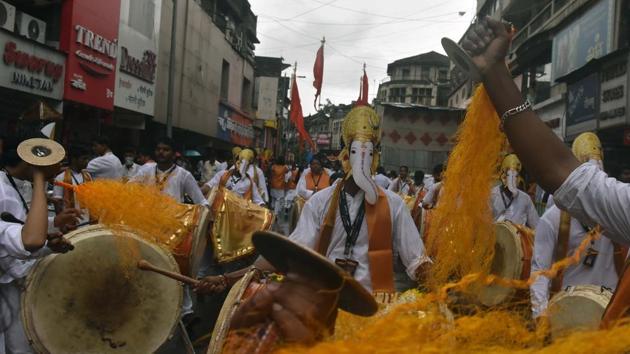
Dhol tasha pathaks during Ganpati procession in Pune. First observed during the Maratha empire set up by Chhatrapati Shivaji in the 16th century, the festival in its present form saw resurgence under Bal Gangadhar Tilak as a rallying ground for people beyond caste and class lines and a means of spreading ideas of nationalism and a sense of unity among the Indian population. (Pratham Gokhale/HT PHOTO)
4/9
 View Photos in a new improved layout
Updated on Aug 25, 2017 6:32 PM
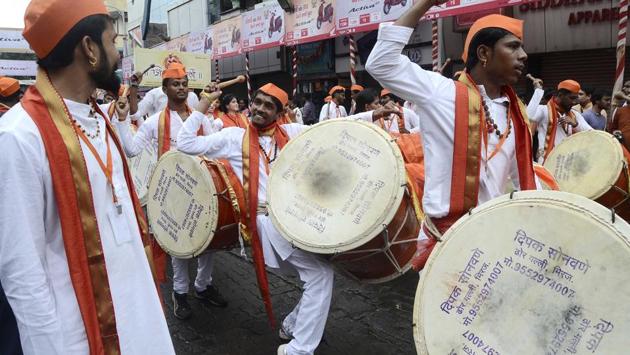
During Ganeshotsav, devotees throng pandals across Mumbai and other cities, and feast on sweets such as modak, which is considered Ganesha’s favourite.To mark the end of the festival, the idols are immersed in water (visarjan) to the chants of Ganpati Bappa Moraya, Pudhchya Varshi Lavkar Ya (Ravindra Joshi/HT PHOTO)
5/9
 View Photos in a new improved layout
Updated on Aug 25, 2017 6:32 PM
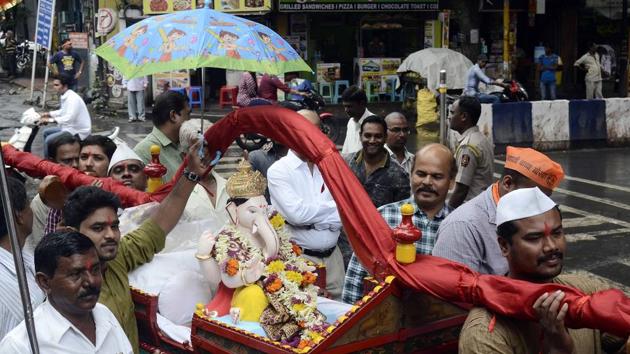
The initial idols were made of mud but over time, Plaster of Paris (POP) became quite common. However the latter pollutes the rivers and clogs water sources and contains harmful levels of mercury and cadmium. With growing awareness, a lot of people are now opting for eco-friendly idols made of easily dissolvable soil, coconut husk, fish friendly foods, and plant seeds. (Ravindra Joshi/HT PHOTO)
6/9
 View Photos in a new improved layout
Updated on Aug 25, 2017 6:32 PM
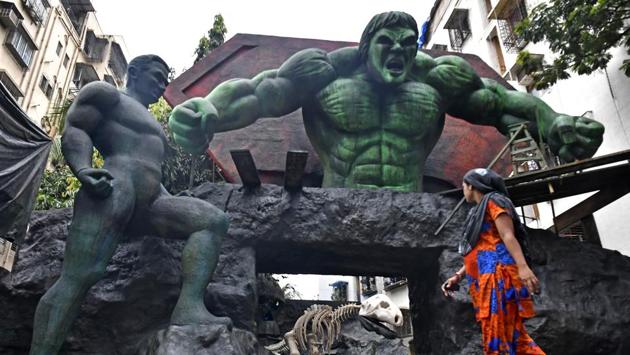
The festival is most commonly associated with the state of Maharashtra, while celebrations also occur widely in Tamil Nadu, Goa and Kerala.The ten day festival is also celebrated by Marathis settled in Delhi with the presence of at least two dozen Ganesh Mandals. ((Shashi S Kashyap/ HT PHOTO)
7/9
 View Photos in a new improved layout
Updated on Aug 25, 2017 6:32 PM
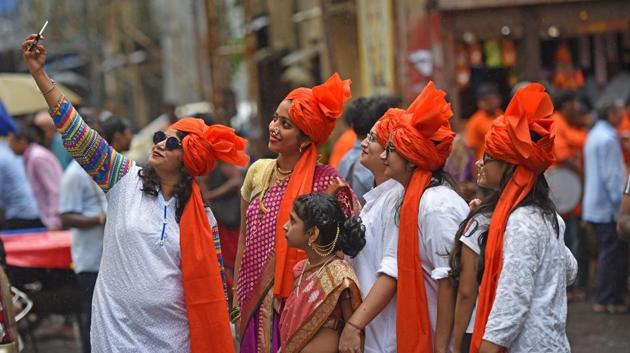
With massive crowds expected to participate in the celebrations, security across the city have been increased with CCTV cameras, use of drones and deployment of anti-terror squads and bomb squads. (Satyabrata Tripathy/HT Photo)
8/9
 View Photos in a new improved layout
Updated on Aug 25, 2017 6:32 PM
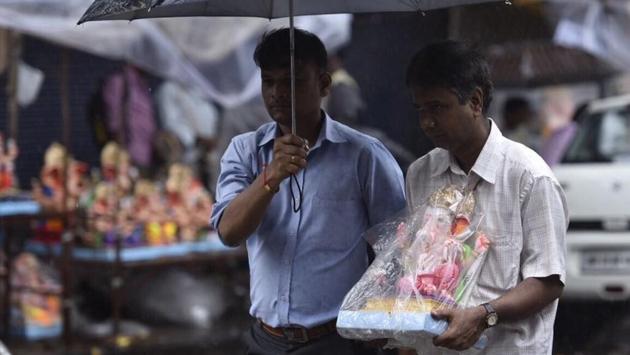
The mouse or a shrew is often seen as the ‘vahana’ or vehicle of choice for the happy-go-lucky god who is considered the destroyer of obstacles. (Satish Bate/HT Photo)
9/9
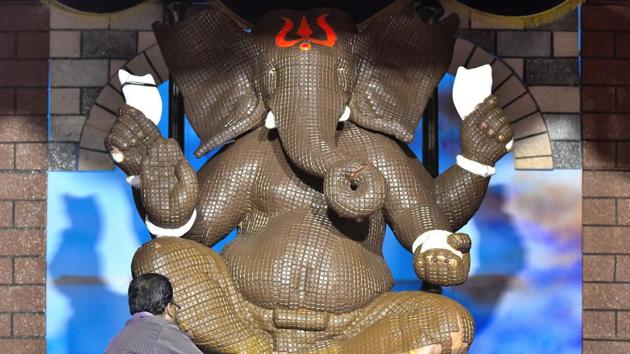 View Photos in a new improved layout
Updated on Aug 25, 2017 6:32 PM


